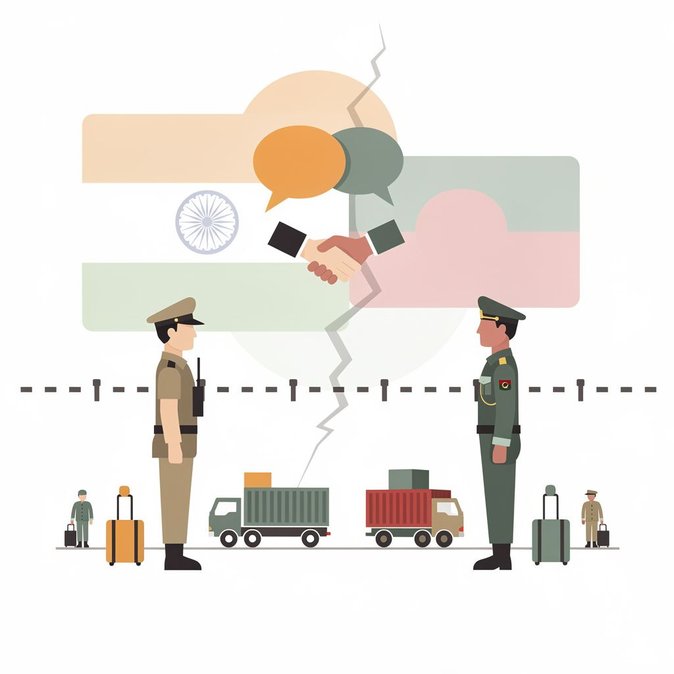
Top commanders of India’s Border Security Force (BSF) and Border Guard Bangladesh (BGB) wrapped up four days of talks in New Delhi on 12 June with a pledge to “strengthen coordinated patrols, enhance real-time information exchange and act jointly against trans-border criminal networks.” The joint statement comes as Dhaka protests alleged ‘push-backs’ of undocumented migrants, while New Delhi steps up efforts to verify and deport persons it says are Bangladeshi nationals living illegally in India. The 4,096-km frontier—much of it porous riverine terrain—has long been a pressure valve for seasonal labour flows. Recent political shifts in both countries, however, have pushed irregular migration to the top of the bilateral agenda, triggering localised tensions in Assam, Tripura and West Bengal where security forces have reported a rise in attempted crossings. Key outcomes include the expansion of joint night patrols, greater drone surveillance, faster verification of detained individuals’ nationality and a review of ‘border kill’ cases through a new hotline. For Indian exporters relying on land-route logistics to Bangladeshi factories, the agreement promises fewer ad-hoc gate closures and smoother clearance at integrated check-posts. At the same time, companies employing low-wage Bangladeshi labour in eastern India should anticipate more documentation checks and potential repatriations. The migration row has also complicated India’s broader trade and connectivity plans in the Bay of Bengal region, including the multimodal Kaladan project and cross-border power-grid links. Diplomatic observers note that the June meeting sought to decouple security cooperation from wider economic talks that will resume in Dhaka in November. HR and mobility teams with Bangladeshi staff assignments in India—or Indian nationals posted to Bangladesh—should monitor any new visa or work-permit verification steps that could emerge as both sides operationalise the coordinated border management plan.
Source: NDTV / Reuters