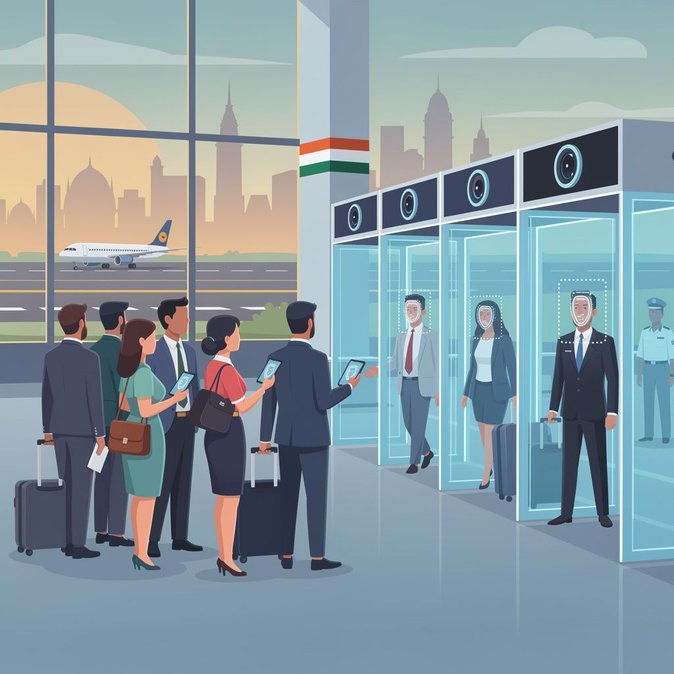
A new era of paper-less international travel out of India quietly began this month. From 1 June 2026, passengers flying abroad from Delhi, Mumbai, Bengaluru and Hyderabad airports must use the government-backed DigiYatra facial-recognition corridor to clear pre-departure checkpoints. The policy—confirmed in a detailed explainer published on 13 June—turns each traveller’s face into a digital token linked to their Aadhaar and boarding pass, replacing repeated manual ID and boarding-pass checks. For business travellers the change is significant: once a boarding pass is uploaded to the DigiYatra mobile app at least 48 hours before departure, the same biometric template unlocks dedicated e-gates at the terminal entry, security hold area and immigration counters. Airlines are already encouraging corporate clients to pre-select seats early so that boarding passes are available in time to register. The Ministry of Civil Aviation estimates that the end-to-end process will cut average airport dwell time by 15-20 minutes at peak periods, easing chronic congestion in India’s busiest hubs. Privacy concerns remain, but authorities insist the encrypted facial templates are stored on the passenger’s own device and deleted after 24 hours. Data-protection clauses in the Digital Personal Data Protection Act 2025 require the operator, DigiYatra Foundation, to keep all biometric records on Indian-based servers and to obtain explicit user consent. For companies managing group travel, the practical implication is new pre-flight workflows: travel managers must brief employees on uploading selfies, ensure passports have at least six months’ validity (still checked at immigration) and budget extra time for first-time users unfamiliar with the e-gate layout. Carriers such as Air India and IndiGo have set up ‘DigiYatra help-desks’ in premium check-in zones to shepherd corporate flyers through the transition week. Looking ahead, the Civil Aviation Ministry says DigiYatra lanes will be extended to Chennai, Kolkata and Goa by December and that outbound passengers who skip enrolment could face longer queues at manual counters. Multinational firms with back-to-back regional itineraries are therefore being urged to mandate app enrolment in their India travel policies before the peak festival season.
Source: NotInTown