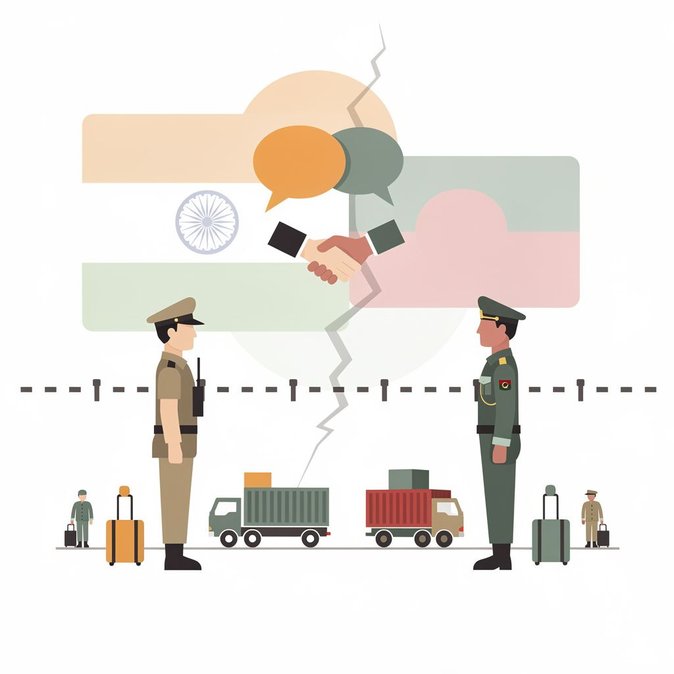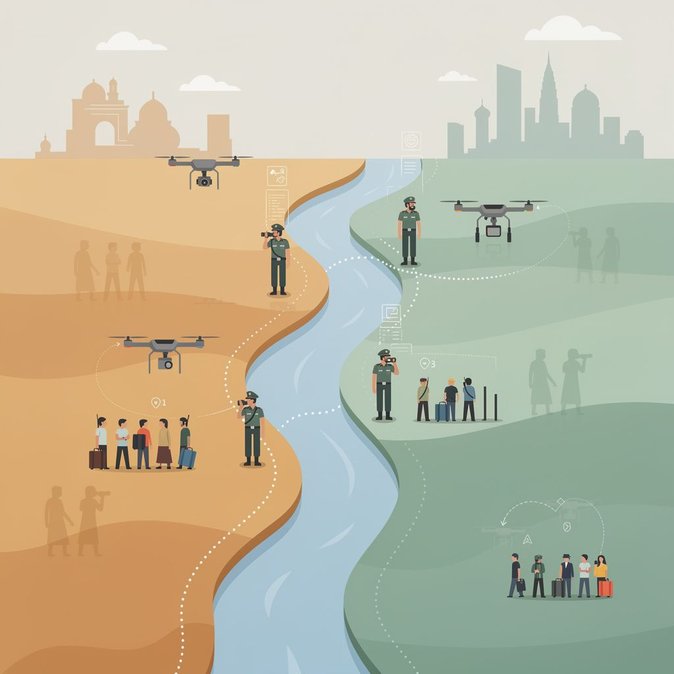
Senior commanders of India’s Border Security Force (BSF) and Border Guard Bangladesh (BGB) wrapped up a four-day meeting in New Delhi with a commitment to expand coordinated patrols, real-time intelligence sharing and joint action against trafficking networks along their 4,096-km frontier. The joint statement described the talks as “cordial, positive and forward-looking” but acknowledged that illegal crossings and alleged push-backs of migrants have strained bilateral ties in recent months. Bangladesh has accused Indian forces of forcing undocumented Bengali-speaking Muslims back across the border without due process, while Indian states such as Assam and West Bengal complain that unchecked migration is altering local demographics and burdening welfare systems. The BSF told its Bangladeshi counterpart that it had asked Dhaka to verify the nationality of 2,860 suspected Bangladeshis present illegally in India; the BGB said it had thwarted 18 forced-entry attempts since 4 June. Under the upgraded “Coordinated Border Management Plan 2.0,” the two forces will deploy additional drones, extend fenced lighting, and establish a 24×7 hotline at sector level to speed up verification of detainees. A pilot project to tag repeat offenders with biometric smart cards that work in both countries’ border databases will be launched at the Petrapole–Benapole checkpoint in July. Officials also agreed to reopen several dormant riverine routes to legitimate trade, hoping economic incentives will undercut smuggling and human-trafficking rackets. For Indian exporters, smoother border formalities could shorten truck-queuing times—currently up to 36 hours during peak seasons—and reduce demurrage costs. However, companies that rely on low-wage Bangladeshi labour in Assam’s tea estates and Kolkata’s construction sites fear tighter policing may worsen worker shortages unless accompanied by legal seasonal-worker schemes. The two sides will reconvene in Dhaka in November to review progress. Diplomats say sustained cooperation is critical ahead of Bangladesh’s 2027 general election, where migration is already a flash-point. Businesses with cross-border supply chains should monitor any new identity-verification rules that emerge from the pilot projects.
Source: NDTV / Reuters syndication