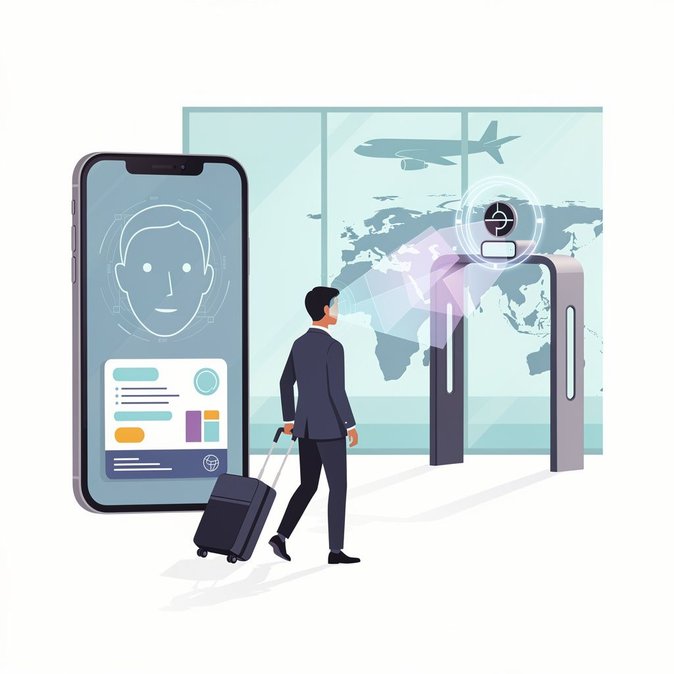
From 1 June 2026, the Ministry of Civil Aviation has made the DigiYatra facial-recognition platform compulsory for passengers departing internationally via Delhi, Mumbai, Bengaluru and Hyderabad airports. The 13 June explainer published by travel outlet NITN details how travellers must upload an Aadhaar-verified selfie and boarding pass to the DigiYatra app at least 48 hours before flying; upon arrival, they breeze past e-gates where live images are matched to encrypted templates in the cloud. Officials claim the system cuts average queueing time at security and immigration from 20 minutes to under seven, freeing up capacity for the busy summer rush.
While DigiYatra streamlines airport formalities, travellers still need to ensure their underlying travel documents are in order. VisaHQ’s India portal (https://www.visahq.com/india/) offers corporate mobility managers and individual flyers an easy way to check visa requirements, complete e-visa applications and track approvals in real time—services that dovetail neatly with the new biometric process.
For frequent-flyer employees, the biggest adjustment is earlier seat confirmation—some airlines charge extra for seat selection before check-in opens. Mobility teams should update travel policies to reimburse such fees and provide step-by-step onboarding guides to avoid last-minute holdups. The biometric rollout dovetails with India’s broader IVFRT-2.0 modernisation: automated e-gates are now integrated with immigration servers, meaning the passport will be inspected only once, at the final border kiosk. The government has hinted that DigiYatra will expand to Kochi and Kolkata by year-end and, eventually, link to a Trusted Traveller Programme that eliminates manual stamping altogether. Privacy advocates continue to press for clearer data-retention rules, but the ministry says records are auto-deleted 24 hours after flight departure. For global companies, the upside is leaner dwell times and potentially reduced duty-of-care risks in overcrowded terminals.
While DigiYatra streamlines airport formalities, travellers still need to ensure their underlying travel documents are in order. VisaHQ’s India portal (https://www.visahq.com/india/) offers corporate mobility managers and individual flyers an easy way to check visa requirements, complete e-visa applications and track approvals in real time—services that dovetail neatly with the new biometric process.
For frequent-flyer employees, the biggest adjustment is earlier seat confirmation—some airlines charge extra for seat selection before check-in opens. Mobility teams should update travel policies to reimburse such fees and provide step-by-step onboarding guides to avoid last-minute holdups. The biometric rollout dovetails with India’s broader IVFRT-2.0 modernisation: automated e-gates are now integrated with immigration servers, meaning the passport will be inspected only once, at the final border kiosk. The government has hinted that DigiYatra will expand to Kochi and Kolkata by year-end and, eventually, link to a Trusted Traveller Programme that eliminates manual stamping altogether. Privacy advocates continue to press for clearer data-retention rules, but the ministry says records are auto-deleted 24 hours after flight departure. For global companies, the upside is leaner dwell times and potentially reduced duty-of-care risks in overcrowded terminals.