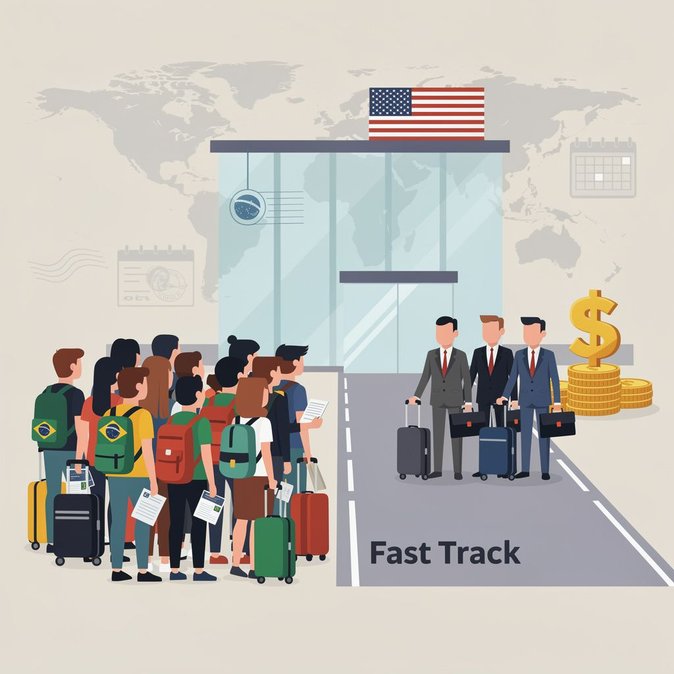
Brazilian companies planning last-minute travel to the United States will soon face a new decision: pay a premium or brave the queue. On 13 June 2026 the U.S. State Department published a temporary final rule creating a six-month pilot that lets applicants for the B1/B2 business-and-tourism visa buy an expedited interview slot for US$750 on top of the standard US$185 fee. The scheme will run from 1 July through 31 December at a limited number of consulates yet to be named. Under the pilot, travellers who have already filed the DS-160 form and paid the basic fee may, subject to availability, book an appointment within ten business days. The State Department estimates it can process about 25,000 such requests and will analyse demand before deciding whether to expand or amend the service in 2027. For Brazilian mobility managers the timing is awkward. Wait times at the U.S. consulates in São Paulo and Rio de Janeiro still hover above five months, according to the most recent government data, forcing many executives to route meetings through Mexico City or Bogotá. The premium pathway offers a lifeline for urgent board meetings, trade shows and the final weeks of Brazil’s national team matches in the FIFA World Cup, but pushes the total upfront cost of a tourist/business visa to almost US$1,000—excluding the reciprocity fee many citizens of other countries must pay. Travel-industry associations in Brazil offered a mixed reaction. The Brazilian Association of Travel Agencies (ABAV) welcomed “any initiative that reduces uncertainty for clients”, but warned that a pay-to-skip system risks favouring large corporates over SMEs and leisure travellers. HR directors at two São Paulo multinationals told Global Mobility News that they will trial the service for critical visits yet continue to lobby Washington for permanent staffing increases at consular posts. Practically, mobility teams should update cost projections, remind employees that paying the surcharge does not guarantee visa issuance, and monitor travel.state.gov for the list of participating consulates later this month. Employers should also note that humanitarian and national-interest expedite requests remain free of charge, preserving an alternative route for truly urgent cases.
How VisaHQ can help
VisaHQ simplifies the visa application process for individuals and businesses. Check current travel requirements, prepare the required documents and manage your application online through the VisaHQ Brazil portal.More From Brazil
View all
Brazilian Health Ministry rules out Ebola after two suspected cases in Rio and São Paulo

President Lula departs for G7 summit in France, raising expectations for breakthrough on U.S. tariffs and EU meat ban