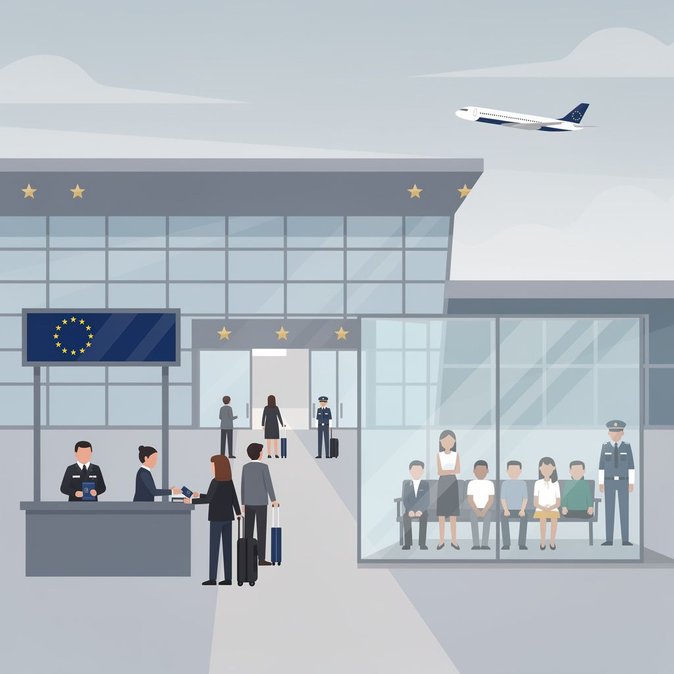
Germany has switched on one of the most visible pieces of the new EU asylum architecture: a fenced, container-style ‘border-procedure centre’ immediately adjacent to Berlin-Brandenburg (BER) Airport. The facility – inaugurated on 14 June 2026 by Federal Interior Minister Alexander Dobrindt – has space for 40 people and is designed to process asylum claims from travellers judged to have little chance of being granted protection, such as applicants from so-called safe-origin countries, individuals with false papers, or those flagged as security risks. Under the new Common European Asylum System (GEAS), persons placed in the border procedure are treated as “not yet admitted” to the Schengen area. Applicants live in dormitory-style rooms behind a secure perimeter while the Federal Office for Migration and Refugees (BAMF) decides their case – a process that must be completed within twelve weeks. If protection is denied, the Bundespolizei can escort the individual directly back to the airside area and onto a return flight. Dobrindt called the centre a “milestone” that will allow Germany to move from being an alleged ‘brake-man’ to a “locomotive” of EU migration management. He also confirmed that the existing temporary controls at Germany’s land borders will continue “for a considerable time” until GEAS proves it can prevent secondary movements. Business-travel and global-mobility managers should note that the centre does not affect the vast majority of passengers transiting BER, yet it signals a tougher frontline screening environment. Carriers have been told they must verify travel documents even more diligently, as fines for transporting inadmissible passengers will rise under GEAS. Employers bringing talent through Berlin should double-check that new hires have the correct visa or waiver and that travel documents are valid for at least six months. The BER pilot is expected to be copied at Frankfurt, Munich, and Düsseldorf later this year. For multinationals, that means faster removal of irregular travellers but also the possibility that legitimate staff arriving with incomplete paperwork could be held in limbo. Providing staff with comprehensive invitation letters and proof of purpose of stay will be more important than ever.
Source: BILD