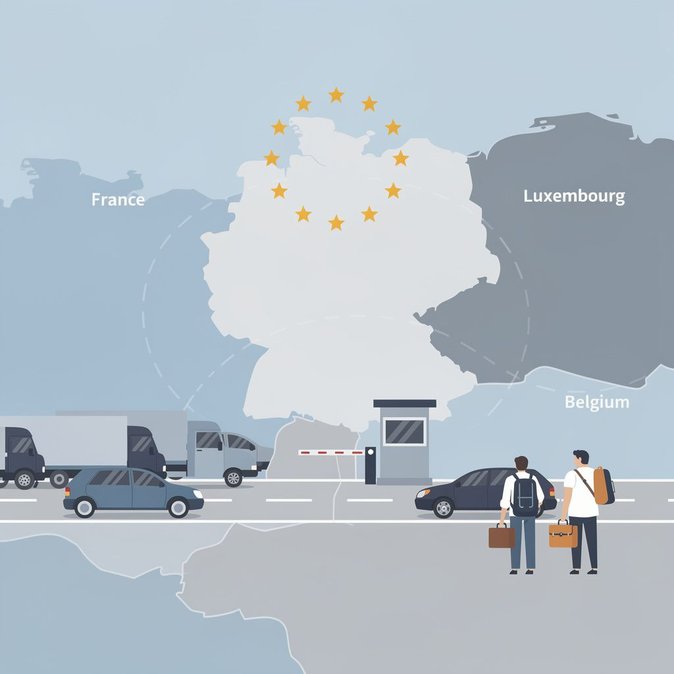
Only one day after GEAS became legally binding, Germany confirmed that fixed and mobile checks at its land borders will remain in place until at least 15 September 2026. The decision has angered businesses and commuters in Rhineland-Palatinate (RLP), a state that depends heavily on daily cross-border labour flows to and from France, Luxembourg and Belgium.
Speaking to public broadcaster SWR on 13 June, federal officials argued the controls are still “migration- and security-politically necessary”.
Yet many local politicians see little justification now that asylum procedures are to be shifted to the EU’s external frontiers.
RLP premier Gordon Schnieder (CDU) backs the extension, but Green and SPD federal MPs from the state accuse Berlin of “symbolic politics” that undermine Schengen freedoms.
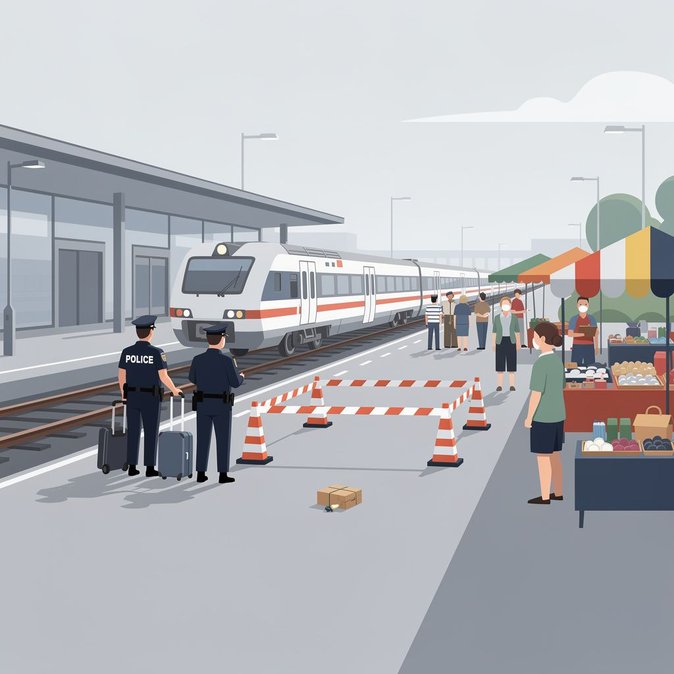
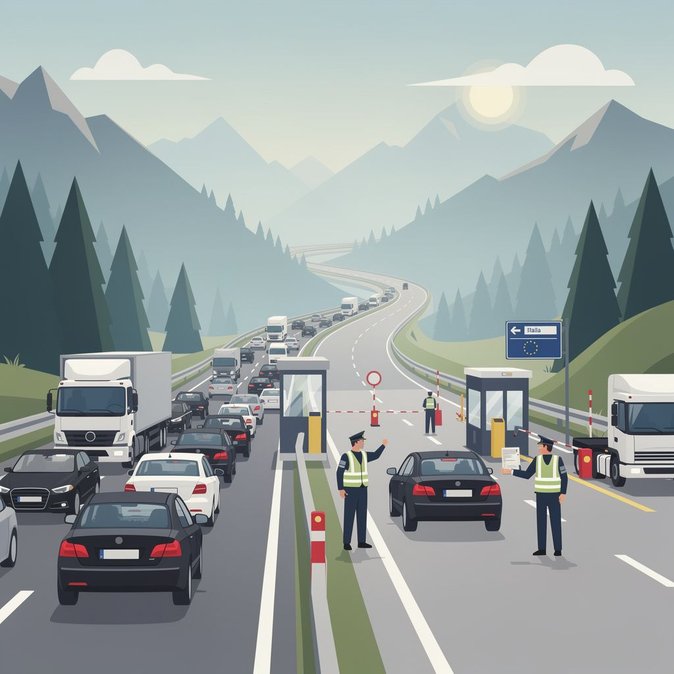
The practical fallout is felt on the A 65 at Lauterbourg and smaller crossings along the Moselle: truck queues stretch for several kilometres during morning peaks, while rail passengers face random ID inspections.
Logistics firms report additional costs of up to €400 per lorry per round-trip due to wage and fuel overheads.
For German multinationals relying on talent from the Grand Est region or Luxembourg’s finance hub, the uncertainty complicates commuter benefits, timing of housing allowances and project staffing.
For organisations needing clarity on documentation and contingency planning, VisaHQ offers up-to-date guidance on German and Schengen entry rules, and provides real-time alerts when border controls tighten or ease. Its online platform (https://www.visahq.com/germany/) streamlines visa and passport services for employees and business travellers, helping HR teams stay compliant while minimising disruption.
Mobility managers are advised to warn travellers to carry passports or national ID cards even on routine cross-border trips, and to factor in 20–40 minutes of potential delay.
Politically, the standoff foreshadows an autumn debate: if GEAS reduces irregular migration as promised, opposition parties will demand that Interior Minister Dobrindt phase out internal checks.
Companies with high intra-EU mobility should watch legislative calendars and prepare position papers advocating a swift return to full Schengen normality.
Speaking to public broadcaster SWR on 13 June, federal officials argued the controls are still “migration- and security-politically necessary”.
Yet many local politicians see little justification now that asylum procedures are to be shifted to the EU’s external frontiers.
RLP premier Gordon Schnieder (CDU) backs the extension, but Green and SPD federal MPs from the state accuse Berlin of “symbolic politics” that undermine Schengen freedoms.
The practical fallout is felt on the A 65 at Lauterbourg and smaller crossings along the Moselle: truck queues stretch for several kilometres during morning peaks, while rail passengers face random ID inspections.
Logistics firms report additional costs of up to €400 per lorry per round-trip due to wage and fuel overheads.
For German multinationals relying on talent from the Grand Est region or Luxembourg’s finance hub, the uncertainty complicates commuter benefits, timing of housing allowances and project staffing.
For organisations needing clarity on documentation and contingency planning, VisaHQ offers up-to-date guidance on German and Schengen entry rules, and provides real-time alerts when border controls tighten or ease. Its online platform (https://www.visahq.com/germany/) streamlines visa and passport services for employees and business travellers, helping HR teams stay compliant while minimising disruption.
Mobility managers are advised to warn travellers to carry passports or national ID cards even on routine cross-border trips, and to factor in 20–40 minutes of potential delay.
Politically, the standoff foreshadows an autumn debate: if GEAS reduces irregular migration as promised, opposition parties will demand that Interior Minister Dobrindt phase out internal checks.
Companies with high intra-EU mobility should watch legislative calendars and prepare position papers advocating a swift return to full Schengen normality.