
Speaking in Dublin on 15 June, Taoiseach Micheál Martin rejected calls for tighter physical controls on the Irish land border following last week’s stabbing of Belfast resident Stephen Ogilvie. The suspect, who entered Northern Ireland by bus from Dublin in 2023 and was later granted leave to remain, has reignited political debate about security within the Common Travel Area (CTA). Martin told reporters that “people have the wrong issue here – it’s not the border itself but whether asylum processes complement one another.” He revealed that Justice Minister Jim O’Callaghan will meet UK Home Secretary Yvette Cooper this week to discuss aligning risk-assessment criteria, improving biometric data exchanges and expanding joint Garda–PSNI intelligence cells. Security analysts note that migration flows have shifted: Irish airports now detect fewer irregular arrivals, while the PSNI reports a rise in clandestine entries via the Republic. Yet the CTA’s legal framework deliberately avoids routine frontier controls to protect the Good Friday Agreement. Any unilateral UK action could therefore have profound diplomatic implications. For global mobility managers, the case underlines the importance of clear documentation when staff travel north-south. Non-EEA family members who hold Irish residence cards may still be asked by UK authorities to prove their right to remain if they reside, even temporarily, in Northern Ireland. Companies should audit whether emergency contact and travel policies cover medical incidents or legal assistance across the border. Ultimately, policymakers on both sides acknowledge that credible asylum screening hinges on rapid data-sharing rather than physical checkpoints. A pilot project allowing real-time exchange of INIS and Home Office biometric matches is slated to go live in Q4 2026; if successful, it could become a model for other CTA routes, including ferry services between Dublin and Holyhead.
Source: Westmeath Independent
How VisaHQ can help
VisaHQ simplifies the visa application process for individuals and businesses. Check current travel requirements, prepare the required documents and manage your application online through the VisaHQ Ireland portal.More From Ireland
View all
EU Migration & Asylum Pact takes effect – Irish employers urged to audit mobility programmes
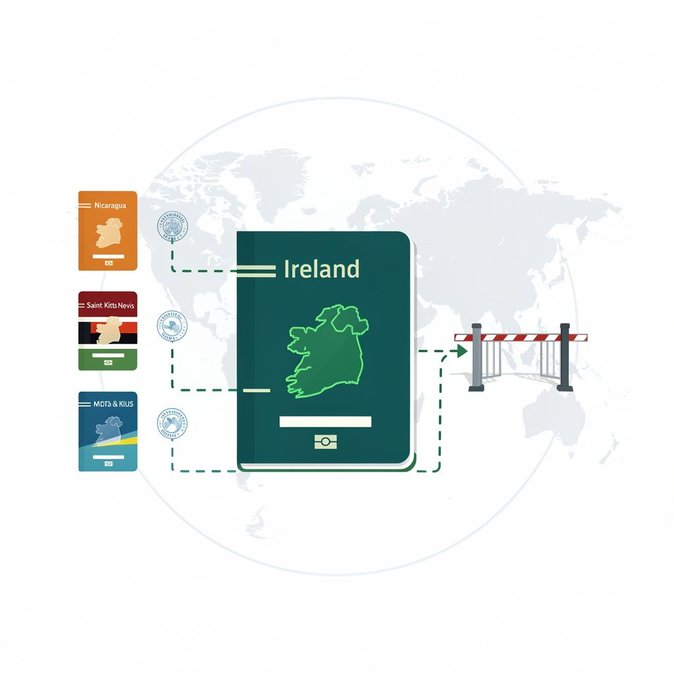
Ireland imposes visa requirement on Nicaragua, Saint Kitts & Nevis and Saint Lucia nationals from 15 June