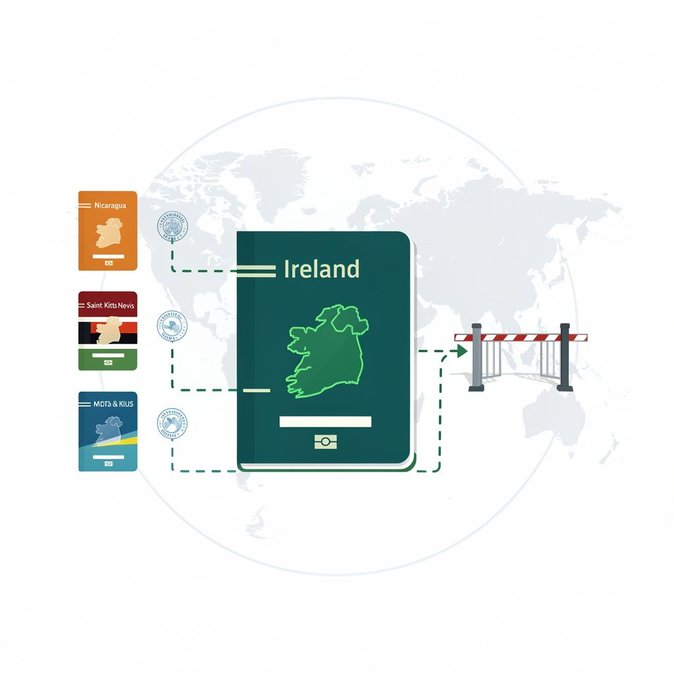
Nationals of Nicaragua, Saint Kitts & Nevis and Saint Lucia are now subject to Irish visa requirements for all travel to the State, following a Statutory Instrument signed by Minister for Migration Colm Brophy. The rule took legal effect at 00:01 on 15 June 2026. Transitional arrangements apply only to travellers who booked flights before the cut-off and will arrive before 14 July; they must carry proof of booking and documentary evidence of purpose of stay. The change aligns Ireland with the UK, which already requires visas from the three Caribbean nations and from Nicaragua. Officials say it closes an ‘asymmetry’ that could be exploited by travellers entering the Common Travel Area through Dublin and continuing to Britain without clearance. Irish consulates in Mexico City and Port of Spain have been designated as primary processing posts; time-to-decision is expected to average four weeks. For corporates, the impact is modest but immediate: cruise-ship crew swaps in Cork and medical-device training visits from Costa Rica-based regional hubs often rely on Caribbean and Central American passport holders. Employers should verify nationality during booking and factor visa lead-times into scheduling. Where short-notice travel is unavoidable, companies can request expedition, but the Department of Foreign Affairs has indicated that humanitarian grounds—not business urgency—will govern prioritisation. Immigration advisers also warn that the move may foreshadow a broader review of Ireland’s visa-exempt list, particularly for countries with low Schengen-visa refusal rates but rising overstay statistics in the CTA. Global-mobility teams should monitor official notices for further additions and proactively collect passport scans early in the assignment-planning cycle. Travellers already in Ireland on visa-free status remain unaffected until their authorised 90-day stay expires, provided they do not leave and seek re-entry. Overstayers face removal and a mandatory ‘cooling-off’ period before a new visa can be issued—penalties that can jeopardise future assignments across the EU.
Source: EIN Presswire
How VisaHQ can help
VisaHQ simplifies the visa application process for individuals and businesses. Check current travel requirements, prepare the required documents and manage your application online through the VisaHQ Ireland portal.More From Ireland
View all
EU Migration & Asylum Pact takes effect – Irish employers urged to audit mobility programmes

UK launches intensified immigration-enforcement sweep in Northern Ireland, raising stakes for Ireland-UK CTA travellers