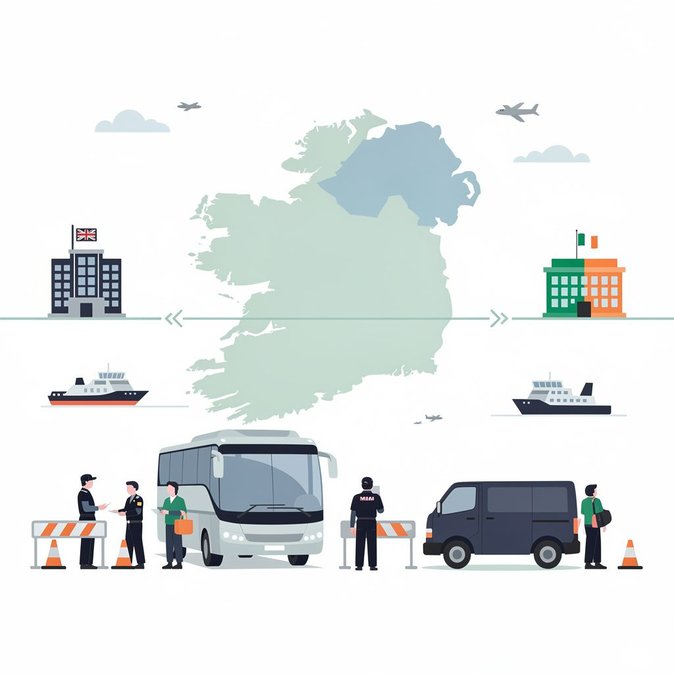
The UK Home Office has announced a significant expansion of immigration-enforcement activity in Northern Ireland, citing a 16 % jump in irregular arrivals via the open land border with the Republic. According to figures released on 15 June 2026, more than 2,680 intelligence-led operations have taken place since the Labour government took office, resulting in roughly 2,230 detentions or arrests. Most operations fall under ‘Operation Gull’, a long-running joint initiative between Border Force and the Police Service of Northern Ireland (PSNI) at Belfast’s ports and airports. The Home Office says over 70 % of all enforcement outcomes in the region are linked to the operation, with Romanian, Albanian and Afghan nationals the most frequently intercepted. Officials claim that organised smuggling groups are exploiting the fact that British and Irish citizens can move freely under the Common Travel Area (CTA), while non-EEA nationals often face no systematic passport checks when travelling by bus, ferry or domestic flight within the island. Dublin reacted cautiously. A Department of Justice spokesperson told GMN that Ireland “shares responsibility for maintaining the integrity of the CTA” but warned that heavy-handed UK measures could push irregular migrants southwards. Taoiseach Micheál Martin has called for enhanced real-time data-sharing between the Home Office, INIS and An Garda Síochána rather than fixed checkpoints on the border, which would breach the 1998 Good Friday Agreement. For employers running cross-border projects, the message is clear: ensure that third-country nationals posted to Northern Ireland or the Republic hold the correct UK or Irish permissions. Mobility managers should expect more spot-checks on company buses, site vehicles and hospitality venues. Irish-registered carriers may also receive additional ‘Information Requests’ under Section 40 of the UK Immigration Act, seeking passenger manifests for services terminating in Belfast but originating in Dublin. Legal advisers warn that employees stopped in Northern Ireland without proof of UK immigration status risk summary removal back to the Republic, even if they are legally resident in Ireland. HR teams should therefore provide physical or digital copies of Irish residence permissions (IRP cards) and brief staff on CTA travel requirements, particularly where family members hold different nationalities.
Source: The Economic Times
How VisaHQ can help
VisaHQ simplifies the visa application process for individuals and businesses. Check current travel requirements, prepare the required documents and manage your application online through the VisaHQ Ireland portal.More From Ireland
View all
EU Migration & Asylum Pact takes effect – Irish employers urged to audit mobility programmes
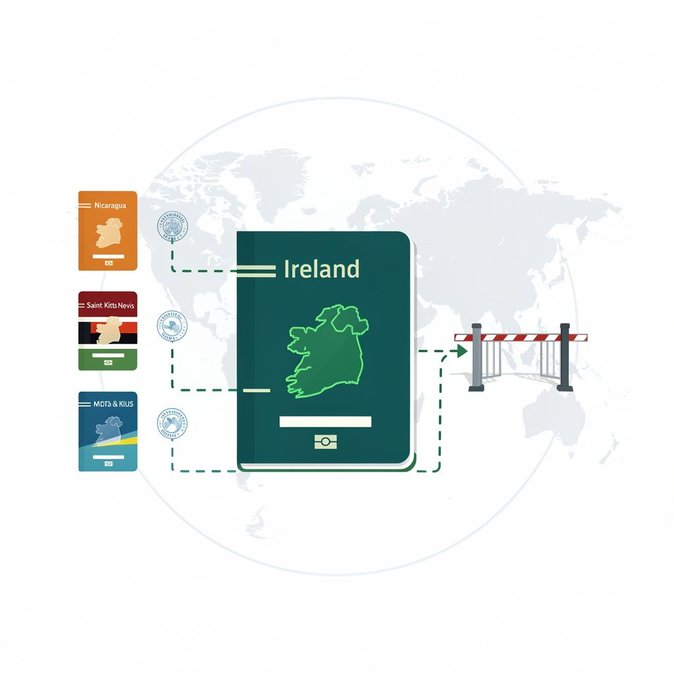
Ireland imposes visa requirement on Nicaragua, Saint Kitts & Nevis and Saint Lucia nationals from 15 June