
The European Union’s long-awaited Migration & Asylum Pact formally entered into application on 12 June 2026, introducing a single set of border-screening, asylum-processing and return rules across the bloc. Although Ireland already operates its own Common Travel Area (CTA) with the United Kingdom and is outside Schengen, it is bound by key elements of the Pact in the areas of asylum procedures, Eurodac data-sharing and returns cooperation. Irish government officials confirmed to Global Mobility News that the Department of Justice has created an inter-agency task-force to map every point at which the new EU rules interact with national law. Priority actions over the next six months include upgrading the International Protection Office’s case-management system so that the expanded Eurodac biometric dataset (now including facial images) can be transmitted within the Pact’s new 72-hour deadline, and drafting regulations to give statutory effect to the Pact’s eight-month limit for most asylum decisions. For multinationals, the biggest near-term impact is the Pact’s mandatory “solidarity mechanism”. While frontline Mediterranean states will continue to receive most new arrivals, all member-states – including Ireland – must now contribute through relocations, financial support or operational assistance. The Department of Enterprise has signalled that employers hiring beneficiaries of international protection will be able to use a fast-track Stamp 4 permission, but HR teams will first have to demonstrate that onboarding and safeguarding procedures meet new EU reception-standards. Travel managers should also note that the Pact introduces systematic security and health screening for anyone intercepted crossing an external EU border irregularly. Although Ireland has no land frontier with non-EU states, Dublin Airport will apply the same checks to passengers refused entry under the Carrier Liability Scheme. Airlines operating direct long-haul services into Ireland have been told to expect more liaison requests from the Irish Naturalisation and Immigration Service (INIS) when travel documents appear suspicious. Finally, compliance professionals are advised to audit intra-EU assignment policies. Because the Pact clarifies which country is responsible for examining an asylum claim, overstaying assignees who attempt to lodge protection applications in a second member-state are likely to be transferred back more swiftly. Legal experts predict that this will reduce the window during which a failed posted-worker application can be converted into a protection claim – a scenario that occasionally arises in the construction and agri-food sectors.
Source: Business Standard
How VisaHQ can help
VisaHQ simplifies the visa application process for individuals and businesses. Check current travel requirements, prepare the required documents and manage your application online through the VisaHQ Ireland portal.More From Ireland
View all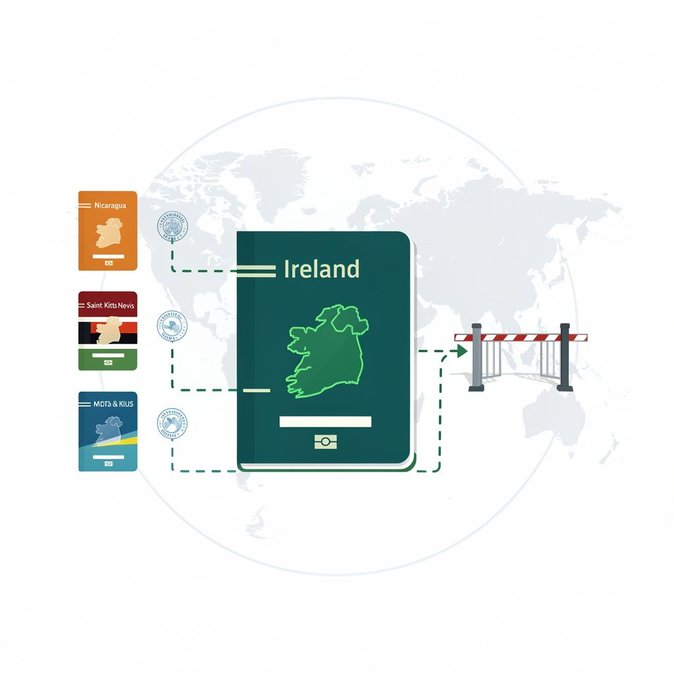
Ireland imposes visa requirement on Nicaragua, Saint Kitts & Nevis and Saint Lucia nationals from 15 June

UK launches intensified immigration-enforcement sweep in Northern Ireland, raising stakes for Ireland-UK CTA travellers