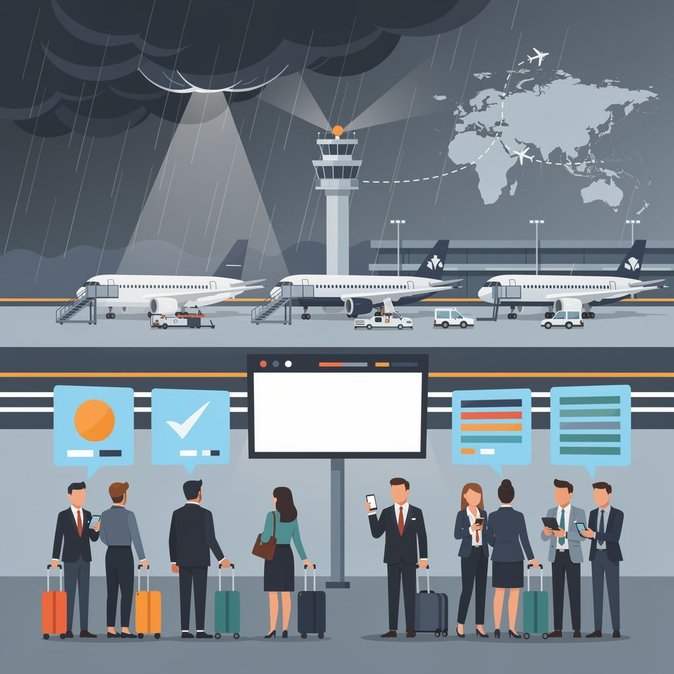
India’s largest carrier, IndiGo, warned passengers on 15 June 2026 to expect cascading delays after a sudden dust storm and thunder-cell forced ground stops at Indira Gandhi International Airport (DEL). The airline’s network control centre said more than 60 rotations—including high-yield corporate shuttles to Mumbai, Hyderabad and Bengaluru—were likely to see rolling reschedules throughout the day. The India Meteorological Department placed Delhi under a red weather alert, recording winds of up to 92 km/h at Palam. While Delhi’s three runways remained technically open, low visibility and lightning protocols required greater separation between aircraft, throttling arrival rates from 45 movements per hour to as low as 16. IndiGo advised travellers to use its mobile app to track re-timings and offered free rebooking within three days. Global mobility managers with tight connection windows—particularly those moving assignees onward to US or EU long-haul flights—should review contingency hotel budgets and consider rerouting through Mumbai or Hyderabad if delays persist. The Delhi disruption underscores the growing climate-resilience challenge for India’s aviation hubs. The Directorate General of Civil Aviation has already asked airlines to submit monsoon-operations plans by 30 June, including crew-duty buffers and spare aircraft provisions. Frequent flyers may see higher travel-time padding in corporate booking tools as carriers bake weather volatility into published block times. For now, IndiGo says operations are expected to normalise by early Tuesday, but warns that a second western disturbance could trigger further convective activity later in the week.
Source: The Daily Pioneer