On 12 June the European Union’s ten-part Migration and Asylum Pact formally entered into application after a two-year transition. EU Reporter summarised the key changes on 15 June, and Finnish officials confirm that the overhaul will have direct operational consequences at Finland’s external borders, reception centres and immigration service.
For companies and travellers that suddenly face a denser thicket of rules, VisaHQ can streamline much of the paperwork. The firm’s Finland portal (https://www.visahq.com/finland/) offers real-time updates on entry formalities, online filing tools and optional concierge support—useful if you need to secure appointments, arrange biometrics or track residence-permit renewals in the new system.
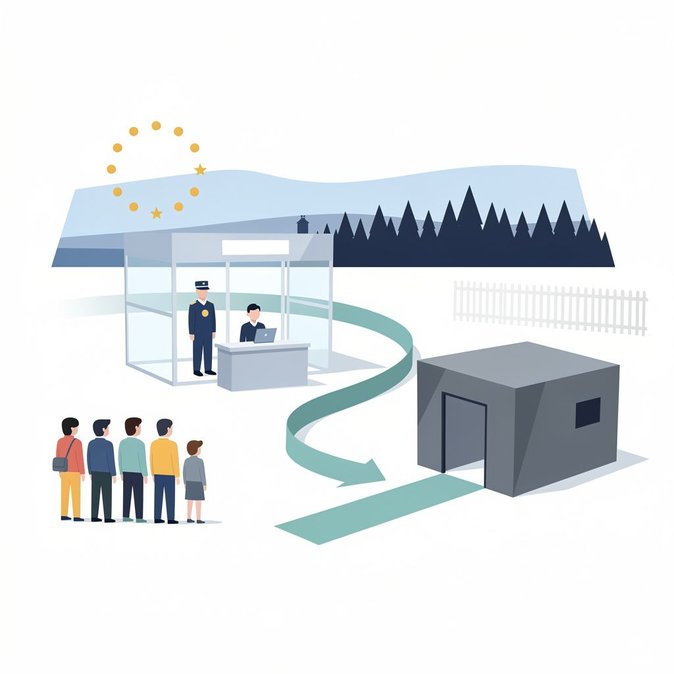
The Pact introduces mandatory screening of all irregular arrivals within seven days (three days for persons apprehended inland), coupled with harmonised security, health and vulnerability checks. For Finland’s Border Guard this means new biometric equipment at the land frontier with Russia and reinforced procedures at Helsinki and regional airports. The goal is to plug gaps that previously allowed asylum seekers to move onwards before registration. A second pillar is the accelerated border-procedure for applicants deemed unlikely to qualify for protection. Such cases must be processed while the person remains in a closed border facility. Finland plans to adapt an existing transit centre near Vantaa for this purpose, pending parliamentary approval of funding later this summer. Solidarity mechanisms in the Pact may provide relief if arrivals spike at the eastern border: other EU states will be obliged either to relocate asylum seekers from Finland or to contribute financially. Conversely, Finland could be asked to help Mediterranean partners if flows shift south. Human-resources teams sending staff to Finland should monitor possible delays in residence-permit appointments as Migri reallocates case-workers to the new border track. Employers may also need to update compliance checklists: the Reception Conditions Directive now guarantees free legal aid and clearer reporting obligations, improving transparency but adding paperwork for sponsoring companies.
For companies and travellers that suddenly face a denser thicket of rules, VisaHQ can streamline much of the paperwork. The firm’s Finland portal (https://www.visahq.com/finland/) offers real-time updates on entry formalities, online filing tools and optional concierge support—useful if you need to secure appointments, arrange biometrics or track residence-permit renewals in the new system.
The Pact introduces mandatory screening of all irregular arrivals within seven days (three days for persons apprehended inland), coupled with harmonised security, health and vulnerability checks. For Finland’s Border Guard this means new biometric equipment at the land frontier with Russia and reinforced procedures at Helsinki and regional airports. The goal is to plug gaps that previously allowed asylum seekers to move onwards before registration. A second pillar is the accelerated border-procedure for applicants deemed unlikely to qualify for protection. Such cases must be processed while the person remains in a closed border facility. Finland plans to adapt an existing transit centre near Vantaa for this purpose, pending parliamentary approval of funding later this summer. Solidarity mechanisms in the Pact may provide relief if arrivals spike at the eastern border: other EU states will be obliged either to relocate asylum seekers from Finland or to contribute financially. Conversely, Finland could be asked to help Mediterranean partners if flows shift south. Human-resources teams sending staff to Finland should monitor possible delays in residence-permit appointments as Migri reallocates case-workers to the new border track. Employers may also need to update compliance checklists: the Reception Conditions Directive now guarantees free legal aid and clearer reporting obligations, improving transparency but adding paperwork for sponsoring companies.