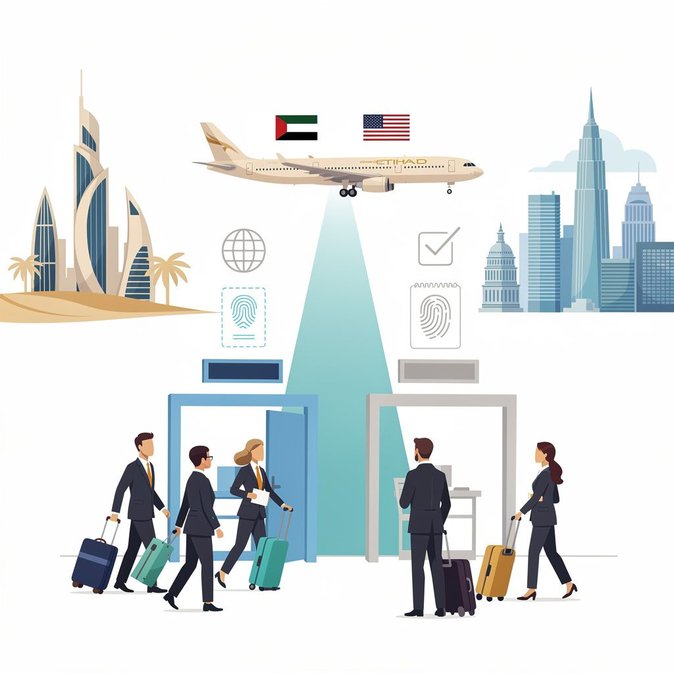
Abu Dhabi’s brand–new Zayed International Airport has taken a decisive step toward cementing the capital’s status as a truly global hub with the formal inauguration of a full U.S. Customs and Border Protection (CBP) Pre-clearance facility. Travellers on all 35 weekly Etihad Airways flights to Boston, Chicago, New York and Washington DC can now clear American immigration, customs and agriculture inspection before departure and arrive in the United States as domestic passengers—skipping long queues, making tight connections and avoiding baggage re-checks. The ribbon-cutting ceremony on 16 June brought together Abu Dhabi Airports CEO Elena Sorlini, U.S. Ambassador Martina Strong, Etihad CEO Antonoaldo Neves and senior CBP officials. Speakers highlighted the strategic value of the only CBP post in the Middle East and Asia: it deepens people-to-people links, supports the UAE’s visitor-economy ambitions and gives Etihad a clear commercial edge on trans-Atlantic routes. The new lounge inside the pre-clearance zone—due to open by year-end—will reinforce that advantage for premium travellers. Beyond convenience, the facility is designed for growth. Zayed International handled more than 24 million passengers in its first twelve months of operation; Etihad is ramping up frequencies and expects U.S. traffic to rebound quickly once geopolitics stabilise. According to CBP Deputy Executive Assistant Commissioner Judson Murdock, the partnership strengthens security while “promoting tourism, cultural exchange and international business.” For multinationals, the upgrade simplifies duty-travel planning: employees can book onward domestic U.S. flights without the typical two-hour immigration buffer and enjoy seamless through-check of baggage. Mobility managers should, however, remind staff that the same ESTA or U.S. visa rules apply, and secondary inspection remains possible. Employers moving talent via Abu Dhabi may also leverage the city’s fast-track Golden Visa options and expanding free-zone ecosystem. From a policy perspective, the UAE–U.S. collaboration underscores how bilateral aviation agreements can dovetail with broader economic diplomacy. The pre-clearance model—already proven in Ireland, Canada and parts of the Caribbean—gives Abu Dhabi a marketing hook as it competes with Dubai for long-haul transfer traffic and with Doha for North-America–bound flows. More importantly, it shows how physical border-control functions can migrate offshore in support of smoother, tech-enabled passenger journeys—an approach GCC neighbours such as Saudi Arabia are studying for their own megahub projects.
Source: The Gulf Time