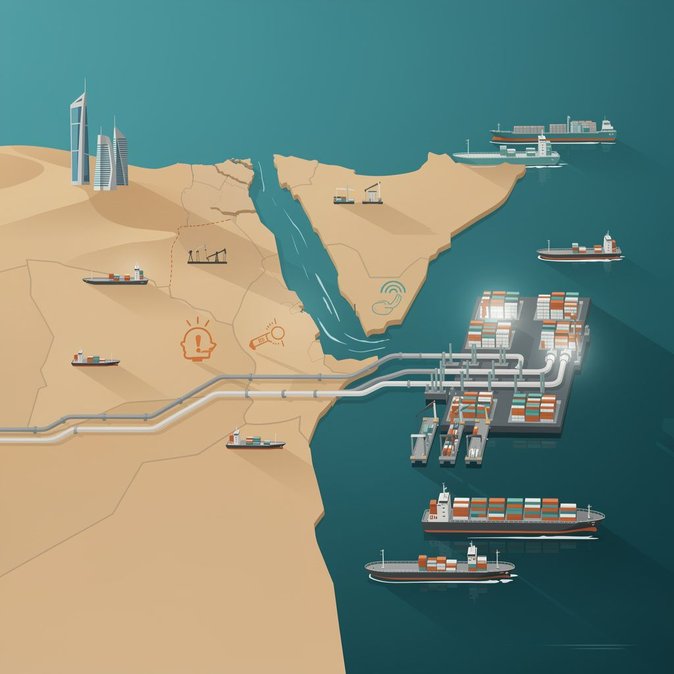
Speaking to Bloomberg on 17 June 2026, Minister of Foreign Trade Dr Thani Al Zeyoudi confirmed that the government has begun feasibility work on a sweeping logistics project that would allow the country to export crude, LNG and containerised goods without transiting the Strait of Hormuz. The announcement was widely reported by The Business Times later the same day. Key components include accelerated expansion of Fujairah, Khor Fakkan and Dibba ports; construction of at least one brand-new harbour on the Gulf of Oman; and parallel investment in additional oil, gas and multi-product pipelines linking eastern terminals to Abu Dhabi production fields. The plan is a direct response to the three-month closure of Hormuz during the Iran–US conflict, which forced Gulf producers to reroute energy exports, pay war-risk premiums and rely heavily on airfreight for critical imports. Although an interim peace deal has reopened the waterway to limited traffic, Al Zeyoudi said the UAE would pursue “zero Hormuz dependency” regardless of the strait’s status. For multinationals that depend on the Emirates as a distribution hub, the implications are profound. If executed, the project will diversify entry points for equipment and raw materials, reducing exposure to chokepoint disruptions and insurance surcharges. It will also create new maritime-to-rail corridors across the desert—an important consideration for mobility teams orchestrating large-scale factory moves or humanitarian deployments that require seamless customs clearance. Yet the shift comes with trade-compliance challenges. Eastern ports sit outside the Gulf Cooperation Council’s common maritime security umbrella, and companies will need to re-align authorised economic-operator (AEO) registrations, bonded-warehouse agreements and certificate-of-origin workflows. Overland trucking from Fujairah to Dubai adds cost and paperwork (cross-emirate transit manifests, re-sequenced last-mile deliveries) that supply-chain managers must model into budgets. While timelines and price tags remain vague, the Energy Ministry is already fast-tracking a second crude pipeline to Fujairah and has hinted at a third. Mobility advisers should monitor upcoming public-private-partnership tenders; labour-import quotas and project visas for infrastructure specialists are likely to be relaxed, opening short-term assignment opportunities in civil engineering, tunnelling and heavy haulage.