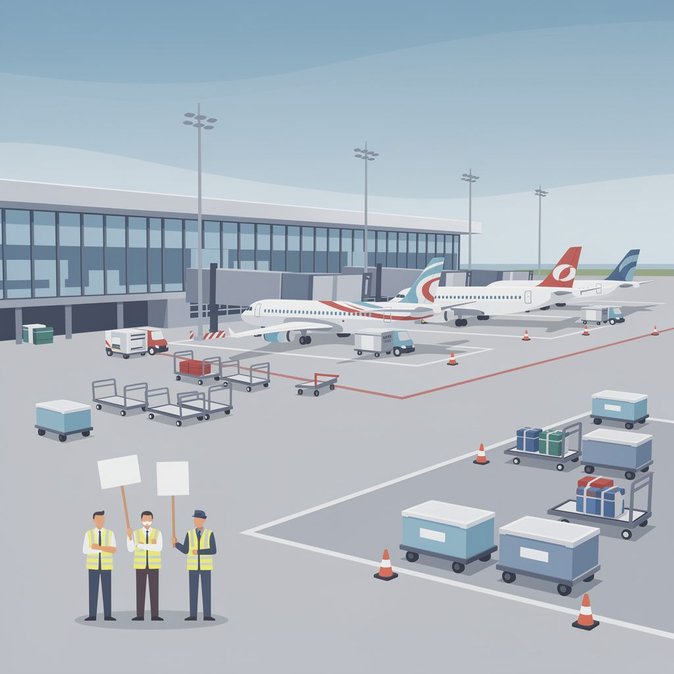
A brief lull in the labour dispute between ground-handling provider Aviapartner and its workforce ended late on 16 June after mediation talks collapsed. Staff in the company’s “operations” unit—responsible for aircraft dispatch, ramp coordination and load-sheet preparation—downed tools for a second consecutive day, accusing management of introducing a new pay system without consultation and ignoring long-standing safety and workload concerns. Although Monday’s spontaneous strike had disrupted around 60 departures, Tuesday’s renewed action was more targeted. Check-in, baggage-sorting and passenger-service desks continued operating, but ramp activity was reportedly at a “95 % stand-still”, forcing airlines such as Ryanair, Brussels Airlines and TAP Air Portugal to reshuffle gate allocations and call in contingency teams. The airport authority warned travellers to monitor flight status closely and arrive early, but said the overall flight schedule remained “largely intact” thanks to alternative handler Swissport picking up some duties. Unions ACV-CSC, ABVV-FGTB and SYNOVA said they had tabled five demands: a transparent job-classification grid, retroactive pay adjustments, guaranteed rest breaks, mandatory safety briefings and a joint review of the new performance-based bonus scheme. Aviapartner claims agreement has been reached on four of the points and that formal talks on the fifth can start next week, yet workers insist negotiations must resume sooner. The Federal Public Service for Employment has offered further mediation on 18 June; failure to agree could widen the strike to baggage and gate teams, posing a bigger threat to the busy summer schedule. For global-mobility managers the incident is a reminder that Belgium’s traditionally consensus-based industrial relations have become more volatile as cost pressures rise. Multinational firms routing assignees or conference delegates through Brussels should build extra dwell time into itineraries, keep mobile numbers on PNRs for re-booking notifications, and circulate contingency guidance on hand-luggage only travel. Relocation providers are also advised to brief incoming assignees on possible arrival delays and to have back-up airport-transfer drivers on call. While Aviapartner and the unions both say they prefer dialogue to escalation, the episode underlines the fragility of airport operations when one of only two licensed handlers stops work. The outcome of Thursday’s talks will be closely watched by airlines, travel-risk insurers and mobility teams preparing for the peak July-August period.
Source: The Brussels Times