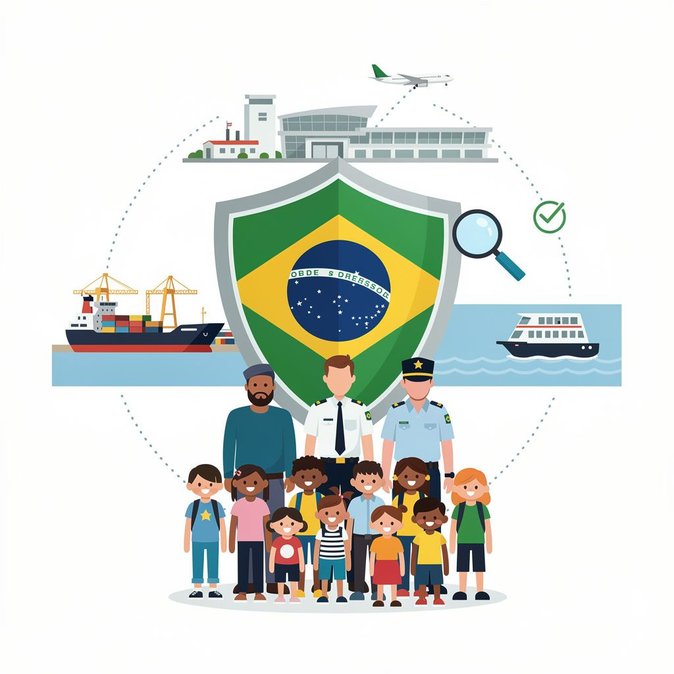
Also on 16 June, the Ministry of Ports and Airports (MPor) signed a Technical Cooperation Agreement with the National Council of Public Prosecutors (CNMP) and the Military Public Prosecutor’s Office to step up the fight against trafficking of children, adolescents and women in the country’s maritime and air terminals.
Whether you’re a mobility manager coordinating family relocations or an individual gearing up for international travel, VisaHQ can streamline the visa and travel-document process. Its Brazil-specific platform (https://www.visahq.com/brazil/) offers up-to-date entry requirements, digital applications and live support, helping travellers clear the enhanced port and airport controls outlined in this initiative.
Nicknamed “Manas que Protegem”, the pact standardises referral protocols, establishes compulsory training for ground-handling staff and creates joint inspection teams at 17 seaports and 32 airports. Under the agreement, MPor will distribute a new Guide for the Protection of Childhood and Youth and install child-friendly interview rooms modelled on UN recommended practices. Airlines will be required to update their crew briefings before the year-end IATA schedule change. For global mobility practitioners this means tighter documentary checks at cargo and cruise terminals such as Santos, Itajaí and Rio’s Pier Mauá, as well as at secondary airports used for corporate shuttles. Companies relocating employees with families should allow extra processing time and be prepared for ad-hoc questioning by multi-agency teams. The initiative complements MJSP’s airport campaign launched the same day, signalling a coordinated federal push ahead of the school-holiday exodus and the expected 80 000 Brazilian fans travelling to North America for the FIFA World Cup.
Whether you’re a mobility manager coordinating family relocations or an individual gearing up for international travel, VisaHQ can streamline the visa and travel-document process. Its Brazil-specific platform (https://www.visahq.com/brazil/) offers up-to-date entry requirements, digital applications and live support, helping travellers clear the enhanced port and airport controls outlined in this initiative.
Nicknamed “Manas que Protegem”, the pact standardises referral protocols, establishes compulsory training for ground-handling staff and creates joint inspection teams at 17 seaports and 32 airports. Under the agreement, MPor will distribute a new Guide for the Protection of Childhood and Youth and install child-friendly interview rooms modelled on UN recommended practices. Airlines will be required to update their crew briefings before the year-end IATA schedule change. For global mobility practitioners this means tighter documentary checks at cargo and cruise terminals such as Santos, Itajaí and Rio’s Pier Mauá, as well as at secondary airports used for corporate shuttles. Companies relocating employees with families should allow extra processing time and be prepared for ad-hoc questioning by multi-agency teams. The initiative complements MJSP’s airport campaign launched the same day, signalling a coordinated federal push ahead of the school-holiday exodus and the expected 80 000 Brazilian fans travelling to North America for the FIFA World Cup.