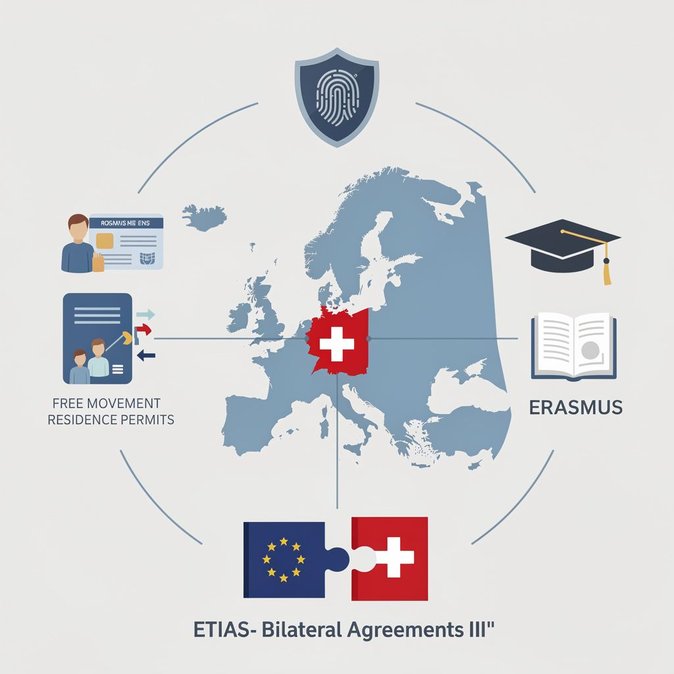
In conclusions published in Brussels on 16 June, EU member states declared that the draft ‘Bilateral Agreements III’ package is the sole workable basis for future relations with Switzerland, warning that the current patchwork of sectoral accords is eroding. The Council’s first formal assessment since 2019 states that, without the new deal, existing agreements on free movement of persons, land transport and aviation will gradually lose legal certainty. For international employers the message is clear: Switzerland’s privileged market access and reciprocal freedom-of-movement regime hinge on Bern ratifying the package in parliament and a likely referendum campaign in 2027. HR and mobility departments should prepare for possible changes to residence-permit quotas, social-security coordination and posted-worker notification rules included in the draft texts. The Council also explicitly expects Switzerland to join the Erasmus+ education programme from January 2027, a move welcomed by multinational companies that rely on intra-EU graduate mobility and dual-degree talent pipelines. The text further urges Switzerland to participate fully in the upcoming Entry/Exit System (EES) and ETIAS travel-authorisation scheme, meaning employers will need to budget for ETIAS fees for third-country assignees entering Switzerland via EU airports. Swiss negotiators have signalled broad political backing in Bern but must still convince sceptical cantons and the right-wing Swiss People’s Party, which is already gearing up for a ‘Suisse Libre’ referendum campaign. If ratification falters, business travellers could face fragmented border formalities and airlines may lose automatic traffic rights under the 2002 aviation accord. Global-mobility leaders should monitor the legislative calendar: the Federal Council plans to submit the accord for consultation after the summer recess, with parliamentary debate likely in early 2027 and a popular vote in Q3 2027.
Source: SWI swissinfo.ch
How VisaHQ can help
VisaHQ simplifies the visa application process for individuals and businesses. Check current travel requirements, prepare the required documents and manage your application online through the VisaHQ Switzerland portal.More From Switzerland
View all
Switzerland Closes Airspace and Deploys 2,000 Troops for 19 June U.S.–Iran Summit at Bürgenstock

Security lockdown on Switzerland’s Bürgenstock triggers road, public-transport and air-space restrictions ahead of historic US-Iran signing