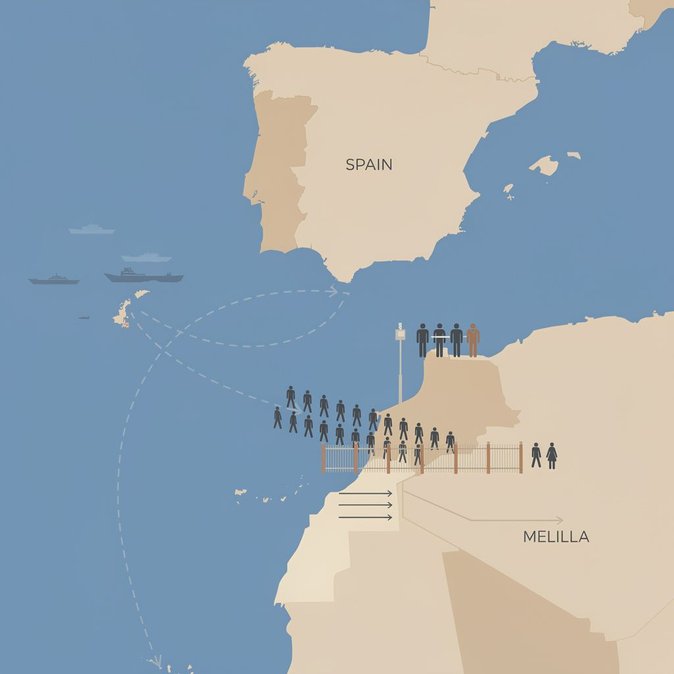
Spain has recorded 10,701 irregular arrivals between 1 January and 15 June 2026, down 36 % from the same period last year, according to the Interior Ministry’s bi-weekly report published on 16 June. Maritime arrivals plunged almost 49 %, driven by a 71 % drop in landings in the Canary Islands, traditionally the busiest gateway. The data confirm a trend officials attribute to reinforced patrols with Senegal and Mauritania, faster asylum decisions and increased returns under bilateral agreements. Conversely, land crossings into Ceuta and Melilla more than tripled to 2,586, reflecting shifting routes along the western Mediterranean land border.
Whether you are a mobility manager relocating staff to Spain or an individual traveler adapting plans to these evolving border dynamics, VisaHQ can simplify the paperwork. The company’s online platform (https://www.visahq.com/spain/) offers real-time visa requirements, electronic application tools and optional courier services, ensuring documents keep pace with policy shifts.
For corporate security managers, the figures matter because reduced boat traffic eases pressure on reception centres near ports and airports, shortening processing queues that sometimes delay deportations of overstayed assignees. Employers operating in Ceuta’s logistics hub, however, should prepare for tighter checks as authorities respond to the spike in land entries. NGOs caution that the headline decline masks dangerous departures from Algeria directly to the Balearics—arrivals there are only 4 % lower year-on-year—and urge Madrid not to relax search-and-rescue capacity. The ministry plans to redeploy patrol vessels from the Canaries to the Strait of Gibraltar ahead of the peak summer season. Business-travel insurers may see lower premiums on voyages via the Atlantic route but should monitor policy wording around force majeure if migrant-related port closures occur in the Strait corridor.
Whether you are a mobility manager relocating staff to Spain or an individual traveler adapting plans to these evolving border dynamics, VisaHQ can simplify the paperwork. The company’s online platform (https://www.visahq.com/spain/) offers real-time visa requirements, electronic application tools and optional courier services, ensuring documents keep pace with policy shifts.
For corporate security managers, the figures matter because reduced boat traffic eases pressure on reception centres near ports and airports, shortening processing queues that sometimes delay deportations of overstayed assignees. Employers operating in Ceuta’s logistics hub, however, should prepare for tighter checks as authorities respond to the spike in land entries. NGOs caution that the headline decline masks dangerous departures from Algeria directly to the Balearics—arrivals there are only 4 % lower year-on-year—and urge Madrid not to relax search-and-rescue capacity. The ministry plans to redeploy patrol vessels from the Canaries to the Strait of Gibraltar ahead of the peak summer season. Business-travel insurers may see lower premiums on voyages via the Atlantic route but should monitor policy wording around force majeure if migrant-related port closures occur in the Strait corridor.