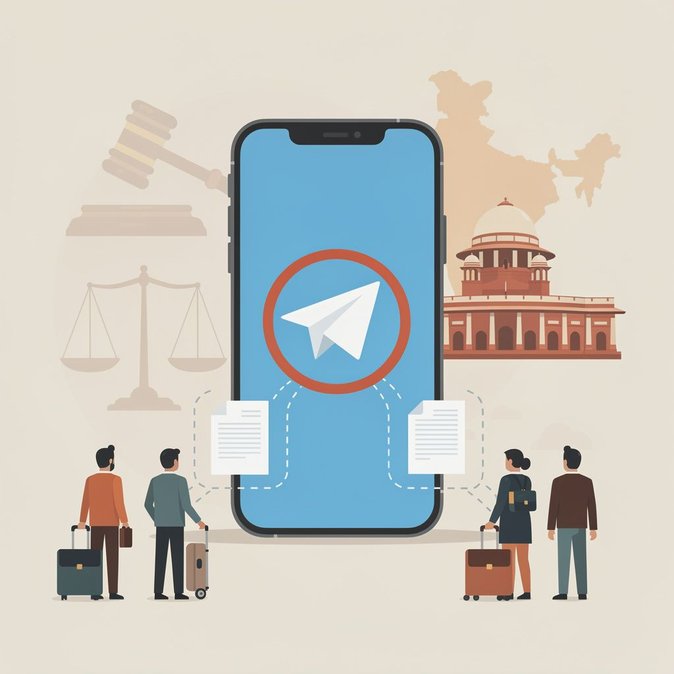
Instant-messaging platform Telegram moved the Delhi High Court on 17 June after the Indian government ordered telecom operators and app stores to block the service nationally until 22 June. The Ministry of Electronics & Information Technology (MeitY) says the freeze is aimed at curbing organised cheating networks ahead of Sunday’s re-examination of the highly competitive National Eligibility-cum-Entrance Test (NEET-UG). Telegram’s petition—filed under Article 226 of the Constitution—argues that the blocking directive is disproportionate and violates both freedom of speech and the principles of natural justice because the company was given no prior notice. The app has more than 150 million Indian users, including thousands of expatriates and foreign assignees who rely on the service to coordinate travel, housing and compliance paperwork while in India. Google and Apple have already removed Telegram from their Indian app stores; existing users report intermittent outages as internet service providers implement the block. For global-mobility managers the disruption is more than an IT inconvenience. Corporate travellers increasingly use encrypted channels to exchange passport scans, flight itineraries and accommodation documents with relocation providers. A sudden suspension can derail onboarding timelines, especially in smaller cities where Telegram remains more popular than WhatsApp among student and tech communities. Legal analysts note that the case will test whether India’s amended Information Technology Rules—which allow emergency blocking without immediate publication of the order—can withstand constitutional scrutiny. The court has issued notice to the Centre to file its reply within 48 hours, setting up an expedited hearing because the ban is time-bound. While the restriction is scheduled to lapse next week, observers warn that it could become a precedent for other pre-emptive shutdowns linked to high-stakes exams or security events. Companies with travelling staff are therefore revisiting their communication-contingency plans and reminding employees to keep alternate channels such as Signal, Slack or MS Teams active when operating in India.