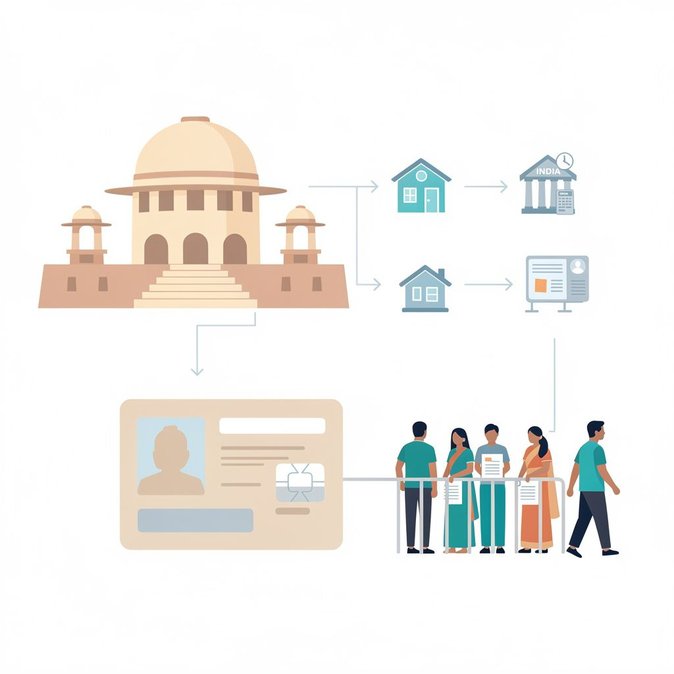
India’s Supreme Court set the stage for another round of scrutiny of the national biometric identity system on 16 June when a bench headed by Chief Justice Surya Kant issued notices to the Union government, all states and Union Territories on a petition that argues Aadhaar should be used strictly as proof of identity and not as evidence of citizenship, domicile or address. The public-interest plea claims that government agencies, banks and local election officials increasingly demand Aadhaar as de-facto proof of nationality, despite earlier court rulings that limited its scope.
At this juncture, global mobility and HR professionals can leverage services like VisaHQ to navigate the shifting document landscape. VisaHQ’s India portal (https://www.visahq.com/india/) offers up-to-date guidance on visa categories, FRRO registration, OCI processing and ancillary paperwork, helping companies and their assignees identify acceptable alternatives when Aadhaar is either unavailable or no longer required.
Why does this matter to global mobility managers? Foreign employees and expatriate assignees are regularly asked to furnish Aadhaar when opening salary bank accounts, leasing apartments, or procuring local SIM cards. If the Court ultimately reins in such practices, companies may be able to rely once again on passports, visas and FRRO/OCI documents as primary evidence—simplifying onboarding and reducing the need for staff to obtain Aadhaar numbers that they may not legally require. It could also curb the risk of inadvertent data-privacy breaches stemming from unnecessary biometric collection. From a compliance perspective, HR teams should review KYC checklists, vendor agreements and internal policies that reference Aadhaar. Multinational firms may need to brief payroll providers and landlords on alternative documentation that foreign nationals can furnish if Aadhaar usage is curtailed. For Indian citizens working remotely from abroad, the petition—if upheld—could likewise make it easier to update overseas addresses without jeopardising the validity of their Aadhaar record. The Court has given the Centre and states six weeks to file replies. Observers expect the Union government to defend the existing practice, citing fraud-prevention advantages. A definitive ruling may still be months away, but mobility stakeholders should begin mapping scenarios and educating business units about possible documentation changes.
At this juncture, global mobility and HR professionals can leverage services like VisaHQ to navigate the shifting document landscape. VisaHQ’s India portal (https://www.visahq.com/india/) offers up-to-date guidance on visa categories, FRRO registration, OCI processing and ancillary paperwork, helping companies and their assignees identify acceptable alternatives when Aadhaar is either unavailable or no longer required.
Why does this matter to global mobility managers? Foreign employees and expatriate assignees are regularly asked to furnish Aadhaar when opening salary bank accounts, leasing apartments, or procuring local SIM cards. If the Court ultimately reins in such practices, companies may be able to rely once again on passports, visas and FRRO/OCI documents as primary evidence—simplifying onboarding and reducing the need for staff to obtain Aadhaar numbers that they may not legally require. It could also curb the risk of inadvertent data-privacy breaches stemming from unnecessary biometric collection. From a compliance perspective, HR teams should review KYC checklists, vendor agreements and internal policies that reference Aadhaar. Multinational firms may need to brief payroll providers and landlords on alternative documentation that foreign nationals can furnish if Aadhaar usage is curtailed. For Indian citizens working remotely from abroad, the petition—if upheld—could likewise make it easier to update overseas addresses without jeopardising the validity of their Aadhaar record. The Court has given the Centre and states six weeks to file replies. Observers expect the Union government to defend the existing practice, citing fraud-prevention advantages. A definitive ruling may still be months away, but mobility stakeholders should begin mapping scenarios and educating business units about possible documentation changes.