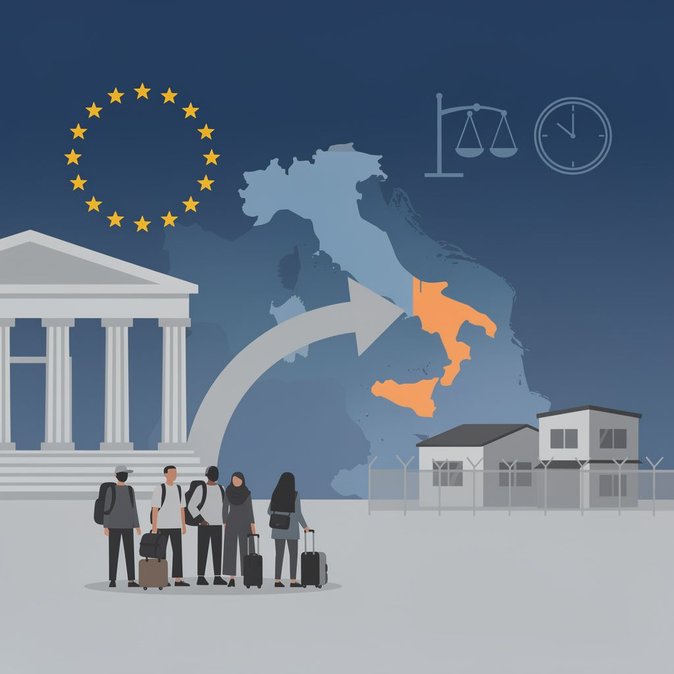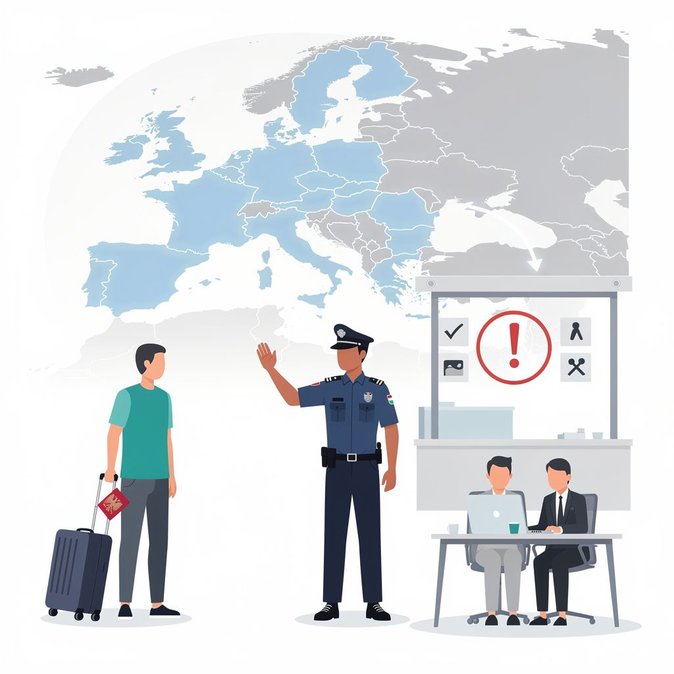
Border Police at the Tarvisio crossing point on Italy’s frontier with Austria apprehended an Albanian national on 16 June 2026 after discovering that he had re-entered the Schengen area despite a five-year expulsion order issued last year. According to the police bulletin, officers conducting routine passport checks flagged the individual’s identity in the Schengen Information System (SIS) and placed him under arrest for re-entry after expulsion—a criminal offence under Article 13(13) of Italy’s Immigration Consolidation Act. The man was taken before a preliminary-investigation judge the same afternoon; a fast-track hearing confirmed the arrest and authorised immediate deportation. He was escorted to Trieste airport for a charter flight to Tirana, a procedure that Italian authorities have accelerated in cooperation with the Albanian Interior Ministry since the two countries signed a readmission protocol in 2025. Incidents of attempted re-entry by previously expelled third-country nationals have risen 18 % year-on-year at Italy’s northern land borders, according to Interior Ministry statistics. The spike is widely attributed to the EU’s new Entry/Exit System, which makes it harder to overstay on a Schengen visa but also highlights data-quality gaps that organised smuggling networks are beginning to exploit. For global-mobility teams, the case is a reminder that even short business visits require scrupulous verification of an assignee’s past immigration history. A client-site meeting in Austria or Germany that involves transiting Italy could trigger arrest if the traveller has an outstanding entry ban anywhere in the Schengen database. Employers are advised to include SIS checks in their pre-travel compliance workflows and to keep records of past permit cancellations or deportations when rehiring former contractors. Italian officials note that penalties for repeat offenders were tightened in the 2023 Cutro Decree, with custodial sentences of up to four years and an automatic 10-year entry ban. The Tarvisio arrest is one of the first to apply the harsher regime and underscores how land-border policing is evolving in parallel with high-profile maritime measures.
Source: Friuli Oggi