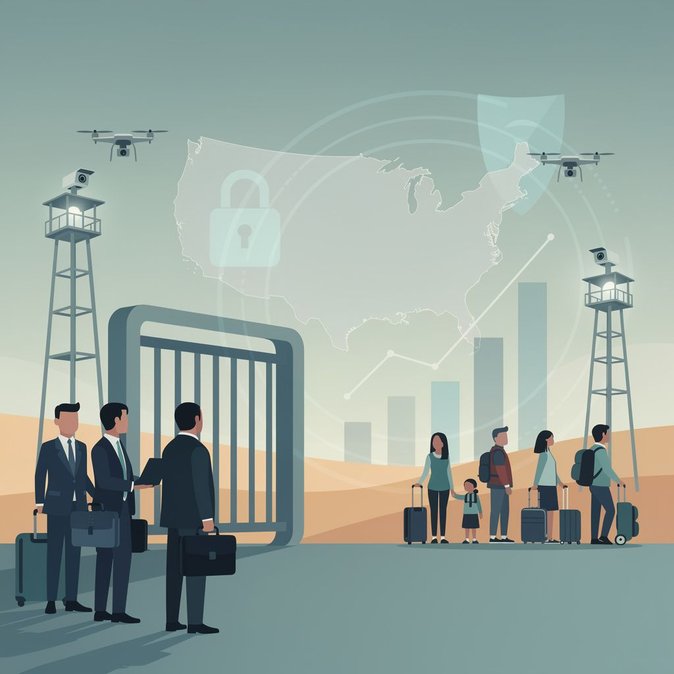
On 16 June the U.S. Senate gave final passage to the Secure America Act, providing roughly US$70 billion for immigration enforcement through FY 2029—US$38 billion for ICE and US$26 billion for Customs and Border Protection. Human Rights Watch criticised lawmakers for ignoring documented abuses, including racial profiling and excessive force in 2025 Los Angeles raids. Budget highlights: the bill funds 94,000 detention beds (up from 78,000), expands CBP’s autonomous-drone fleet and earmarks US$1.6 billion for a new biometric-exit system at all land borders by 2028. It also sets aside money for 4,500 additional Border Patrol agents and imposes quarterly detention-bed occupancy targets—a metric critics say incentivises arrests over alternatives such as remote check-ins. Political context: Immigration remains a central issue in the 2026 mid-term cycle. Supporters, led by Senate Homeland Security Chair Ron Johnson, argue the bill “closes security gaps” and curbs fentanyl smuggling. Opponents decry a lack of meaningful oversight mechanisms; an effort to attach a detainee-bill-of-rights amendment failed 48-52. Business-mobility implications: Companies that move staff across U.S. land borders should prepare for heavier enforcement and longer secondary inspections as new agents deploy.
![Congress approves US$70 billion enforcement package despite human-rights concerns]()
VisaHQ can help organizations and individual travelers adapt to these changes by securing essential visas, advising on compliance with updated biometric-exit protocols, and providing real-time alerts as DHS rules evolve; see https://www.visahq.com/united-states/ for tailored support.
Expansion of biometric exit will require assignees (including green-card holders) to submit facial scans on departure, increasing compliance complexity for frequent travellers. Next steps: The president is expected to sign the measure by week’s end. DHS must publish an implementation plan within 60 days; stakeholders should watch the Federal Register for proposed rules on drone surveillance, data retention and the detention-bed quota.

VisaHQ can help organizations and individual travelers adapt to these changes by securing essential visas, advising on compliance with updated biometric-exit protocols, and providing real-time alerts as DHS rules evolve; see https://www.visahq.com/united-states/ for tailored support.
Expansion of biometric exit will require assignees (including green-card holders) to submit facial scans on departure, increasing compliance complexity for frequent travellers. Next steps: The president is expected to sign the measure by week’s end. DHS must publish an implementation plan within 60 days; stakeholders should watch the Federal Register for proposed rules on drone surveillance, data retention and the detention-bed quota.