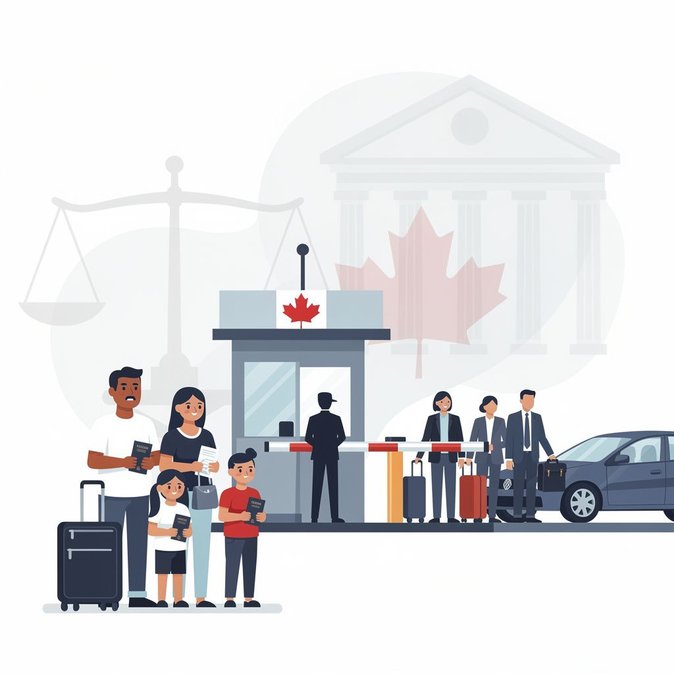
On 18 June a coalition of refugee lawyers and civil-society groups filed an application in Federal Court arguing that Canada is failing to protect asylum seekers returned to the United States under the Safe Third Country Agreement (STCA). The case centres on a Honduran family who say Canadian officers at an official land port of entry forced them to decide between family separation or being sent back together; they opted to remain together and were subsequently detained in the U.S. and deported to Honduras. The lawsuit contends that Canada has an obligation to reassess the safety of the United States for particular claimants before removal, especially given recent U.S. policy shifts on family detention and expedited removal. Plaintiffs seek a ruling that Canada must provide individual pre-removal risk assessments—or at minimum meaningful “safety-valve” interviews—rather than applying a blanket return. From a global-mobility perspective the litigation could complicate cross-border operations for companies moving employees who hold precarious immigration status in either country. Should the court order additional procedural safeguards, inspection times at high-traffic crossings such as Windsor-Detroit and Pacific Highway could lengthen, affecting just-in-time supply chains and business travel. Government lawyers have thirty days to file a response. While Ottawa defends the STCA as a cornerstone of orderly asylum management, it has pledged to “review operational guidance” in light of the filing. Companies that regularly send personnel across the border should monitor the case: a judgment striking down aspects of the STCA would have immediate operational repercussions and could trigger a renegotiation of the 20-year-old accord.