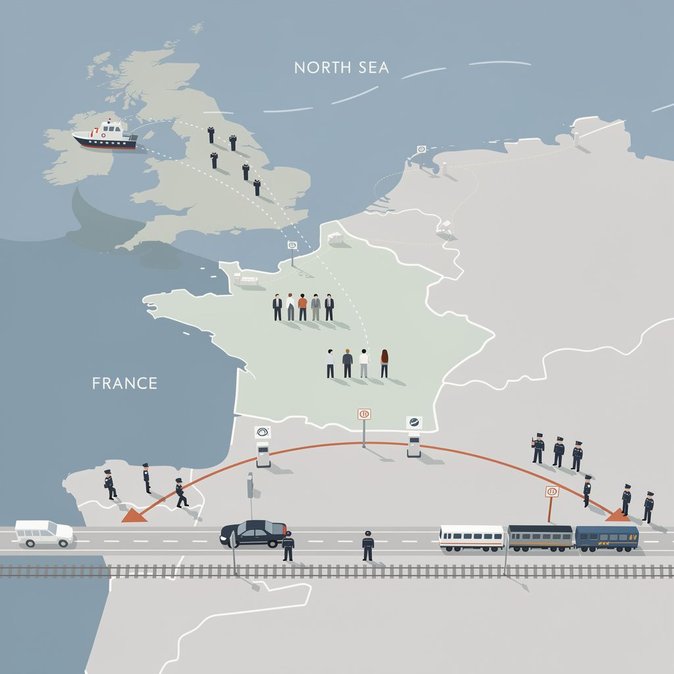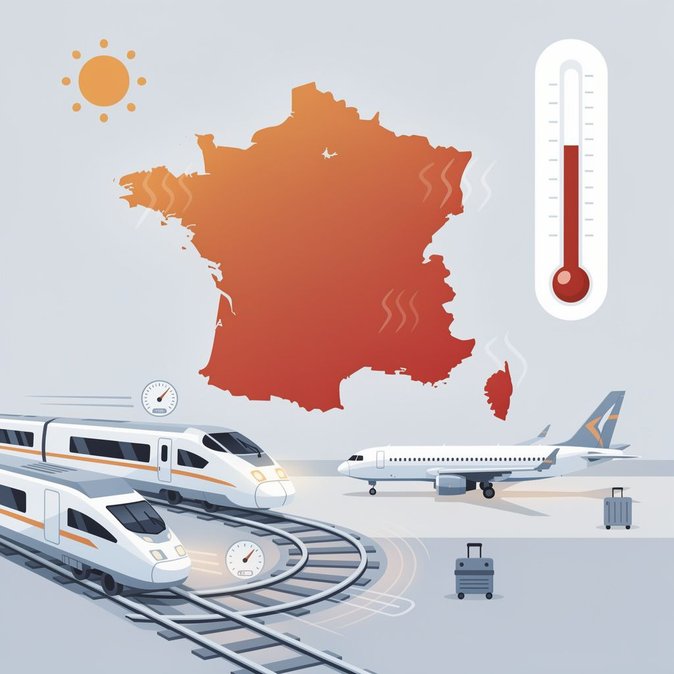
For the second time in barely a month, soaring temperatures have upended French domestic mobility. Météo-France placed 69 départements under orange (“be prepared”) heatwave alert and a further 12 under yellow storm watch on Thursday, 18 June 2026, as afternoon highs topped 40 °C in parts of Nouvelle-Aquitaine and the Rhône Valley. The national rail operator SNCF responded by cancelling dozens of TER regional services and slowing TGVs on exposed high-speed sections where rail-bed sensors reported railhead temperatures above 50 °C. Infrastructure manager SNCF Réseau switched to so-called “canicule” working from 11:00, meaning maintenance crews were mobilised to monitor track geometry in real time and spray critical turnouts with water to prevent metal dilation. On the Bordeaux–Toulouse line, 17 services were either curtailed or replaced by buses, while Brittany saw selective speed restrictions that added up to 25 minutes to Paris–Rennes journey times. Eurostar and Thalys reported only minor knock-on delays, but corporate-travel departments were warned that Friday’s timetable could also be thinned if night-time temperatures fail to drop below 24 °C. Education authorities authorised head-teachers to shorten the school day or move classes online in 38 départements, easing morning commuter flows but pushing more travellers onto afternoon services once buildings became stifling. Airlines at Paris-Orly activated “hot-weather payload” rules, off-loading freight to ensure sufficient take-off performance on the shorter runway 08/26. Regional airports at Biarritz and Montpellier delayed departures of fully booked holiday charters until after sunset. Heat-related travel disruption is fast becoming a structural business-risk factor in France. A 2025 study for Transport & Environnement estimated that the average annual cost of extreme-temperature rail slow-orders could rise to €210 million by 2030 without targeted investment in heat-resilient steel and improved ballast cooling. The government’s 2027-2037 rail-infrastructure plan already earmarks €1.4 billion for climate adaptation, but procurement has yet to begin. For now, mobility managers are urged to build flexible itineraries, authorise premium-class rail bookings that include lounge access (and therefore air-conditioning), and remind travellers to carry at least 1.5 litres of water on long journeys. Longer term, SNCF is experimenting with white-paint coatings that can cut rail-surface temperatures by up to 10 °C and has ordered 55 bi-mode TER “Regio 1400” units able to switch from electric to diesel when overhead wires sag and must be de-energised. Deployment starts in 2027, leaving at least one more summer in which heatwaves will test the resilience of France’s mobility network.