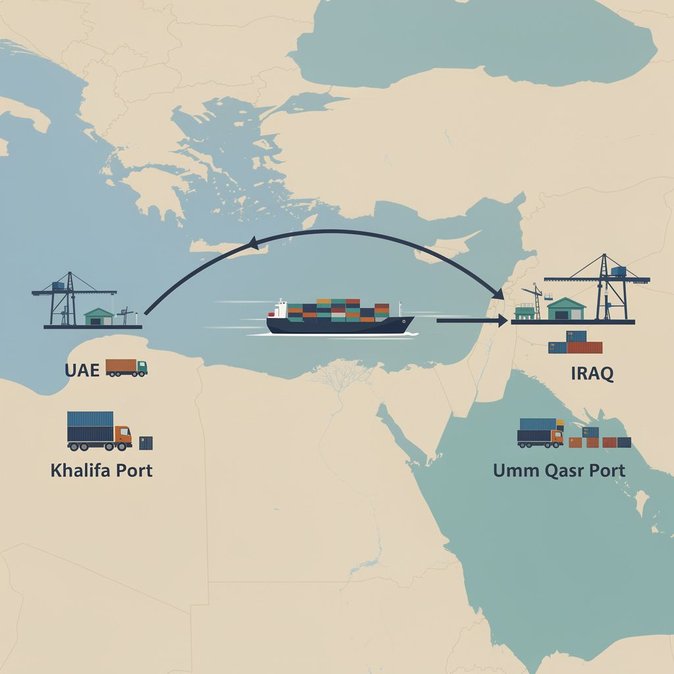
AD Ports Group on 19 June 2026 launched an integrated logistics service connecting Abu Dhabi’s Khalifa Port to Umm Qasr on Iraq’s Gulf coast. The new corridor offers a weekly container- and Ro-Ro-capable service and plugs directly into the group’s MICCO trucking and warehousing network.
1. Strategic significance
With Iraq rebuilding oil-field infrastructure and retail supply chains, the UAE-Iraq lane has seen double-digit cargo growth. A direct sea link removes trans-shipment delays in Jebel Ali or Kuwait’s Shuwaikh port, shaving 4–5 days off door-to-door lead times for project cargo and finished goods.
2. What the service offers multinationals
• End-to-end single bill of lading covering ocean freight, bonded-trucking to Basra and Erbil, and customs brokerage.
• Temperature-controlled containers for pharmaceutical and food clients.
• Priority berthing in Khalifa Port’s South Quay, allowing late gate-in cut-offs for exporters based in Dubai’s free zones.
3. Mobility-sector knock-on effects
Faster cargo flows facilitate corporate relocations into Iraq by ensuring household goods and IT equipment clear customs in a predictable window. The service also opens back-haul capacity for Iraqi exporters sending date products and construction materials to the UAE, supporting two-way trade.
For companies dispatching engineers, project managers or expatriate families along this new corridor, VisaHQ can streamline the visa process for both the UAE and Iraq. Its online platform (https://www.visahq.com/united-arab-emirates/) offers real-time application tracking, document checks and courier support, so mobility planners can align travel docs with shipping schedules and avoid costly delays.
4. Policy context
The route aligns with the UAE-Iraq Comprehensive Economic Partnership talks and the GCC Rail Framework, underscoring Abu Dhabi’s ambition to be the Gulf’s primary multimodal hub. Captain Mohamed Juma Al Shamisi, AD Ports CEO, said similar ‘marine highway’ links to Kuwait and Bahrain are under study.
5. Advice for mobility planners
Timing is key: the maiden voyage leaves Khalifa Port on 25 June. Companies moving equipment or personal effects into Iraq this summer should book slots quickly; early-bird rates apply for the first three sailings.
1. Strategic significance
With Iraq rebuilding oil-field infrastructure and retail supply chains, the UAE-Iraq lane has seen double-digit cargo growth. A direct sea link removes trans-shipment delays in Jebel Ali or Kuwait’s Shuwaikh port, shaving 4–5 days off door-to-door lead times for project cargo and finished goods.
2. What the service offers multinationals
• End-to-end single bill of lading covering ocean freight, bonded-trucking to Basra and Erbil, and customs brokerage.
• Temperature-controlled containers for pharmaceutical and food clients.
• Priority berthing in Khalifa Port’s South Quay, allowing late gate-in cut-offs for exporters based in Dubai’s free zones.
3. Mobility-sector knock-on effects
Faster cargo flows facilitate corporate relocations into Iraq by ensuring household goods and IT equipment clear customs in a predictable window. The service also opens back-haul capacity for Iraqi exporters sending date products and construction materials to the UAE, supporting two-way trade.
For companies dispatching engineers, project managers or expatriate families along this new corridor, VisaHQ can streamline the visa process for both the UAE and Iraq. Its online platform (https://www.visahq.com/united-arab-emirates/) offers real-time application tracking, document checks and courier support, so mobility planners can align travel docs with shipping schedules and avoid costly delays.
4. Policy context
The route aligns with the UAE-Iraq Comprehensive Economic Partnership talks and the GCC Rail Framework, underscoring Abu Dhabi’s ambition to be the Gulf’s primary multimodal hub. Captain Mohamed Juma Al Shamisi, AD Ports CEO, said similar ‘marine highway’ links to Kuwait and Bahrain are under study.
5. Advice for mobility planners
Timing is key: the maiden voyage leaves Khalifa Port on 25 June. Companies moving equipment or personal effects into Iraq this summer should book slots quickly; early-bird rates apply for the first three sailings.