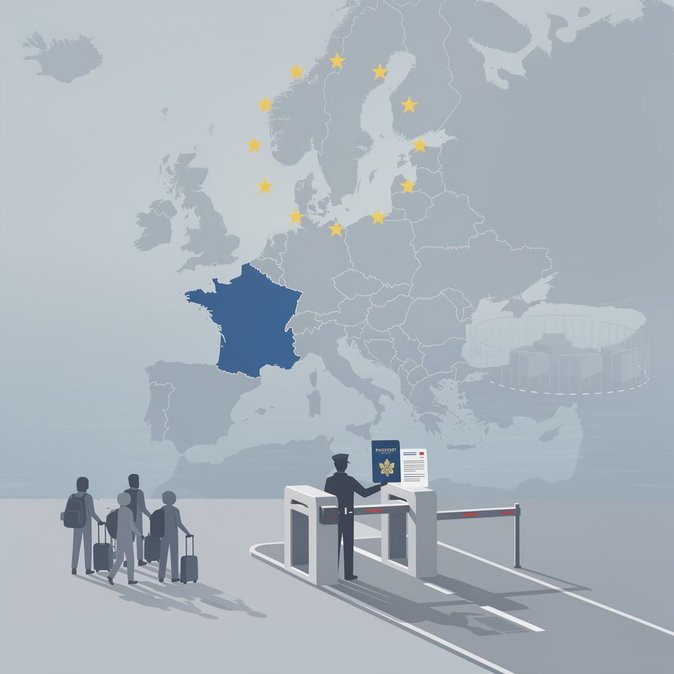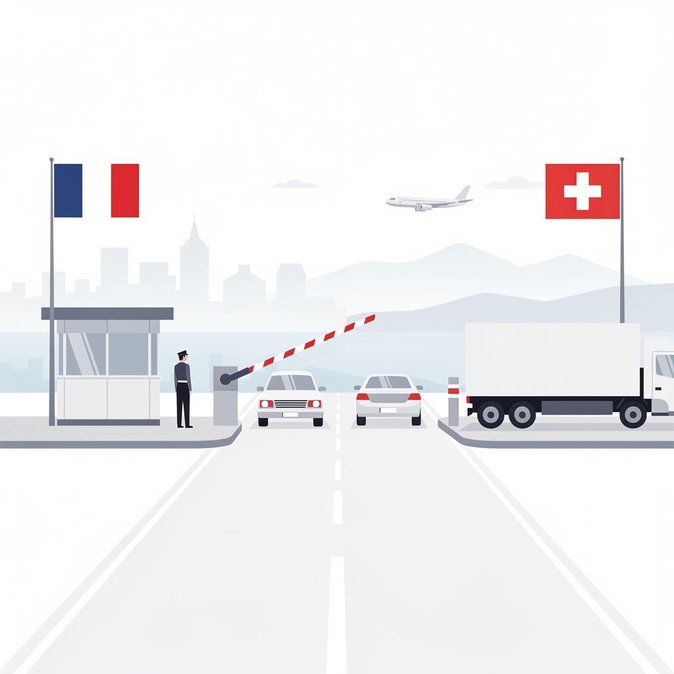
After ten days of tight controls, Switzerland’s temporary re-introduction of Schengen border checks with France concluded as scheduled at 23:59 on 19 June 2026. The measures, authorised by the Swiss Federal Council to secure the 15-17 June G7 summit in Évian-les-Bains, had narrowed cross-border traffic to just seven authorised crossings around Geneva and imposed ID checks on all travellers.
For travellers who may face similar temporary controls in the future, VisaHQ can help ensure that passports, visas and supporting documents are in perfect order ahead of time. The platform offers fast, user-friendly processing for France and many other destinations, complete with real-time updates and expert support: https://www.visahq.com/france/
Geneva Airport also operated under adapted procedures from 13 June, advising passengers to arrive earlier and carry passports even for intra-Schengen flights. According to the Geneva Airport G7 information portal, normal operations resume on 20 June, with closed crossings reopening progressively overnight. French authorities, which have maintained their own internal border checks since 2015, kept mirror measures in place but lifted most lane closures on the A1 and secondary roads. No major delays were reported on the final day, thanks to staggered departure schedules for delegations and freight curfews for hazardous goods. For French and multinational firms that rely on daily cross-border commuters in the Grand Genève region, the end of the security window means a return to usual commuting times, although random police checks remain possible until France’s wider internal-border regime expires in October 2026. Logistics operators should update route-planning systems to remove the detours that were mandatory between 12 and 18 June. Looking ahead, both the Swiss Federal Office for Customs and Border Security and the French Ministry of the Interior consider the operation a successful stress-test for the Schengen Entry/Exit System, which recorded more than 1.2 million crossings during the summit period without major outages.

For travellers who may face similar temporary controls in the future, VisaHQ can help ensure that passports, visas and supporting documents are in perfect order ahead of time. The platform offers fast, user-friendly processing for France and many other destinations, complete with real-time updates and expert support: https://www.visahq.com/france/
Geneva Airport also operated under adapted procedures from 13 June, advising passengers to arrive earlier and carry passports even for intra-Schengen flights. According to the Geneva Airport G7 information portal, normal operations resume on 20 June, with closed crossings reopening progressively overnight. French authorities, which have maintained their own internal border checks since 2015, kept mirror measures in place but lifted most lane closures on the A1 and secondary roads. No major delays were reported on the final day, thanks to staggered departure schedules for delegations and freight curfews for hazardous goods. For French and multinational firms that rely on daily cross-border commuters in the Grand Genève region, the end of the security window means a return to usual commuting times, although random police checks remain possible until France’s wider internal-border regime expires in October 2026. Logistics operators should update route-planning systems to remove the detours that were mandatory between 12 and 18 June. Looking ahead, both the Swiss Federal Office for Customs and Border Security and the French Ministry of the Interior consider the operation a successful stress-test for the Schengen Entry/Exit System, which recorded more than 1.2 million crossings during the summit period without major outages.