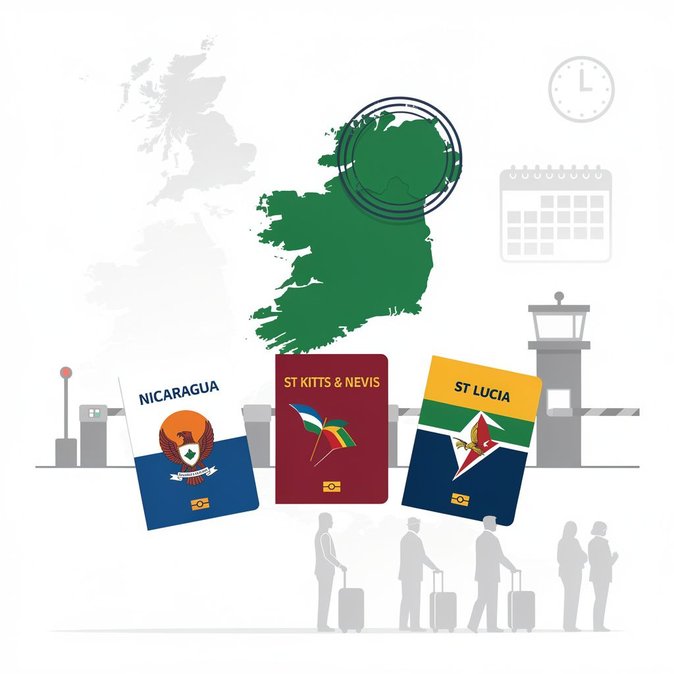
Irish business-travel planners awoke this week to yet another change in the country’s short-stay visa landscape. On 11 June the Department of Justice, Home Affairs and Migration confirmed that, with effect from Monday 15 June, nationals of Nicaragua, St Kitts & Nevis and St Lucia must obtain an Irish visa before boarding a flight or ferry to the Republic.
With entry regulations evolving at this pace, many companies are turning to VisaHQ for hands-on support; its online portal (https://www.visahq.com/ireland/) lets travel managers verify real-time requirements, generate personalised checklists and even arrange document collection, streamlining what can otherwise be a six-to-eight-week application process.
The move brings Ireland into closer alignment with the United Kingdom and most Schengen states, both of which already require visas for the three Caribbean and Central-American nations. Although the measure formally took effect five days ago, 20 June marked the first full business week in which the rule applied across the board. Transitional arrangements expire on 14 July, giving airlines, tour operators and internationally mobile employees a narrow window to adjust bookings already made before 15 June. Travellers who bought tickets before the cut-off date may still enter Ireland without a visa provided they carry proof of purchase and meet normal immigration conditions at the border. For employers, the immediate impact is felt most acutely in the hospitality, agri-food and seasonal tourism sectors, which regularly rely on visa-exempt seasonal labour from the Caribbean. HR teams must now build in additional time—currently six to eight weeks—for Irish short-stay visa processing. Global mobility managers should also note that a new €60 fee applies for single-entry C-type visas and that transit visas are mandatory even for crew or passengers merely connecting through Dublin Airport. Officials insist the change is part of an evidence-based risk-assessment programme that monitors irregular migration patterns and asylum-application trends. However, migration NGOs have already warned that sudden visa alignment with the UK may push more would-be tourists to try the land border with Northern Ireland, heightening pressure on post-Brexit Common Travel Area controls. Best practice for corporate travellers is therefore to double-check every passport on multi-location itineraries that include Ireland, the UK and the Schengen Area. Carriers have been reminded that they face fines for carrying incorrectly documented passengers, and anecdotal reports suggest that airline check-in staff at several Caribbean airports refused boarding to travellers lacking an Irish visa as early as 16 June.
With entry regulations evolving at this pace, many companies are turning to VisaHQ for hands-on support; its online portal (https://www.visahq.com/ireland/) lets travel managers verify real-time requirements, generate personalised checklists and even arrange document collection, streamlining what can otherwise be a six-to-eight-week application process.
The move brings Ireland into closer alignment with the United Kingdom and most Schengen states, both of which already require visas for the three Caribbean and Central-American nations. Although the measure formally took effect five days ago, 20 June marked the first full business week in which the rule applied across the board. Transitional arrangements expire on 14 July, giving airlines, tour operators and internationally mobile employees a narrow window to adjust bookings already made before 15 June. Travellers who bought tickets before the cut-off date may still enter Ireland without a visa provided they carry proof of purchase and meet normal immigration conditions at the border. For employers, the immediate impact is felt most acutely in the hospitality, agri-food and seasonal tourism sectors, which regularly rely on visa-exempt seasonal labour from the Caribbean. HR teams must now build in additional time—currently six to eight weeks—for Irish short-stay visa processing. Global mobility managers should also note that a new €60 fee applies for single-entry C-type visas and that transit visas are mandatory even for crew or passengers merely connecting through Dublin Airport. Officials insist the change is part of an evidence-based risk-assessment programme that monitors irregular migration patterns and asylum-application trends. However, migration NGOs have already warned that sudden visa alignment with the UK may push more would-be tourists to try the land border with Northern Ireland, heightening pressure on post-Brexit Common Travel Area controls. Best practice for corporate travellers is therefore to double-check every passport on multi-location itineraries that include Ireland, the UK and the Schengen Area. Carriers have been reminded that they face fines for carrying incorrectly documented passengers, and anecdotal reports suggest that airline check-in staff at several Caribbean airports refused boarding to travellers lacking an Irish visa as early as 16 June.