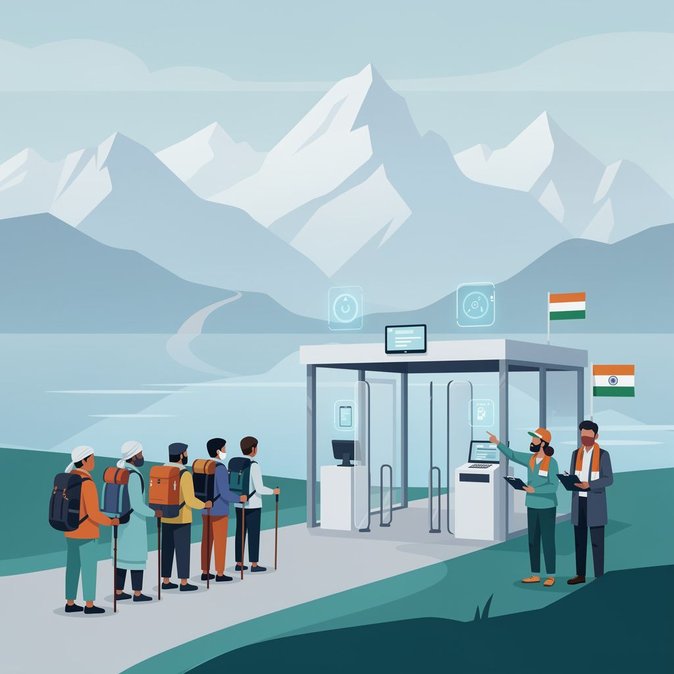
In a late-evening Gazette notification dated 20 June 2026 the Ministry of Home Affairs exercised its powers under the Immigration and Foreigners Act to declare the Nathu La check-post in Sikkim and the Lipulekh La check-post in Uttarakhand as “authorised immigration posts” for the duration of the 2026 Kailash Mansarovar Yatra. The decision gives statutory backing to long-standing operational arrangements that allow Indian pilgrims to exit and re-enter the country at the two Himalayan passes on their way to Mount Kailash and Lake Mansarovar in China’s Tibet Autonomous Region. Until now, Border Security Force (BSF) and Customs officials manned the crossings on the basis of executive orders; the fresh designation streamlines immigration formalities, enables electronic traveller records and removes uncertainty for tour operators handling high-altitude pilgrim groups. Officials said the first batch of 44 pilgrims—accompanied by liaison and medical officers—completed acclimatisation in Gangtok on 19 June and will cross into Tibet on 20 June. Pilgrims using the Uttarakhand route will begin their trek from Dharchula later this week. Both corridors will employ biometric exit-entry stamping and satellite phones for real-time tracking, part of a wider push to enhance safety after several altitude-related fatalities in 2024–25. For the corporate mobility community, the notifications are a reminder that temporary immigration posts can be created by executive order for religious tourism or disaster response. Companies arranging expatriate travel to border areas should monitor Gazette updates to avoid inadvertent immigration violations. Travel-management firms specialising in incentive or faith-based tours can now advertise legally recognised land exits—something that simplifies group insurance coverage and clarifies liability in case of border closures. China’s Tibet authorities have welcomed the move, saying it will “smooth the organisation of escorted convoys” on the Tibetan side. With demand for the yatra already exceeding pre-pandemic levels, industry stakeholders expect the 2026 season to draw nearly 5,000 Indians—up 35 percent on 2025—provided weather permits the full four-month window.
Source: The CSR Journal