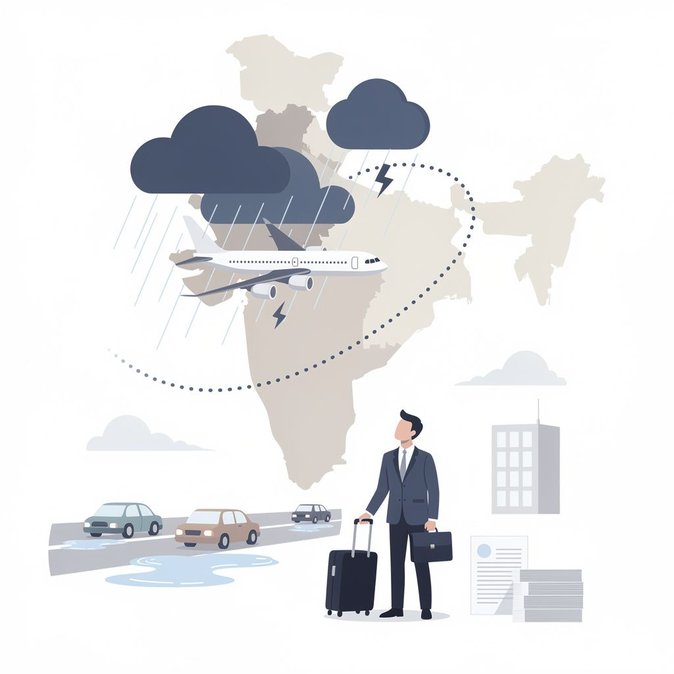
The India Meteorological Department (IMD) on 21 June 2026 issued a red-level warning for multiple regions, forecasting heavy to very heavy rainfall, thunderstorms and wind gusts up to 80 km/h between 21 and 27 June. States on alert include Delhi-NCR, Punjab, Haryana, Uttar Pradesh, Rajasthan, Uttarakhand, Himachal Pradesh, Bihar, Jharkhand, Odisha and much of central India. Airports Authority of India (AAI) officials told carriers to file alternate airports in flight plans for the entire week. IndiGo and Air India have already waived change fees for travel to 12 affected airports, while Vistara activated its ‘monsoon congestion playbook’, adding buffer time to turn-arounds at Delhi, Lucknow and Jaipur. Freight forwarders moving pharmaceuticals out of Uttar Pradesh report that trucking firms are switching to night-time movements to avoid anticipated road flooding. For corporate mobility teams, the alert coincides with end-of-quarter project rotations and graduate-trainee intakes. Companies relocating staff to NCR or central India should prepare for potential flight diversions to Ahmedabad or Mumbai and advise travellers to use DigiYatra e-gates, which remain operational even when manual counters slow down. Employers sponsoring foreign assignees must also watch FRRO deadlines; missed in-person reporting due to weather can be rescheduled online within seven days under the Immigration and Foreigners Rules 2026. The IMD notes that climate-change-driven monsoon variability has intensified: the number of red alerts issued in June has doubled since 2020. Airports such as Chandigarh and Dehradun—both inside the warning zone—still rely on CAT-I ILS procedures and may experience extended closures in low visibility. Multinationals with time-sensitive travel (e.g., site inspections, client bids) should build 24-hour contingencies into itineraries this week.
Source: Prabhat Khabar
How VisaHQ can help
VisaHQ simplifies the visa application process for individuals and businesses. Check current travel requirements, prepare the required documents and manage your application online through the VisaHQ India portal.More From India
View all
VIP Movement Management: PM Modi Delays Departure to Keep Delhi Airport and Highways Clear for 2.3 Million NEET Examinees

July 2026 U.S. Visa Bulletin Signals Further EB-1 Retrogression for India—What Employers Need to Know