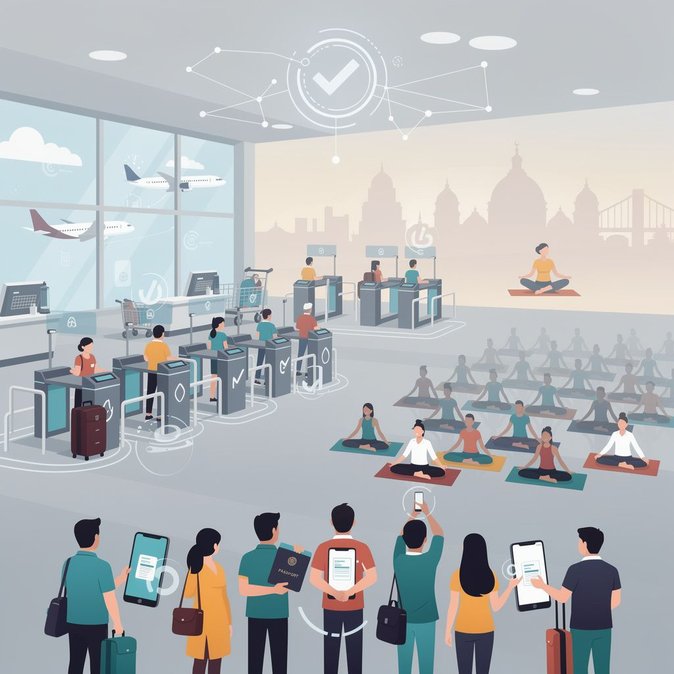
Kolkata’s historic Red Road turned into a sea of yoga mats on 21 June 2026 as Prime Minister Narendra Modi led more than 30,000 participants—and an estimated 3,500 foreign visitors from 78 countries—in the flagship celebration of the 12th International Day of Yoga. While Yoga Day is primarily a cultural event, it also functions as a stress-test for India’s border, visa and airport systems because thousands of overseas guests fly in on the same three-day window. This year the Ministry of Home Affairs and the Bureau of Immigration used the occasion to conduct the first large-scale operational trial of India’s mandatory e-Arrival Card, which fully replaced the paper disembarkation form for non-Indian passport holders on 1 April 2026. Arriving passengers completed the digital declaration within 72 hours of departure, uploaded vaccination and customs information, and generated a QR code that airlines were required to scan before boarding. According to airport officials, more than 94 percent of foreign passengers bound for Kolkata complied, cutting average immigration clearance time by 40 percent compared with last year. Airlines operating additional Yoga Day charters—including Emirates, Singapore Airlines and IndiGo—were granted temporary night-landing slots at Netaji Subhas Chandra Bose International Airport. Civil Aviation Ministry data show the airport handled 92 international movements on 20-22 June, nearly twice the normal daily average. To manage the spike, Kolkata became the fifth India gateway to activate DigiYatra facial-recognition e-gates for international departures, allowing visa holders and OCI card-holders who had pre-enrolled biometrics to bypass manual document checks. From a mobility perspective, the event underscored how India’s post-pandemic tourism recovery is now intertwined with digital border control. Tour operators reported that the simplified e-Tourist Visa (restored in May 2026) combined with the e-Arrival Card meant most Yoga Day visitors completed all formalities on a smartphone without visiting a consulate. Hoteliers said average length of stay for inbound yoga tourists has risen from 3.2 to 4.7 nights since electronic processes were introduced, boosting local revenue. For companies that move staff into India, the successful stress-test offers reassurance that the e-Arrival Card and DigiYatra will be able to cope with peak-season volumes later this year. The Ministries of Ayush and Tourism have already indicated that the same digital workflow will be mandatory for the 13th BRICS Urbanisation Forum in New Delhi in July, signalling a long-term policy shift toward paperless entry.
Source: The Week / Akashvani News
How VisaHQ can help
VisaHQ simplifies the visa application process for individuals and businesses. Check current travel requirements, prepare the required documents and manage your application online through the VisaHQ India portal.More From India
View all
VIP Movement Management: PM Modi Delays Departure to Keep Delhi Airport and Highways Clear for 2.3 Million NEET Examinees
IMD Issues Week-Long Heavy-Rain Alert: Airlines Activate Monsoon Diversion Plans Across North and Central India