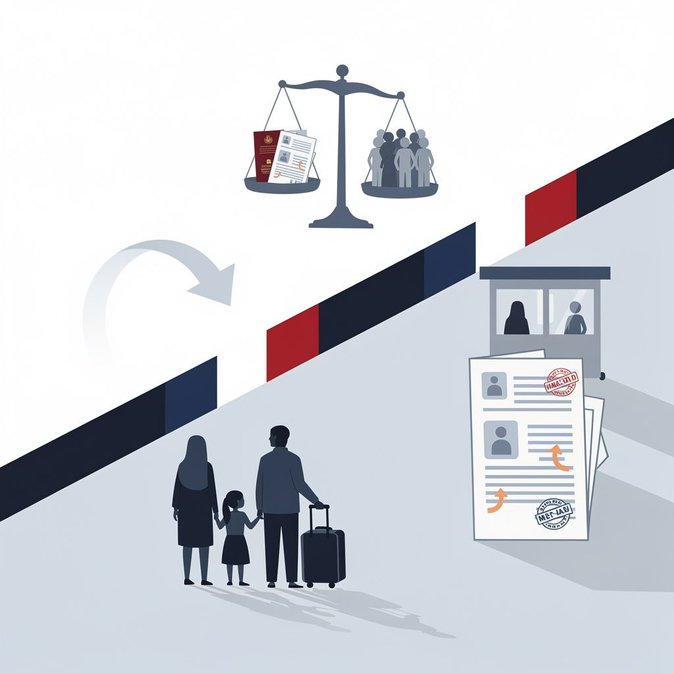
A Honduran family’s deportation under the Safe Third Country Agreement (STCA) has become the centre-piece of a fresh legal challenge filed by Amnesty International Canada and the Canadian Council for Refugees. An investigative report published Sunday (June 21) details how the family—identified as Carlos, Antonia and their son Alejandro—were turned back at the Fort Erie crossing in 2021 after Canadian officers cited the STCA, despite evidence of gang threats at home. They remain in hiding in Honduras.
The STCA, in force since 2004, obliges asylum seekers to request refugee protection in the first “safe” country they enter (Canada or the United States). Canada’s Supreme Court upheld the pact in 2023 but noted that humanitarian exemptions must be available. Advocates argue those exemptions are “largely theoretical” and that CBSA officers have little discretion to stay removals. CBSA told reporters it can only intervene in “exceptional cases” backed by clear evidence of risk.
Organizations and individuals needing up-to-date guidance on entry requirements, work permits or travel documents can streamline the process through VisaHQ’s online platform. The company’s Canada portal (https://www.visahq.com/canada/) consolidates visa rules, digital applications and courier logistics, making it easier for employers and relocating staff to track paperwork and stay compliant while the legal landscape around the STCA remains unsettled.
From a mobility-policy angle, the case underscores how changes at the Canada-U.S. land border can influence corporate relocation strategies—particularly for firms that move staff via intra-company transfers using the CUSMA (NAFTA) work-permit class. Employees’ accompanying family members who plan to claim asylum must now consider that arriving at an official port may trigger automatic return to the United States. The new court application seeks judicial review of CBSA’s implementation guidelines and could force Ottawa to revise officer training or expand humanitarian carve-outs. If successful, experts predict a rise in asylum claims at official crossings and potential processing slow-downs for other travellers. Until the case is resolved, global employers should continue to treat the Canada-U.S. frontier as a complex compliance zone: ensure transferees carry complete documentation, brief them on STCA implications, and coordinate with immigration counsel when family members may have protection needs.
The STCA, in force since 2004, obliges asylum seekers to request refugee protection in the first “safe” country they enter (Canada or the United States). Canada’s Supreme Court upheld the pact in 2023 but noted that humanitarian exemptions must be available. Advocates argue those exemptions are “largely theoretical” and that CBSA officers have little discretion to stay removals. CBSA told reporters it can only intervene in “exceptional cases” backed by clear evidence of risk.
Organizations and individuals needing up-to-date guidance on entry requirements, work permits or travel documents can streamline the process through VisaHQ’s online platform. The company’s Canada portal (https://www.visahq.com/canada/) consolidates visa rules, digital applications and courier logistics, making it easier for employers and relocating staff to track paperwork and stay compliant while the legal landscape around the STCA remains unsettled.
From a mobility-policy angle, the case underscores how changes at the Canada-U.S. land border can influence corporate relocation strategies—particularly for firms that move staff via intra-company transfers using the CUSMA (NAFTA) work-permit class. Employees’ accompanying family members who plan to claim asylum must now consider that arriving at an official port may trigger automatic return to the United States. The new court application seeks judicial review of CBSA’s implementation guidelines and could force Ottawa to revise officer training or expand humanitarian carve-outs. If successful, experts predict a rise in asylum claims at official crossings and potential processing slow-downs for other travellers. Until the case is resolved, global employers should continue to treat the Canada-U.S. frontier as a complex compliance zone: ensure transferees carry complete documentation, brief them on STCA implications, and coordinate with immigration counsel when family members may have protection needs.