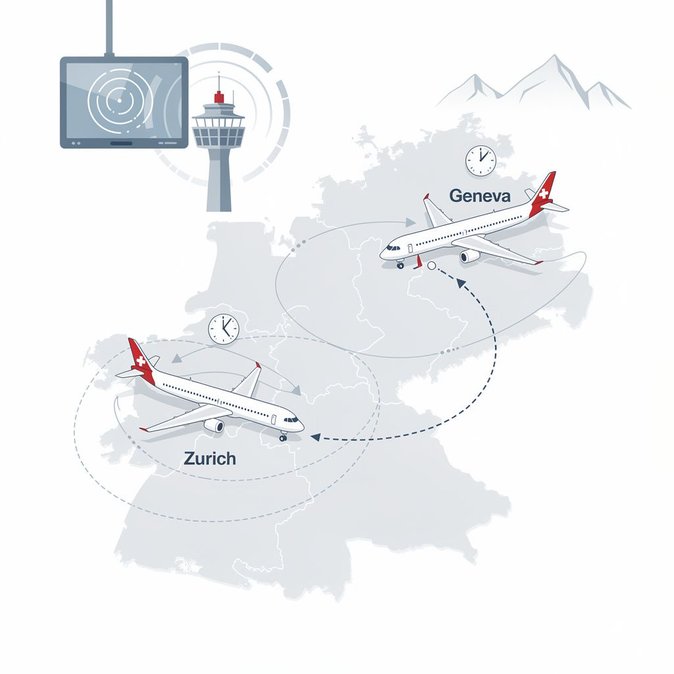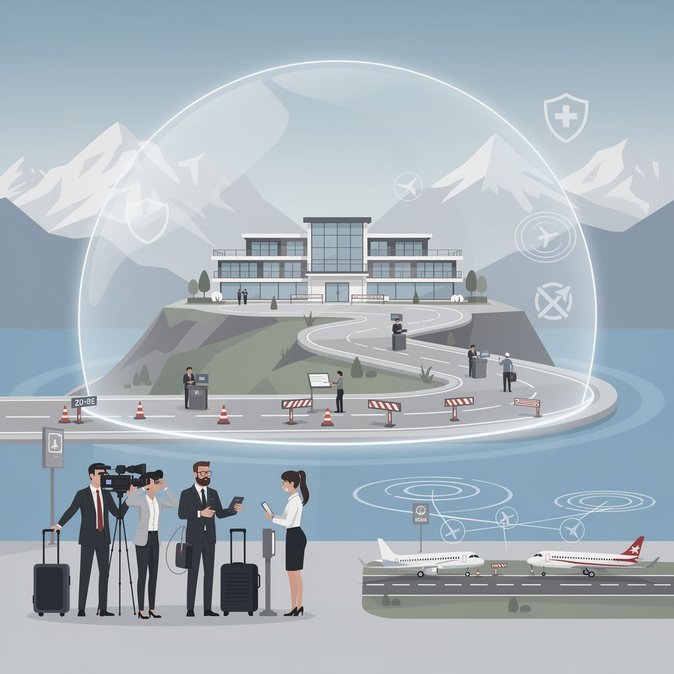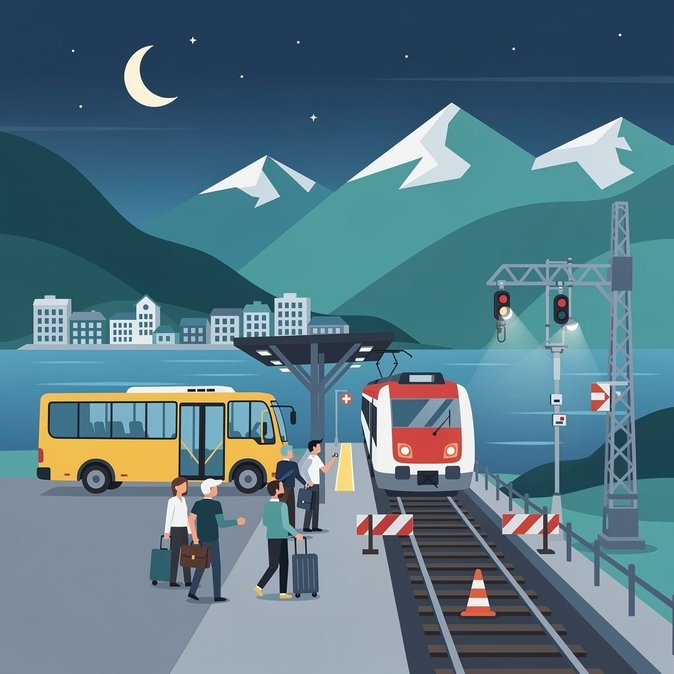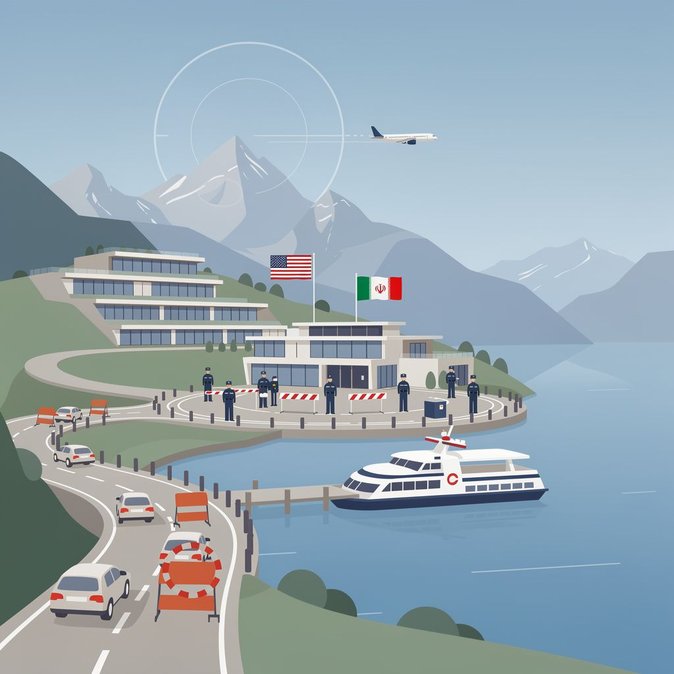
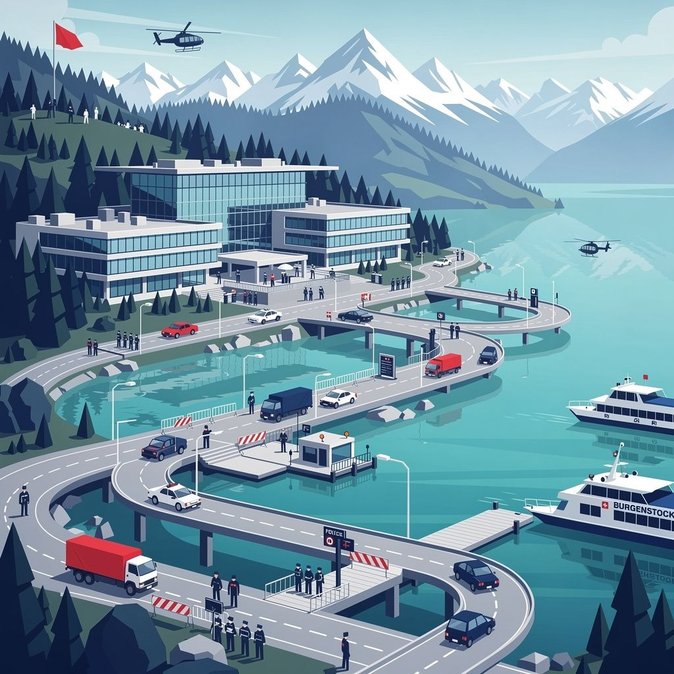
Switzerland’s Bürgenstock resort—already a byword for quiet diplomacy—again became the centre of international attention on Sunday afternoon as Vice-President J. D. Vance and Iranian parliamentary speaker Mohammad Ghalibaf launched a multi-party negotiating process aimed at defusing Middle-East tensions. The Swiss Federal Council authorised an unprecedented security operation: 2,000 army troops and cantonal police secured the ridge overlooking Lake Lucerne, while the Federal Office for Customs and Border Security re-introduced spot checks on road and rail entries into Nidwalden and neighbouring cantons. For mobility planners the summit is less about geopolitics than about logistics. The entire Bürgenstock access road is closed to private traffic; accredited vehicles are funneled through a single checkpoint where travel documents and biometric badges are scanned. Lake steamers that normally ferry tourists from Lucerne to Kehrsiten are suspended, and airspace within a six-nautical-mile radius is subject to the restricted zone that triggered Sunday’s radar glitch over Zurich. Helicopter transfers for high-level delegations continue, but only along pre-filed corridors managed jointly by Skyguide and the Swiss Air Force. Businesses in central Switzerland are feeling the impact. Pilatus Aircraft, headquartered in nearby Stans, has paused demo flights, while logistics firm Galliker reports re-routing time-critical pharma shipments to Basel to avoid possible road delays. Hotels in Lucerne, on the other hand, are enjoying near-full occupancy as journalists, security contractors and NGO observers fill rooms vacated by leisure travellers deterred by the cordon. Switzerland’s foreign ministry, keen to balance security with its reputation for openness, set up a temporary consular desk at Lucerne station to assist foreign nationals who find themselves on the wrong side of the perimeter.
![US-Iran Peace Talks Open on Mount Bürgenstock Under Tight Swiss Security]()
For those still planning trips into Switzerland during the summit, VisaHQ offers an easy way to confirm whether your existing Schengen visa is sufficient or to apply for the necessary travel document online; the platform also sends live alerts about temporary entry rules like the ones now in force around Lucerne. Checking requirements takes only minutes at https://www.visahq.com/switzerland/ and dedicated agents can expedite processing for journalists, business travellers and NGO staff summoned at short notice.
Travellers holding Schengen visas valid for Switzerland receive an explanatory leaflet (in eight languages) with alternative public-transport connections and a QR code for live updates. The special measures are scheduled to last “for the duration of the first negotiation round”, officially until 25 June, but Federal Councillor Ignazio Cassis has authority to extend them if the talks run longer. Companies with employees commuting through the region are advised to monitor the cantonal police Telegram channel and allow at least 30 minutes extra for identity checks—small inconveniences, Swiss officials argue, for a conference that could reshape regional security and, by extension, global energy flows.
For those still planning trips into Switzerland during the summit, VisaHQ offers an easy way to confirm whether your existing Schengen visa is sufficient or to apply for the necessary travel document online; the platform also sends live alerts about temporary entry rules like the ones now in force around Lucerne. Checking requirements takes only minutes at https://www.visahq.com/switzerland/ and dedicated agents can expedite processing for journalists, business travellers and NGO staff summoned at short notice.
Travellers holding Schengen visas valid for Switzerland receive an explanatory leaflet (in eight languages) with alternative public-transport connections and a QR code for live updates. The special measures are scheduled to last “for the duration of the first negotiation round”, officially until 25 June, but Federal Councillor Ignazio Cassis has authority to extend them if the talks run longer. Companies with employees commuting through the region are advised to monitor the cantonal police Telegram channel and allow at least 30 minutes extra for identity checks—small inconveniences, Swiss officials argue, for a conference that could reshape regional security and, by extension, global energy flows.