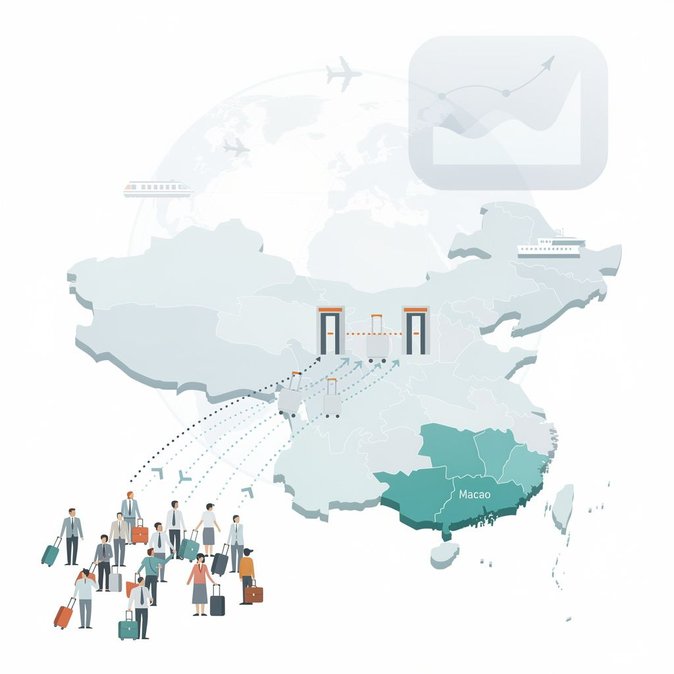
China’s National Immigration Administration reports that 6.667 million people crossed the country’s borders during the three-day Dragon Boat Festival holiday, averaging 2.222 million entries and exits per day—an increase of 12.9 % over the same period in 2025. Of that total, Hong Kong and Macao residents accounted for 2.969 million movements, an 18.4 % year-on-year jump, making them the fastest-growing segment of all traveller categories. The spike underscores the continued normalisation of cross-boundary travel between Hong Kong and Mainland China since quarantine-free movement resumed two years ago. For employers managing Greater Bay Area (GBA) commutes, the numbers translate into busier land and sea checkpoints: daily volumes at the Shenzhen Bay and Hong Kong West Kowloon rail terminals briefly hit 90 % of their designed processing capacity on 20 June, the busiest holiday-traffic day. Border officers responded by opening every inspection booth, adding mobile e-gates and issuing real-time congestion alerts through WeChat and the Mainland-Hong Kong joint checkpoint app. According to travel-risk platform Safeture, average queuing times still stretched to 45 minutes at Lo Wu during the Saturday peak, a reminder for firms to build additional buffer time into staff itineraries during Chinese public holidays. Another noteworthy data point for global-mobility teams is the rise in visa-free foreign arrivals: 266,000 inbound travellers entered China under 14-day or 30-day unilateral visa-waiver programmes during the same period, up 15.2 % year-on-year. Although the figure covers the whole country, Hong Kong carriers benefited from transit traffic, especially long-haul European passengers taking advantage of Hong Kong’s multiple-entry visa policy when routing through the SAR. Looking ahead, both Hong Kong Immigration Department and Mainland authorities have indicated they will maintain the expanded e-gate staffing model for the upcoming summer school-holiday rush (mid-July to late August). Corporate travel managers should monitor official checkpoint apps for surge-day advisories and consider shifting cross-border meetings to virtual formats during high-peak weekends.
Source: Economic Reference via Eastmoney
How VisaHQ can help
VisaHQ simplifies the visa application process for individuals and businesses. Check current travel requirements, prepare the required documents and manage your application online through the VisaHQ Hong Kong portal.More From Hong Kong
View all
Dragon Boat Festival sees 6.67 million cross-border journeys as Hong Kong checkpoints hit post-pandemic record

HKSTP uses Paris VivaTech 2026 to position Hong Kong as Asia–Europe launch-pad for tech talent