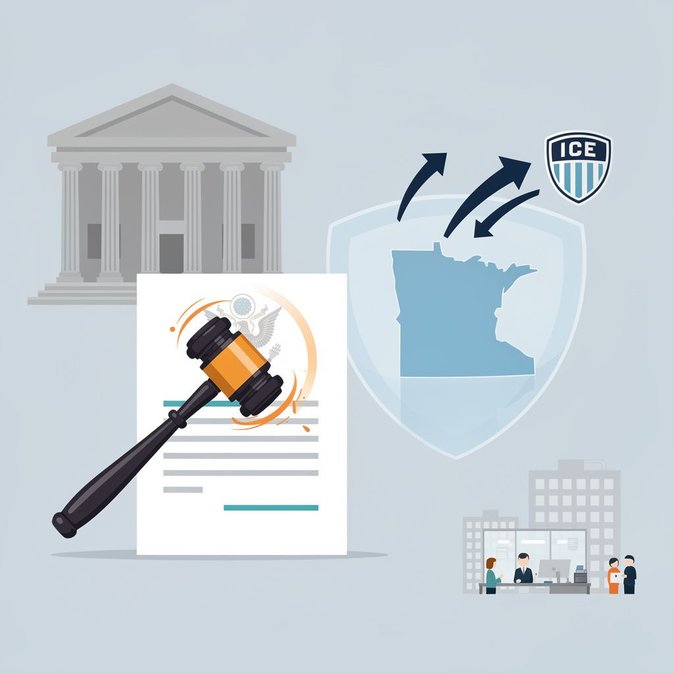
In a ruling unsealed Monday afternoon, U.S. District Judge Patrick Schlitz quashed a series of Justice Department subpoenas issued to Minnesota Governor Tim Walz, Attorney General Keith Ellison and several city and county leaders. The subpoenas sought internal communications for a grand-jury probe into alleged obstruction of a high-profile ICE surge in the Minneapolis–St Paul metro earlier this year. Judge Schlitz wrote that their “dominant purpose” was to compel local officials “to assist federal immigration enforcement and to retaliate for their failure to do so,” violating principles of federalism. The decision is the first major judicial rebuke of the Trump administration’s strategy of leveraging grand-jury powers to force so-called sanctuary jurisdictions to co-operate with ICE. Legal analysts say it limits Washington’s ability to demand local participation in civil immigration enforcement, a question that has roiled city councils and corporate relocation planners alike. For employers, the ruling reduces the immediate risk that Minnesota’s state agencies could be compelled to share workforce data or driver-licence databases with ICE investigators. Yet counsel caution that the Justice Department may appeal and has other tools — notably administrative subpoenas under 8 U.S.C. § 1225(d) — that remain intact. Global mobility teams with operations in the Upper Midwest should nonetheless monitor policy fluctuations: state lawmakers have proposed legislation to codify limits on courthouse arrests and data-sharing. Companies that rely on state licensing boards for professional visas or on Driver and Vehicle Services for employee ID renewals may benefit from a clearer firewall between state databases and federal agents, easing assignee safety concerns. The case underscores how litigation over sanctuary policies can directly influence document-production requests that affect employers’ compliance costs and workers’ sense of security. Mobility leaders are urged to track the appellate docket and update crisis-management protocols should federal-state tension rise again.
Source: Associated Press