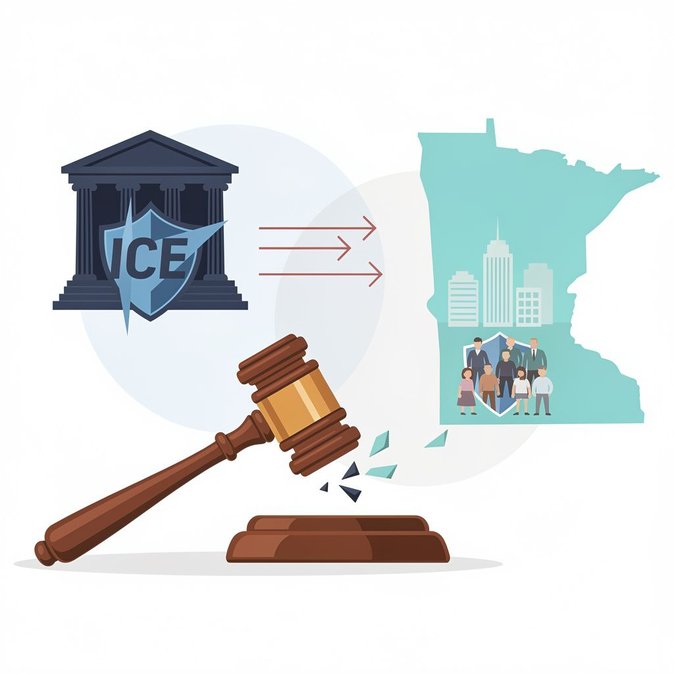
A U.S. District Court judge in Minneapolis has thrown out a set of grand-jury subpoenas that the Trump administration sent to Minnesota’s governor, attorney general and several city and county leaders. In a ruling unsealed on June 22, Judge Patrick Schlitz wrote that the Justice Department’s demand for documents was “an effort to coerce state officials into enforcing civil immigration law and to harass them for refusing to do so.”
The subpoenas were issued in January as part of a federal probe into whether state and local leaders obstructed “Operation Metro Surge,” a large-scale Immigration and Customs Enforcement (ICE) sweep across the Twin Cities earlier this year. Schlitz noted that the government could not point to any criminal statute the officials might have violated, and said the materials sought—such as public speeches and press statements—were protected political speech.
The decision is the latest judicial rebuke of the administration’s strategy of using federal courts to compel so-called “sanctuary” jurisdictions to co-operate with ICE. Similar efforts to subpoena information from California and Colorado officials have also been quashed in recent months, underscoring the limits of federal power when states decline to dedicate resources to immigration enforcement.
For companies and individuals sorting through U.S. immigration rules, VisaHQ can simplify the process by securing the correct visas, monitoring application status, and updating clients on shifting requirements. Their dedicated U.S. page (https://www.visahq.com/united-states/) aggregates forms, fees, and timelines in one place—an especially useful resource for HR teams managing global mobility in an era of evolving enforcement policies.
For multinational employers and mobility managers, the ruling matters because it signals that local non-co-operation policies will remain in force in many U.S. cities. Companies relocating foreign staff to Minneapolis–St Paul can expect the city’s existing “separation ordinance”—which bars police from inquiring about immigration status—to remain intact, reducing the risk of workplace ICE raids.
The case also illustrates how quickly immigration enforcement priorities can swing with political winds, an uncertainty global employers need to monitor closely.
Practical tip: Employers with worksites in “sanctuary” regions should ensure compliance protocols align with local policies (e.g., confirming warrants before admitting federal agents) and train managers not to share employee information without proper legal process.

The subpoenas were issued in January as part of a federal probe into whether state and local leaders obstructed “Operation Metro Surge,” a large-scale Immigration and Customs Enforcement (ICE) sweep across the Twin Cities earlier this year. Schlitz noted that the government could not point to any criminal statute the officials might have violated, and said the materials sought—such as public speeches and press statements—were protected political speech.
The decision is the latest judicial rebuke of the administration’s strategy of using federal courts to compel so-called “sanctuary” jurisdictions to co-operate with ICE. Similar efforts to subpoena information from California and Colorado officials have also been quashed in recent months, underscoring the limits of federal power when states decline to dedicate resources to immigration enforcement.
For companies and individuals sorting through U.S. immigration rules, VisaHQ can simplify the process by securing the correct visas, monitoring application status, and updating clients on shifting requirements. Their dedicated U.S. page (https://www.visahq.com/united-states/) aggregates forms, fees, and timelines in one place—an especially useful resource for HR teams managing global mobility in an era of evolving enforcement policies.
For multinational employers and mobility managers, the ruling matters because it signals that local non-co-operation policies will remain in force in many U.S. cities. Companies relocating foreign staff to Minneapolis–St Paul can expect the city’s existing “separation ordinance”—which bars police from inquiring about immigration status—to remain intact, reducing the risk of workplace ICE raids.
The case also illustrates how quickly immigration enforcement priorities can swing with political winds, an uncertainty global employers need to monitor closely.
Practical tip: Employers with worksites in “sanctuary” regions should ensure compliance protocols align with local policies (e.g., confirming warrants before admitting federal agents) and train managers not to share employee information without proper legal process.