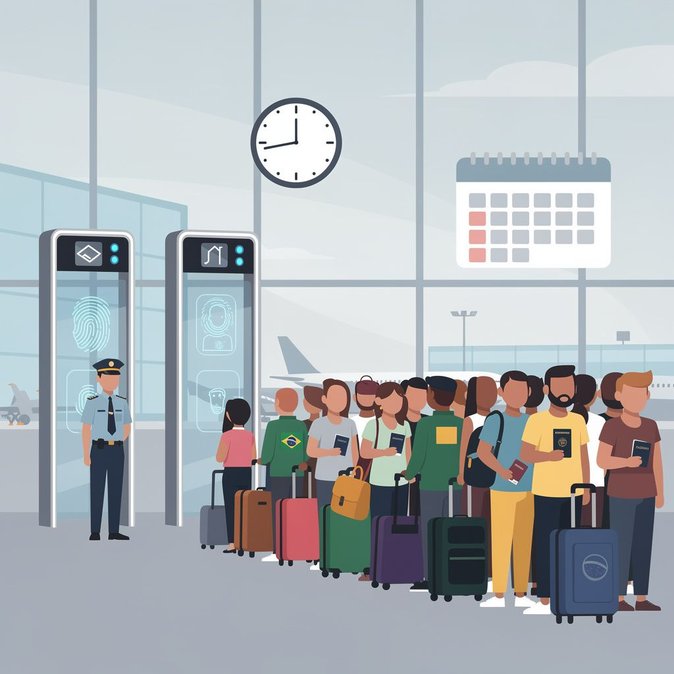
In a 23 June 2026 interview published by specialist portal ETIAS Pro, Frontex deputy executive director Uku Särekanno cautioned that travellers should expect longer waits at Schengen external borders until at least 2028. The EU Entry/Exit System (EES), fully operational since April, records biometrics for all third-country nationals—including Brazilians—replacing passport stamps. According to Särekanno, first-time enrolment remains the bottleneck: “Border guards must capture four fingerprints and a facial image; that alone can add 60–90 seconds per passenger.” Tests at Lisbon, Madrid and Paris-CDG show queue times tripling during peak South-Atlantic arrivals.
VisaHQ, an online visa and passport facilitation service, can help Brazilian travellers pre-empt many of these pain points. Through its dedicated Brazil portal (https://www.visahq.com/brazil/), the platform lets users verify passport validity rules, receive up-to-date Schengen entry guidance, and will allow them to secure ETIAS authorisations as soon as the system goes live—minimising surprises at the border.
Once a traveller’s data are in the system, later crossings are faster, but airport infrastructure and staffing need “one to two summer seasons” to stabilise. The Frontex official confirmed that the legal window allowing member states to suspend EES for operational reasons closes in September, meaning airports must adapt rather than defer. He urged airlines to stagger departures from visa-exempt markets such as Brazil and to warn passengers about pre-departure passport validity rules now automatically enforced by EES. For Brazilian corporates, the message is to build extra buffer time into Europe itineraries and verify that employees hold passports issued within the last ten years—an often-overlooked technicality that EES gates will no longer ignore. Travel managers should also watch for the next phase: the launch of ETIAS in Q4 2026, which will add another pre-travel authorisation step.
VisaHQ, an online visa and passport facilitation service, can help Brazilian travellers pre-empt many of these pain points. Through its dedicated Brazil portal (https://www.visahq.com/brazil/), the platform lets users verify passport validity rules, receive up-to-date Schengen entry guidance, and will allow them to secure ETIAS authorisations as soon as the system goes live—minimising surprises at the border.
Once a traveller’s data are in the system, later crossings are faster, but airport infrastructure and staffing need “one to two summer seasons” to stabilise. The Frontex official confirmed that the legal window allowing member states to suspend EES for operational reasons closes in September, meaning airports must adapt rather than defer. He urged airlines to stagger departures from visa-exempt markets such as Brazil and to warn passengers about pre-departure passport validity rules now automatically enforced by EES. For Brazilian corporates, the message is to build extra buffer time into Europe itineraries and verify that employees hold passports issued within the last ten years—an often-overlooked technicality that EES gates will no longer ignore. Travel managers should also watch for the next phase: the launch of ETIAS in Q4 2026, which will add another pre-travel authorisation step.