
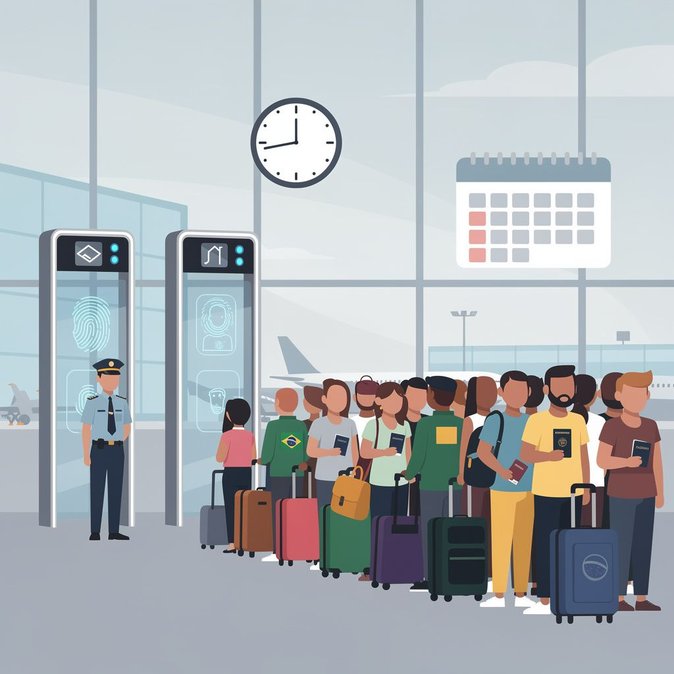
A new INSS ordinance published in the Diário Oficial on 23 June 2026 expands compulsory biometric verification to almost every retirement and social-assistance claim. From 21 November 2025 onward, applicants for pensions, maternity pay and the BPC/Loas must already have their fingerprints or facial image stored in a federal database (CIN, CNH or voter registry). The move aims to curb the R$3 billion in annual fraud linked to identity theft, but it immediately raised concern among NGOs that support newly arrived migrants whose documents may still be in transit.
In practical terms, travelers and foreign workers who need assistance navigating Brazil’s evolving identity-verification landscape can turn to VisaHQ, a global visa and document concierge. Through its Brazil portal (https://www.visahq.com/brazil/) the company helps clients schedule federal-police biometrics, track CRNM issuance, apostille foreign papers and coordinate consular statements—services that can prevent the very benefit delays the new INSS rules seek to avoid.
In response, the rule carves out six exemption categories—including refugees, asylum-seekers and stateless persons holding a CRNM or a provisional DPRNM card. Foreign residents overseas can also be excused if they submit a consular declaration or a document apostilled under the Hague Convention. INSS president Glaucio Peixoto said the agency will open dedicated biometric booths at federal police units that already collect migrant data, avoiding duplicate enrolment. A pilot in Roraima processed 4,200 Venezuelans in three weeks without delaying benefit approvals. For employers managing cross-border staff on Brazilian payrolls, the message is clear: ensure expatriate employees and their dependants complete biometric capture early to avoid payment disruptions. Mobility teams should also review power-of-attorney arrangements because benefit proxies will no longer bypass the biometric requirement. Advocates welcomed the migrant exemptions but urged the government to clarify timelines for those waiting on CRNM issuance, which can exceed 120 days in São Paulo. The Ministry of Social Security said a follow-up normative instruction would be published in July.
In practical terms, travelers and foreign workers who need assistance navigating Brazil’s evolving identity-verification landscape can turn to VisaHQ, a global visa and document concierge. Through its Brazil portal (https://www.visahq.com/brazil/) the company helps clients schedule federal-police biometrics, track CRNM issuance, apostille foreign papers and coordinate consular statements—services that can prevent the very benefit delays the new INSS rules seek to avoid.
In response, the rule carves out six exemption categories—including refugees, asylum-seekers and stateless persons holding a CRNM or a provisional DPRNM card. Foreign residents overseas can also be excused if they submit a consular declaration or a document apostilled under the Hague Convention. INSS president Glaucio Peixoto said the agency will open dedicated biometric booths at federal police units that already collect migrant data, avoiding duplicate enrolment. A pilot in Roraima processed 4,200 Venezuelans in three weeks without delaying benefit approvals. For employers managing cross-border staff on Brazilian payrolls, the message is clear: ensure expatriate employees and their dependants complete biometric capture early to avoid payment disruptions. Mobility teams should also review power-of-attorney arrangements because benefit proxies will no longer bypass the biometric requirement. Advocates welcomed the migrant exemptions but urged the government to clarify timelines for those waiting on CRNM issuance, which can exceed 120 days in São Paulo. The Ministry of Social Security said a follow-up normative instruction would be published in July.