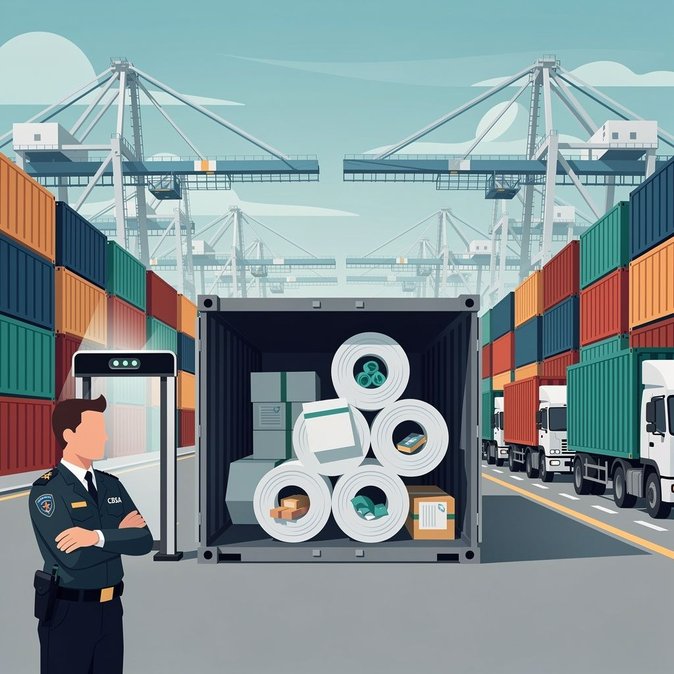
The Canada Border Services Agency (CBSA) revealed on June 23 that its officers had seized more than half a tonne of opium concealed inside industrial-sized paper rolls at the Tsawwassen Container Examination Facility in Delta, British Columbia. Acting on intelligence from the agency’s National Targeting Centre and U.S. Customs and Border Protection, officers referred a marine container for secondary inspection, used detector dogs and X-ray technology, and discovered 10 paper rolls packed with 520.6 kilograms of the narcotic.
While drug busts do not always make it onto corporate mobility radars, this operation does. Large seizures trigger enhanced vessel screening and additional documentation checks at West Coast ports for weeks afterwards. Multinational shippers moving household goods, commercial samples or project cargo through Vancouver and Prince Rupert can expect longer dwell times and a higher likelihood of random inspection as CBSA officers follow up on leads generated by the case. Companies relocating staff or equipment should therefore budget extra transit time and be ready to produce detailed packing lists.
Amid these operational delays, organisations may also need to ensure their employees’ travel paperwork is flawless to avoid compounding any border slow-downs. VisaHQ offers an easy, online way to secure Canadian visas, eTAs and work permits, providing step-by-step guidance and real-time status tracking for both corporate and individual travellers. Learn more at https://www.visahq.com/canada/
The seizure also underscores Canada’s new $1.3 billion Border Plan, which allocates CAD 355 million for detection technology and frontline staffing. Business travel programmes that rely on NEXUS or FAST lanes should monitor for temporary lane closures as equipment is upgraded. Employers moving foreign workers across the U.S.-Canada land border may encounter sporadic slow-downs as resources are re-deployed to freight terminals.
Finally, the case highlights the immigration consequences of customs violations. Foreign nationals convicted of smuggling can face deportation and a multi-year re-entry bar. Mobility managers should remind transferees—especially those shipping personal effects—that misdeclared goods risk both criminal prosecution and loss of status in Canada.
While drug busts do not always make it onto corporate mobility radars, this operation does. Large seizures trigger enhanced vessel screening and additional documentation checks at West Coast ports for weeks afterwards. Multinational shippers moving household goods, commercial samples or project cargo through Vancouver and Prince Rupert can expect longer dwell times and a higher likelihood of random inspection as CBSA officers follow up on leads generated by the case. Companies relocating staff or equipment should therefore budget extra transit time and be ready to produce detailed packing lists.
Amid these operational delays, organisations may also need to ensure their employees’ travel paperwork is flawless to avoid compounding any border slow-downs. VisaHQ offers an easy, online way to secure Canadian visas, eTAs and work permits, providing step-by-step guidance and real-time status tracking for both corporate and individual travellers. Learn more at https://www.visahq.com/canada/
The seizure also underscores Canada’s new $1.3 billion Border Plan, which allocates CAD 355 million for detection technology and frontline staffing. Business travel programmes that rely on NEXUS or FAST lanes should monitor for temporary lane closures as equipment is upgraded. Employers moving foreign workers across the U.S.-Canada land border may encounter sporadic slow-downs as resources are re-deployed to freight terminals.
Finally, the case highlights the immigration consequences of customs violations. Foreign nationals convicted of smuggling can face deportation and a multi-year re-entry bar. Mobility managers should remind transferees—especially those shipping personal effects—that misdeclared goods risk both criminal prosecution and loss of status in Canada.