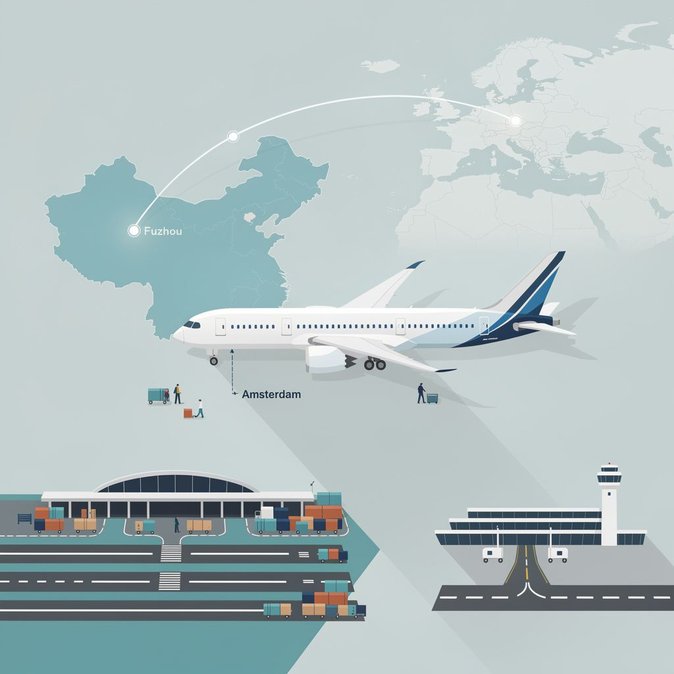
Fuzhou Changle International Airport celebrated a double milestone on 23 June 2026. At 09:00 local time, the airport’s long-awaited second runway was officially commissioned, immediately boosting hourly movement capacity from 28 to 45 and giving the fast-growing Fujian capital room to handle wide-body intercontinental services. Minutes later, Xiamen Airlines flight MF813—a Boeing 787-9 bearing the slogan “福连五洲 荷你乡约” (Blessed Fuzhou, Meet in Holland)—took off for Amsterdam-Schiphol, marking the first non-stop passenger link between Fuzhou and Europe. The new route will operate twice weekly (Wednesday and Saturday) and leverages SkyTeam partner KLM’s network to offer same-day connections from Amsterdam to more than 30 European and South American cities. Local authorities estimate that direct access to one of Europe’s premier cargo and passenger hubs will cut door-to-door transit times for electronics, seafood and e-commerce parcels by up to 24 hours, while also making it easier for Fujian’s textile exporters and Dutch agritech firms to arrange short-notice business trips. For the province’s booming outbound tourism sector, Amsterdam provides an attractive gateway to the European Union’s Schengen area—especially after the Dutch government’s decision in May to roll out a 48-hour fast-track visa channel for Chinese leisure groups. Conversely, the flight offers European travellers a one-stop itinerary to visit Fuzhou before connecting onwards to UNESCO-listed sites in Xiamen, Wuyishan and the Hakka tulou clusters. Airport officials told local media that the second runway enabled simultaneous independent arrivals and departures for wide-body aircraft, a prerequisite for additional long-haul services now under negotiation with carriers from Qatar, Australia and the United States. The municipal government is also finalising a 72-hour visa-free layover scheme to capitalise on the added capacity. Industry analysts say the twin developments underscore how regional hubs beyond Beijing, Shanghai and Guangzhou are now competing aggressively for international traffic as China’s aviation market rebounds. For multinational companies, the result is a wider choice of entry points, more freight belly-hold options and, crucially, direct access to second-tier manufacturing clusters that drive many global supply chains.
Source: Southeast Net
How VisaHQ can help
VisaHQ simplifies the visa application process for individuals and businesses. Check current travel requirements, prepare the required documents and manage your application online through the VisaHQ China portal.More From China
View all
Foreign Ministry touts China’s ‘open-door’ agenda at press briefing, invites multinationals to upcoming trade expos
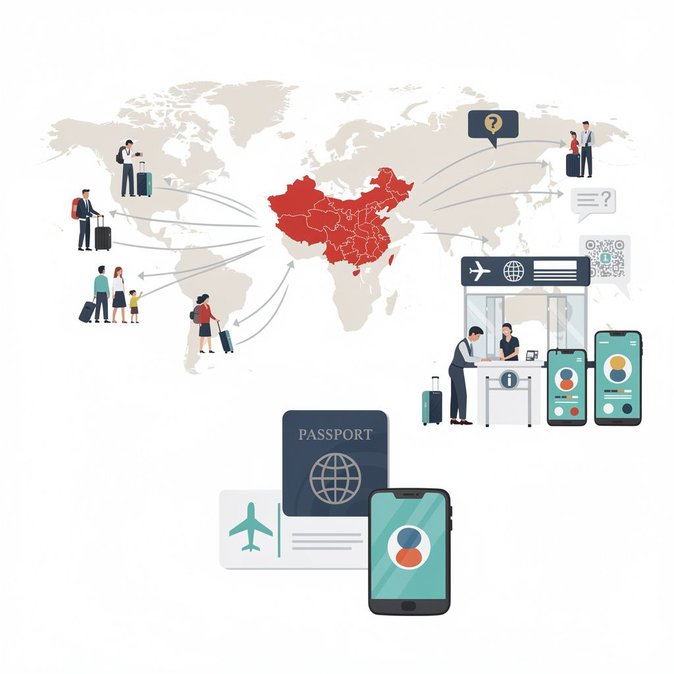
Visa-free expansion drives China’s inbound tourism surge, authorities urged to focus on ‘last-mile’ services