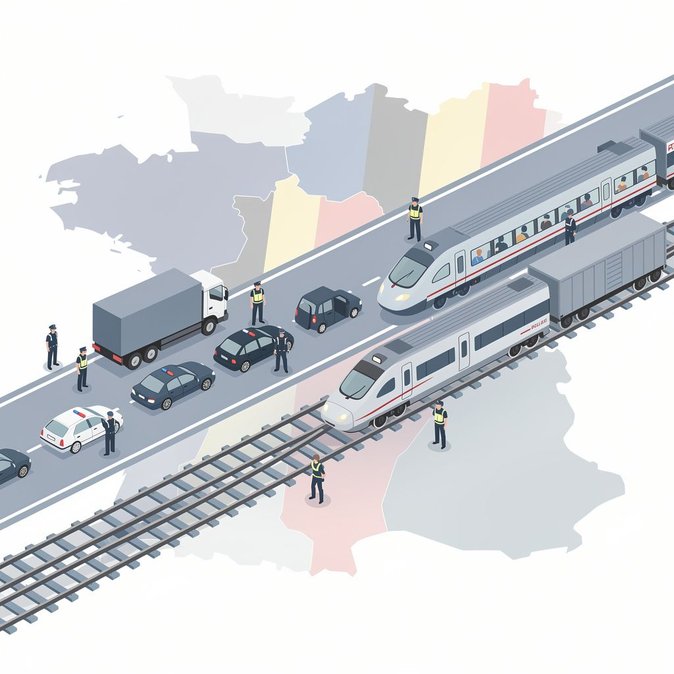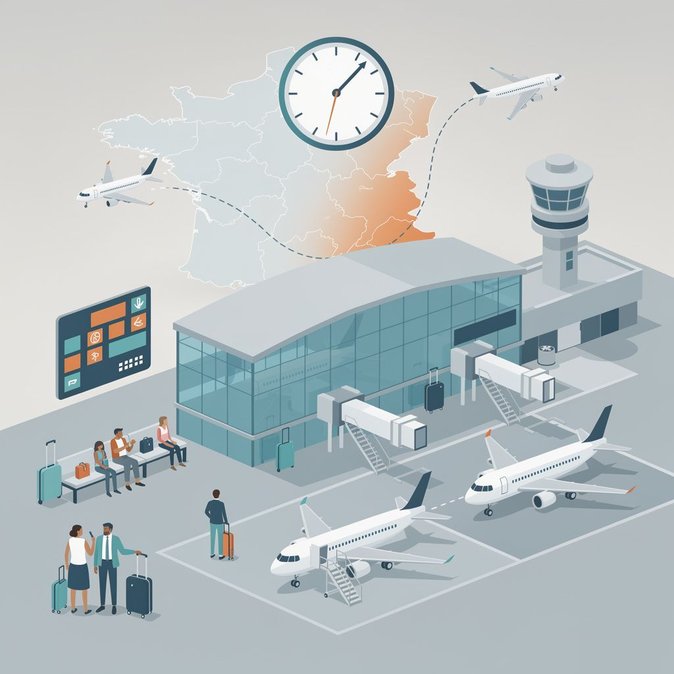
Travellers using Montpellier-Méditerranée Airport faced widespread disruption on 23 June 2026 after a 24-hour strike by French air-traffic controllers led to the cancellation of roughly 30 % of scheduled services. The UNSA-ICNA union called the action to protest a controversial overhaul of France’s air-traffic management framework that would centralise rostering and require more night-shifts in regional towers. Similar stoppages affected smaller hubs in Nîmes and Perpignan, although Paris-area airports were spared this time. The Directorate-General for Civil Aviation (DGAC) pre-emptively asked airlines to cut flight plans, enabling carriers such as Air France-Hop!, Transavia and easyJet to rebook passengers or shift operations to Marseille. Nonetheless, business travellers reported missing cross-country connections, and inbound pharmaceutical shipments for a life-sciences cluster in the Montpellier Méditerranée Business Park were delayed by up to 48 hours. Employers’ federation MEDEF Occitanie warned that repeated industrial action—this is the third controllers’ stoppage in five weeks—risks eroding investor confidence in the fast-growing high-tech corridor between Toulouse and the Côte d’Azur. The walk-out also coincides with peak conference season: organisers of the International Aquaculture Forum, which draws 1,500 delegates to the Sud de France Arena, scrambled to arrange charter buses from Marseille and Barcelona to keep the event on track. For mobility managers the lesson is clear: contingency routing via high-speed rail or road should be baked into travel policies for southern France through the summer. The DGAC says negotiations on staffing levels and overtime pay will continue next week, but unions hint at further strikes around the 3–4 July holiday getaway if talks stall. Companies with time-sensitive cargo are advised to consider routing via Lyon Saint-Exupéry or using night-freight trucking until labour peace returns.
Source: Le Journal Toulousain