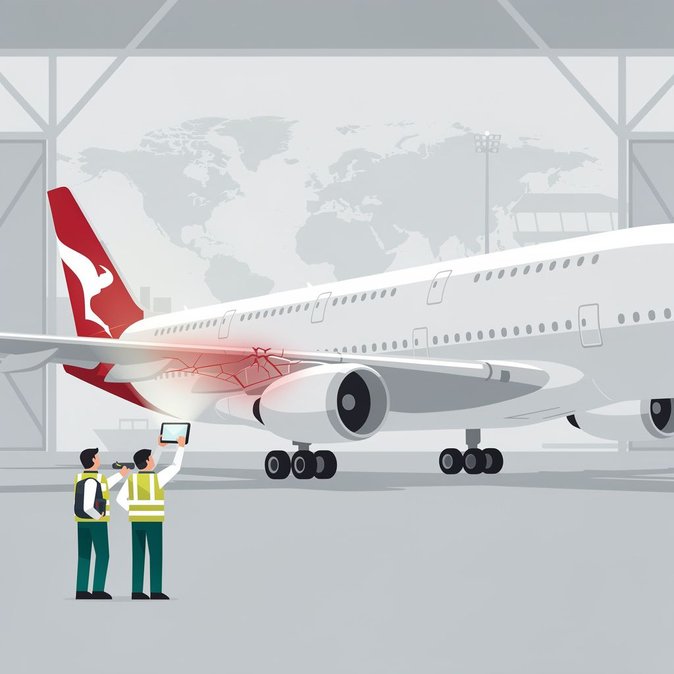
Europe’s aviation safety regulator EASA issued an emergency airworthiness directive late on 22 June after inspectors discovered cracks in the mid-spars of several Airbus A380 wings. The directive captured 16 aircraft worldwide, including one Qantas superjumbo – VH-OQI ‘David Warren’ – which is already in heavy maintenance in Dresden. Qantas confirmed on 24 June that the jet will undergo the mandated inspections before returning to service, adding that no schedule changes are expected. Although limited to a single frame, the order is a reminder that the aging A380 fleet – still central to Qantas’ high-demand London, Los Angeles and Johannesburg rotations – carries significant maintenance risk as the type heads toward the end of its economic life. Any unplanned downtime can cascade into network disruption, missed connections and MICE-travel headaches for corporate clients. The timing is also awkward for Qantas’ broader fleet-renewal narrative. The carrier is banking on Project Sunrise A350-1000ULRs to take over marquee ultra-long-haul routes from 2027, but until then the A380 shoulders much of the premium-cabin load. A material inspection finding would tighten wide-body capacity on the Kangaroo Route just as northern-summer demand peaks. For travel managers the take-away is two-fold. First, build additional layover buffers into itineraries that currently rely on QF A380 sectors, especially where connections involve time-critical onward legs on non-Oneworld airlines. Second, monitor Qantas’ engineering advisories: if further cracks are uncovered, the airline may accelerate its foreshadowed 2032 A380 retirement, forcing long-term programme adjustments.
Source: 2PAXfly