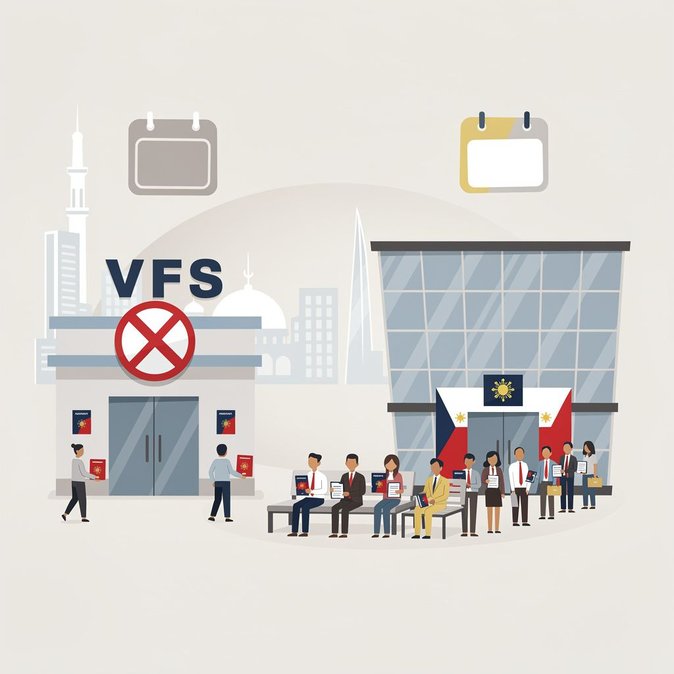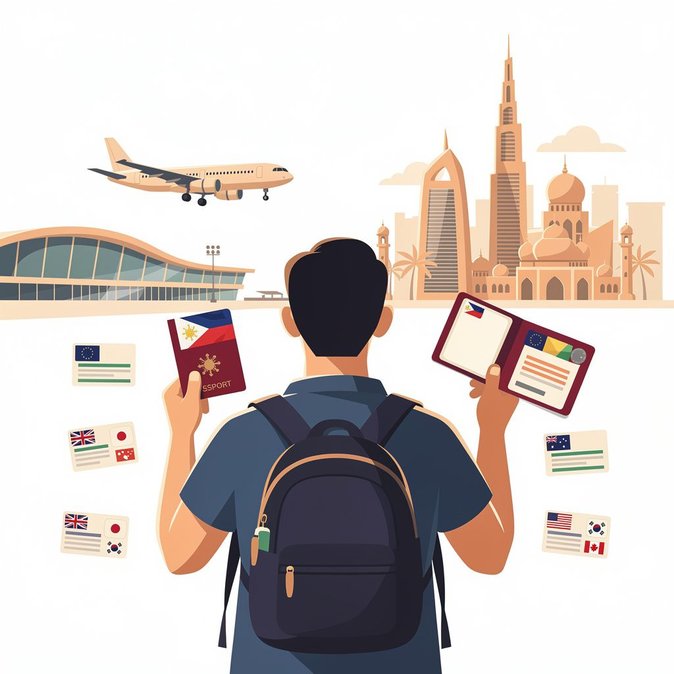
The United Arab Emirates has officially opened its doors wider to Philippine nationals by introducing a visa-on-arrival (VoA) facility that took effect at midnight on 25 June 2026. Filipino citizens who hold a valid visa, residence permit or Green Card issued by the United States, European Union, United Kingdom, Australia, Japan, Singapore, South Korea, Canada or New Zealand can now obtain a UAE visit visa at any international airport in the country. Two VoA options are available.
Filipino travellers seeking personalised assistance before departure may find it useful to consult VisaHQ. The firm’s online platform (https://www.visahq.com/united-arab-emirates/) consolidates the latest UAE entry requirements, compares visa-on-arrival with traditional consular visas, and offers live support—helpful for corporate mobility teams and holidaymakers alike.
A 14-day, single-entry visa costs AED 100 and may be extended once for another 14 days on payment of AED 250, while a 60-day single-entry visa costs AED 250 but is not extendable. Travellers simply present their Philippine passport and qualifying third-country residence permit at immigration; no prior online application is required. The Department of Foreign Affairs in Manila said the move reflects “excellent bilateral relations” and thanked the UAE for recognising the Philippines’ growing business and tourist links with the Gulf. Dubai’s Department of Economy & Tourism expects the policy to spur Southeast Asian leisure demand during the summer shoulder season and generate incremental MICE traffic once the World Trade Centre’s expanded convention calendar resumes in August. For global mobility managers, the change simplifies short-notice assignments involving Filipino specialists who already work in the US or OECD markets. Employers should update travel policies to flag the new on-arrival payment process and remind staff that overstays attract fines of AED 50 per day. Airlines operating high-volume Manila–Dubai and Cebu–Abu Dhabi routes are preparing dedicated check-in counters to verify eligibility and minimise ground-handling delays. Consular advisers note that the UAE now hosts just over one million Filipinos—the third-largest expatriate community in the federation. The VoA concession not only reinforces those socio-economic ties but also signals the UAE’s broader strategy of tiered, privilege-linked entry schemes designed to attract skilled talent and affluent visitors without compromising border security.
Filipino travellers seeking personalised assistance before departure may find it useful to consult VisaHQ. The firm’s online platform (https://www.visahq.com/united-arab-emirates/) consolidates the latest UAE entry requirements, compares visa-on-arrival with traditional consular visas, and offers live support—helpful for corporate mobility teams and holidaymakers alike.
A 14-day, single-entry visa costs AED 100 and may be extended once for another 14 days on payment of AED 250, while a 60-day single-entry visa costs AED 250 but is not extendable. Travellers simply present their Philippine passport and qualifying third-country residence permit at immigration; no prior online application is required. The Department of Foreign Affairs in Manila said the move reflects “excellent bilateral relations” and thanked the UAE for recognising the Philippines’ growing business and tourist links with the Gulf. Dubai’s Department of Economy & Tourism expects the policy to spur Southeast Asian leisure demand during the summer shoulder season and generate incremental MICE traffic once the World Trade Centre’s expanded convention calendar resumes in August. For global mobility managers, the change simplifies short-notice assignments involving Filipino specialists who already work in the US or OECD markets. Employers should update travel policies to flag the new on-arrival payment process and remind staff that overstays attract fines of AED 50 per day. Airlines operating high-volume Manila–Dubai and Cebu–Abu Dhabi routes are preparing dedicated check-in counters to verify eligibility and minimise ground-handling delays. Consular advisers note that the UAE now hosts just over one million Filipinos—the third-largest expatriate community in the federation. The VoA concession not only reinforces those socio-economic ties but also signals the UAE’s broader strategy of tiered, privilege-linked entry schemes designed to attract skilled talent and affluent visitors without compromising border security.