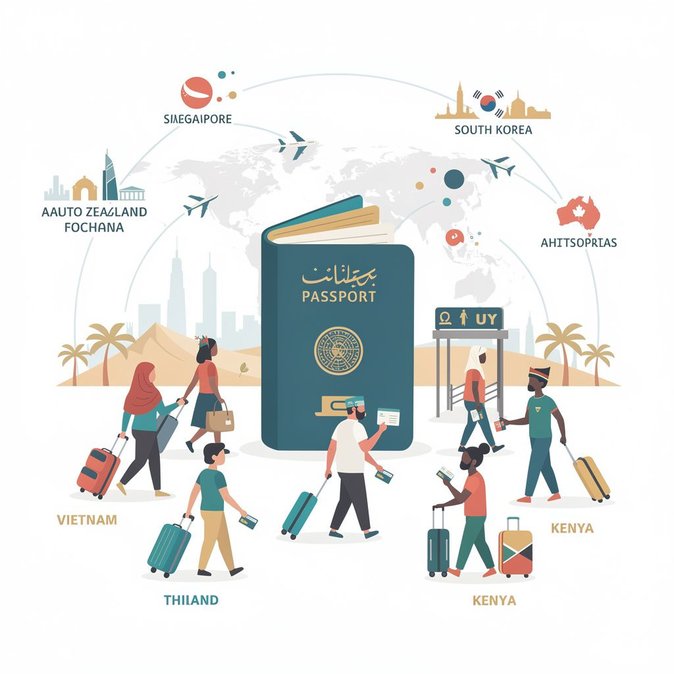
Hot on the heels of its Philippine announcement, the Federal Authority for Identity, Citizenship, Customs and Port Security (ICP) has expanded the UAE’s visa-on-arrival eligibility list to cover nationals of Indonesia, Vietnam, Thailand, Kenya, South Africa and—confirming yesterday’s news—the Philippines. Indians remain eligible under the earlier programme. At the same time, the ICP added six further countries of residence whose permits will be recognised: Singapore, Japan, South Korea, Australia, New Zealand and Canada, joining the US, EU and UK. Visitors from the newly listed countries may choose either a 14-day VoA (extendable once) or a 60-day non-extendable VoA, subject to the same AED 100/AED 250 fee structure. The ICP framed the decision as part of a “flexible entry and residence system” aimed at deepening trade, tourism and cultural links with emerging markets in Asia and Africa. Travel management companies expect an uptick in last-minute incentive trips from Southeast Asia and corporate site visits by African fintech start-ups exploring Dubai’s free-zone ecosystem. Hospitality analysts project an additional 150,000 hotel room-nights in Q4 2026, driven chiefly by Indonesia and South Africa, whose carriers already operate daily services to DXB. Employers should note that eligibility hinges on a combination of nationality and the traveller’s third-country residence permit. Global mobility teams must therefore verify both data points before ticketing staff. Overstay fines, currently AED 50 per day, remain unchanged. Strategically, the broadened VoA is seen as a soft-launch for the forthcoming GCC Grand Tours unified visa, expected late 2026, which will let tourists move seamlessly among the six Gulf monarchies—further cementing the UAE’s position as the region’s primary aviation and logistics hub.
Source: Khaleej Times