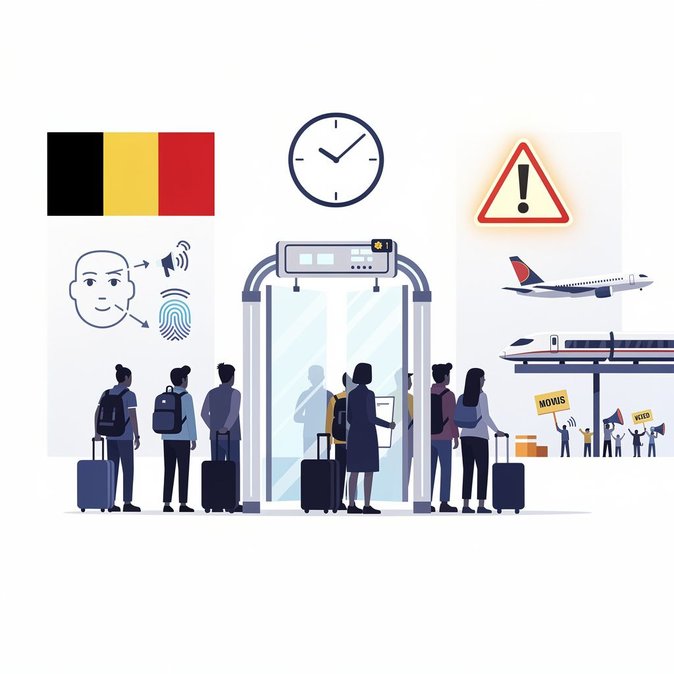
Australia’s Department of Foreign Affairs and Trade (DFAT) has refreshed its Smartraveller advice for Belgium, marking it “still current” as of 26 June 2026 but adding new guidance on the Schengen Entry/Exit System (EES) that went live in April. The notice reminds travellers that passports will now be scanned and biometrics recorded on first entry, replacing manual stamping and potentially causing queues at busy land crossings with France, Germany and the Netherlands.
For travellers who want extra clarity on Belgium’s entry procedures or the wider Schengen framework, VisaHQ provides step-by-step resources and application support through its Belgium portal (https://www.visahq.com/belgium/). The service can help corporate travel managers and individual visitors double-check documentation, stay on top of policy changes and secure any required paperwork well before departure.
The advisory maintains the overall risk level of “Exercise normal safety precautions” but reiterates Belgium’s national terror-threat level 3 (“serious”) and warns of frequent general strikes that can halt rail and airport operations at short notice. Business travellers are urged to build buffer time into itineraries and to monitor local media for industrial-action alerts. DFAT also highlights Schengen over-stay penalties and reminds dual EU–Australian nationals to check which passport they use when entering under EES, a detail that has already caught out several frequent flyers to Brussels. The update underscores that ETIAS, the forthcoming electronic travel authorisation, is not yet in force and that visa-free rules remain unchanged until at least late 2026. Australian corporates sending staff to EU headquarters in Brussels should circulate the new advice, particularly the section on biometric enrolment, which can add 15–20 minutes at automated kiosks for first-time entrants. Travel managers may also wish to review crisis-management plans in light of the heightened terrorism warning and ongoing public-sector labour disputes.

For travellers who want extra clarity on Belgium’s entry procedures or the wider Schengen framework, VisaHQ provides step-by-step resources and application support through its Belgium portal (https://www.visahq.com/belgium/). The service can help corporate travel managers and individual visitors double-check documentation, stay on top of policy changes and secure any required paperwork well before departure.
The advisory maintains the overall risk level of “Exercise normal safety precautions” but reiterates Belgium’s national terror-threat level 3 (“serious”) and warns of frequent general strikes that can halt rail and airport operations at short notice. Business travellers are urged to build buffer time into itineraries and to monitor local media for industrial-action alerts. DFAT also highlights Schengen over-stay penalties and reminds dual EU–Australian nationals to check which passport they use when entering under EES, a detail that has already caught out several frequent flyers to Brussels. The update underscores that ETIAS, the forthcoming electronic travel authorisation, is not yet in force and that visa-free rules remain unchanged until at least late 2026. Australian corporates sending staff to EU headquarters in Brussels should circulate the new advice, particularly the section on biometric enrolment, which can add 15–20 minutes at automated kiosks for first-time entrants. Travel managers may also wish to review crisis-management plans in light of the heightened terrorism warning and ongoing public-sector labour disputes.