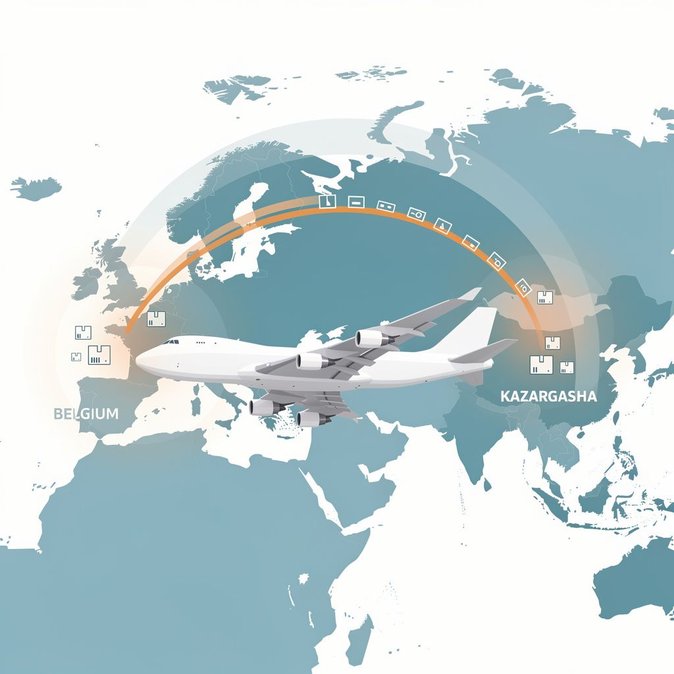
ASL Airlines Belgium has inaugurated a direct cargo link between Liege Airport (LGG) and Sary-Arka Airport in Karaganda, Kazakhstan. The service, which began operating on 16 June but was formally announced on 24 June, runs five times per week using Boeing 747-400F aircraft. The route positions Karaganda as a budding logistics hub on the Eurasian land-bridge while reinforcing Liege’s status as one of Europe’s top three cargo gateways. Westbound flights will carry Kazakh manufactured goods, perishables and e-commerce shipments to Belgium, while eastbound legs will transport pharmaceuticals, automotive parts and high-tech components sourced from Benelux and German suppliers. Logistics analysts say the frequency and wide-body capacity could shave up to 48 hours off door-to-door transit times compared with traditional routings via Moscow or Istanbul.
Business travelers who need to visit either end of this new corridor—whether to inspect warehousing facilities in Karaganda or negotiate cargo agreements in Liege—can streamline their visa formalities through VisaHQ’s Belgium portal. The company’s platform (https://www.visahq.com/belgium/) provides clear checklists, real-time status updates and optional express processing for both Schengen and Kazakh visas, ensuring logistics professionals spend less time on paperwork and more time moving freight.
The service also bypasses Russian airspace restrictions still affecting some carriers, offering a stable alternative for companies wary of geopolitical risk. Customs brokers at Liege confirm that ASL has integrated the flights into Belgium’s Automated Import System, allowing pre-lodgement of transit declarations and faster truck-feed connections to Antwerp and Rotterdam ports. For Belgian exporters eyeing Central Asia’s infrastructure boom, the schedule provides same-day uplift of project cargo too large for passenger bellies. While primarily a freight development, the new corridor enhances Belgium’s overall connectivity and may spur future combination services that include limited passenger capacity—an option ASL’s parent group is reportedly evaluating.
Business travelers who need to visit either end of this new corridor—whether to inspect warehousing facilities in Karaganda or negotiate cargo agreements in Liege—can streamline their visa formalities through VisaHQ’s Belgium portal. The company’s platform (https://www.visahq.com/belgium/) provides clear checklists, real-time status updates and optional express processing for both Schengen and Kazakh visas, ensuring logistics professionals spend less time on paperwork and more time moving freight.
The service also bypasses Russian airspace restrictions still affecting some carriers, offering a stable alternative for companies wary of geopolitical risk. Customs brokers at Liege confirm that ASL has integrated the flights into Belgium’s Automated Import System, allowing pre-lodgement of transit declarations and faster truck-feed connections to Antwerp and Rotterdam ports. For Belgian exporters eyeing Central Asia’s infrastructure boom, the schedule provides same-day uplift of project cargo too large for passenger bellies. While primarily a freight development, the new corridor enhances Belgium’s overall connectivity and may spur future combination services that include limited passenger capacity—an option ASL’s parent group is reportedly evaluating.