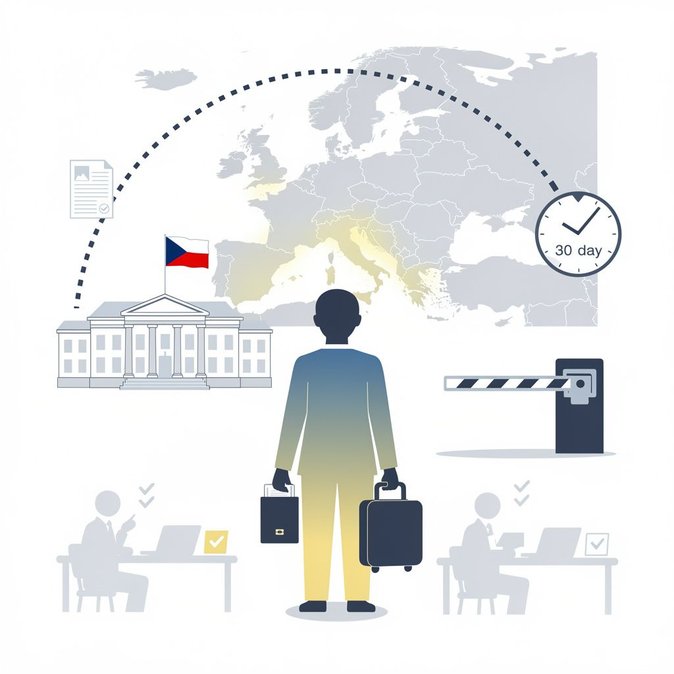
In a late-evening session on 24 June, the Czech Chamber of Deputies approved in first reading a government bill that will make it harder for Ukrainians holding EU temporary protection to keep their status. Under the draft, protection will lapse if the holder stays outside the Schengen Area for more than 30 days or is subject to criminal or administrative expulsion. The Interior Ministry will also stop issuing substitute travel documents—cizinecké pasy—to beneficiaries, a measure officials say is designed to curb secondary movements to third countries. Applicants for the special long-term residence that succeeds temporary protection must now prove they have no outstanding tax debt, in addition to the existing clean-criminal-record requirement. Health-insurance coverage paid by the state will be narrowed to refugees officially assessed as having limited self-sufficiency, while fee waivers for recognition of foreign diplomas will disappear. Interior Minister Lubomír Metnar told MPs that about 70,000 people have expressed interest in switching to the new long-term status; the tougher rules are meant to “separate those integrating from those abusing the system.” Business-mobility specialists should note that employees on temporary protection who take extended business trips outside Schengen risk losing their legal stay. Companies are advised to switch key Ukrainian assignees to standard work permits or intra-corporate-transfer visas. The bill now moves to committee and could take effect on 1 September. The opposition Pirate Party warned that constant rule changes complicate workforce planning for firms that have recruited heavily from the 350,000 Ukrainians currently in Czechia. Advocacy groups argue that limiting travel documents will hinder professional up-skilling programmes financed by EU funds.
Source: ČTK / ČeskéNoviny.cz
How VisaHQ can help
VisaHQ simplifies the visa application process for individuals and businesses. Check current travel requirements, prepare the required documents and manage your application online through the VisaHQ Czech Republic portal.More From Czech Republic
View all
Czech Customs Warns of One-Hour cPortál Outage and New €3 Duty on Most Low-Value Imports From 1 July
EU Visa Working Party Meets in Brussels to Debate Tougher Suspension Mechanism—What It Means for Czech Travellers and Employers