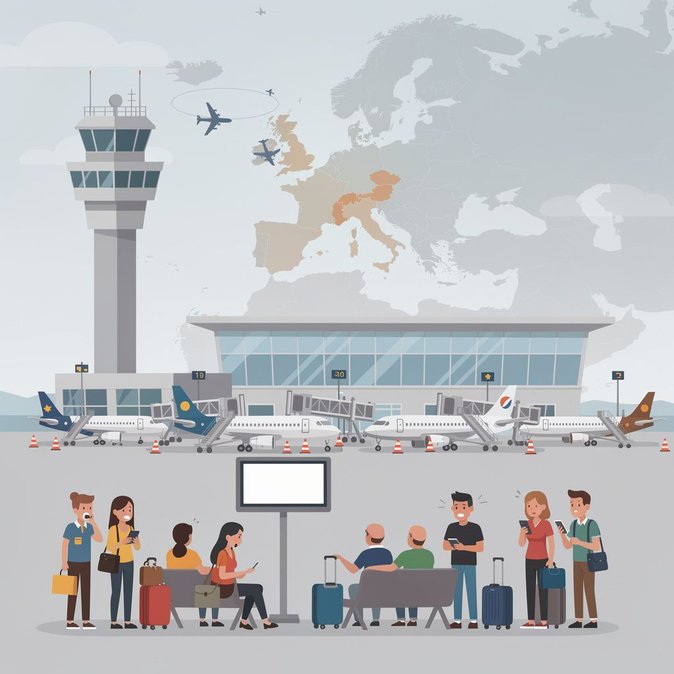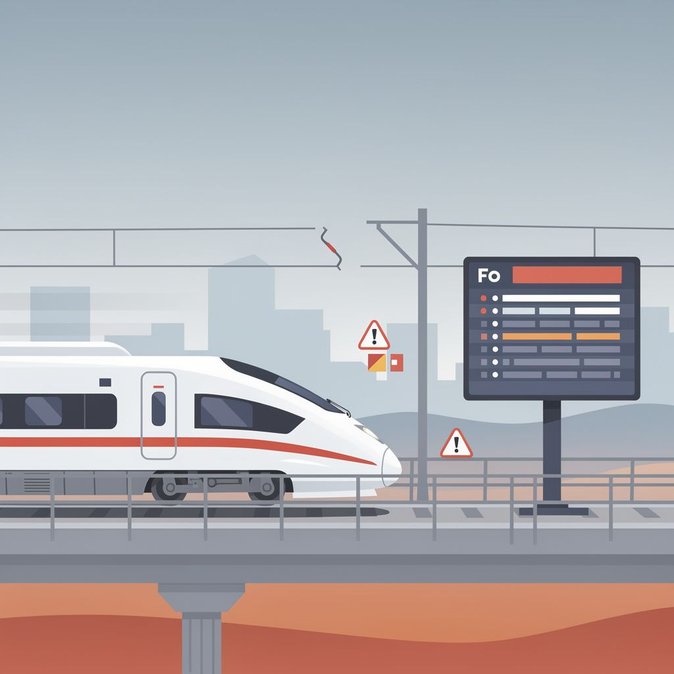
Renfe restored full AVE and Alvia services between Madrid and Huelva on the morning of 25 June after copper-cable theft near Urda and Malagón the previous day caused signal failures and multi-hour delays. The incident disrupted key business-corridor trains linking the capital with Seville and Cádiz, forcing some travellers onto last-minute flights and rental cars. Technicians worked through the night to replace 700 metres of signalling cable and install temporary fibre-optic lines. The Guardia Civil has launched an investigation; similar thefts cost Spain’s rail infrastructure manager ADIF €14 million in 2025.
For travellers who suddenly need to re-route via nearby international airports such as Lisbon, Faro, or even Paris because of domestic rail chaos, checking visa and passport requirements at short notice can add to the stress. VisaHQ can shoulder that burden by providing a quick, personalised rundown of entry rules, e-visa options, and transit formalities through its portal at https://www.visahq.com/spain/ helping ensure that an unexpected switch from rail to air doesn’t derail the entire trip.
The episode underscores vulnerabilities in Spain’s high-speed network at a time when rail is marketed as a greener alternative to short-haul flights. Corporates embedding sustainability targets into travel policies may face criticism if recurrent rail disruptions push travellers back to the air. Mobility managers should consider booking early-morning services a day in advance of critical meetings to mitigate risk from overnight vandalism. Insurance providers also recommend adding “missed connection” riders when itineraries rely on single daily trains to secondary cities. ADIF is evaluating smart-sensor technology to detect real-time voltage drops indicative of cable tampering, a measure already piloted on the Barcelona-Figueres stretch. If adopted network-wide, the system could reduce repair times and minimise service interruptions.
For travellers who suddenly need to re-route via nearby international airports such as Lisbon, Faro, or even Paris because of domestic rail chaos, checking visa and passport requirements at short notice can add to the stress. VisaHQ can shoulder that burden by providing a quick, personalised rundown of entry rules, e-visa options, and transit formalities through its portal at https://www.visahq.com/spain/ helping ensure that an unexpected switch from rail to air doesn’t derail the entire trip.
The episode underscores vulnerabilities in Spain’s high-speed network at a time when rail is marketed as a greener alternative to short-haul flights. Corporates embedding sustainability targets into travel policies may face criticism if recurrent rail disruptions push travellers back to the air. Mobility managers should consider booking early-morning services a day in advance of critical meetings to mitigate risk from overnight vandalism. Insurance providers also recommend adding “missed connection” riders when itineraries rely on single daily trains to secondary cities. ADIF is evaluating smart-sensor technology to detect real-time voltage drops indicative of cable tampering, a measure already piloted on the Barcelona-Figueres stretch. If adopted network-wide, the system could reduce repair times and minimise service interruptions.