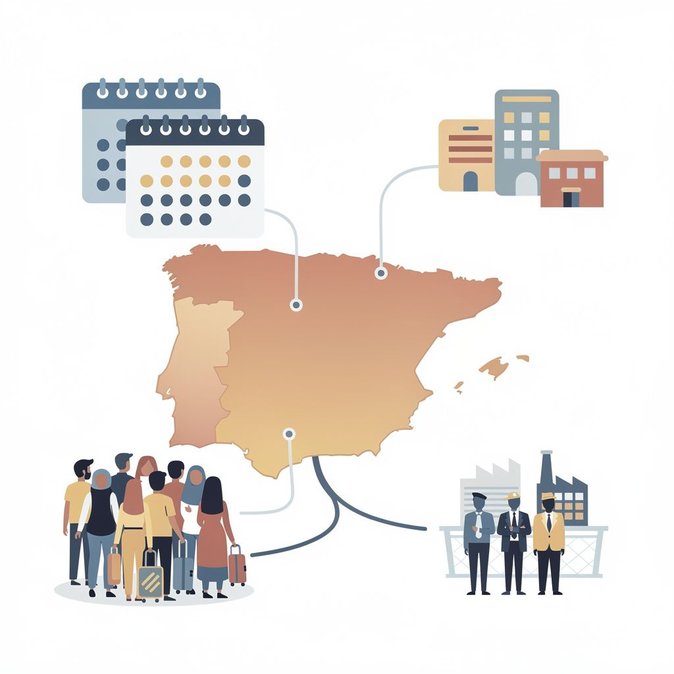
The Boletín Oficial del Estado of 25 June carried a resolution from the Directorate-General for Humanitarian Assistance and the Asylum Reception System setting out the structural planning for services to be provided between July 2026 and June 2027. The document lists housing, psychosocial support, language tuition and employment guidance as eligible services to be delivered via action-concertada agreements with NGOs, co-financed by the EU’s FAMI and ESF+ funds.
Separately, organizations and individuals navigating Spain’s evolving migration framework may also need clarity on visa and residence procedures. VisaHQ’s online platform (https://www.visahq.com/spain/) offers up-to-date guidance and application support for Spanish travel and work permits, ensuring that employers, NGOs and beneficiaries can synchronize legal paperwork with the new reception timelines.
Unlike ad-hoc emergency contracts, the plan quantifies target capacity by province and introduces performance indicators—such as average days in reception centres and job-placement rates—to be reported quarterly. This data-driven approach aligns Spain with EU accountability standards ahead of the bloc’s new Pact on Migration and Asylum entering into force in 2027. For regional governments hosting reception facilities, the resolution provides budget visibility and establishes a 60-day window to submit co-funding proposals. NGOs gain certainty to sign long-term leases and hire staff on indefinite contracts, improving service continuity. Companies that sponsor refugee-employment pathways—particularly in agriculture and hospitality—will benefit from streamlined referral channels once beneficiaries move to the plan’s ‘autonomía’ phase. HR leaders should liaise with accredited NGOs to tap into vocational-training subsidies embedded in the new framework. Legal advisers note that the action-concertada model exempts such agreements from standard public-procurement rules, but entities must still pass compliance audits covering governance, equality and data protection.
Separately, organizations and individuals navigating Spain’s evolving migration framework may also need clarity on visa and residence procedures. VisaHQ’s online platform (https://www.visahq.com/spain/) offers up-to-date guidance and application support for Spanish travel and work permits, ensuring that employers, NGOs and beneficiaries can synchronize legal paperwork with the new reception timelines.
Unlike ad-hoc emergency contracts, the plan quantifies target capacity by province and introduces performance indicators—such as average days in reception centres and job-placement rates—to be reported quarterly. This data-driven approach aligns Spain with EU accountability standards ahead of the bloc’s new Pact on Migration and Asylum entering into force in 2027. For regional governments hosting reception facilities, the resolution provides budget visibility and establishes a 60-day window to submit co-funding proposals. NGOs gain certainty to sign long-term leases and hire staff on indefinite contracts, improving service continuity. Companies that sponsor refugee-employment pathways—particularly in agriculture and hospitality—will benefit from streamlined referral channels once beneficiaries move to the plan’s ‘autonomía’ phase. HR leaders should liaise with accredited NGOs to tap into vocational-training subsidies embedded in the new framework. Legal advisers note that the action-concertada model exempts such agreements from standard public-procurement rules, but entities must still pass compliance audits covering governance, equality and data protection.