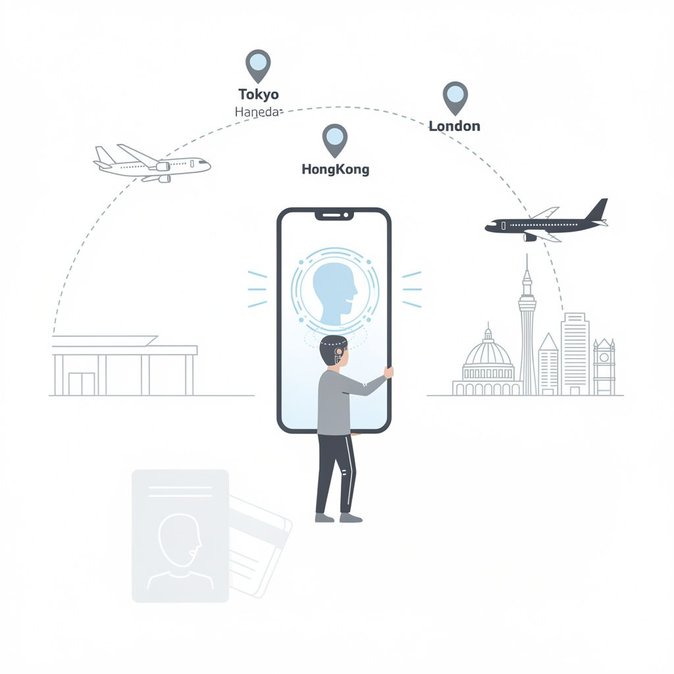
Japan Airlines (JAL) and Tokyo International Air Terminal Corporation announced on 25 June that they have completed what they describe as the world’s first end-to-end digital-identity transfer trial, enabling a passenger to fly from Tokyo-Haneda to London via Hong Kong without showing a passport or boarding pass at airport touchpoints. The proof-of-concept formed part of IATA’s Data & Technology programme. During the test, a volunteer traveller pre-loaded passport, boarding-pass and facial-biometric data into a secure mobile wallet. That encrypted “digital identity” was shared with airport systems at Haneda, Hong Kong International Airport (HKIA) and London Heathrow.
For travellers wondering how their visa or entry requirements fit into this new biometric journey, VisaHQ can streamline the paperwork long before you reach the airport. Through our Hong Kong portal (https://www.visahq.com/hong-kong/), both corporate travel managers and individual passengers can secure visas, electronic travel authorizations and even passport renewals online, ensuring that when paperless corridors become mainstream your documents are already in perfect order.
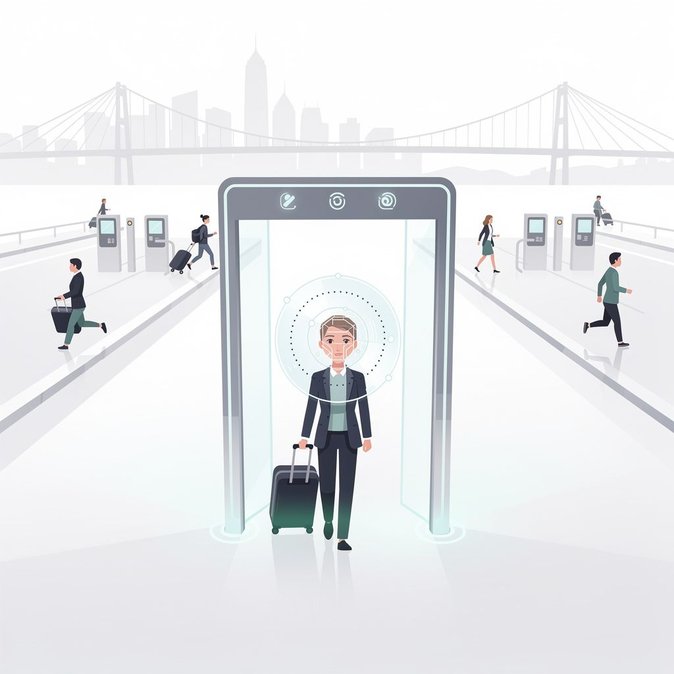
In Hong Kong, the data synced with Airport Authority Hong Kong’s Flight Token platform, allowing the passenger to clear security, immigration and boarding gates using facial recognition alone. The trial integrated three mobile-wallet providers and two biometric-matching methods (one-to-one and one-to-many), demonstrating interoperability across jurisdictions. JAL said the technology could cut processing times, reduce paperwork errors and support airports with limited staffing by keeping passengers moving. For Hong Kong, the success reinforces HKIA’s ambition to become a leading smart-airport hub. The airport introduced Flight Token for originating passengers in 2025; this is the first time it has been used in an international transfer scenario, paving the way for truly paperless connections that are attractive to premium and corporate travellers. Travel-risk and mobility managers should monitor regulatory developments, as widescale adoption would require governments to recognise digital travel credentials at border control. Nonetheless, the pilot shows how biometric corridors—from airline reservation to final gate—could soon make multi-segment travel faster and more secure.
For travellers wondering how their visa or entry requirements fit into this new biometric journey, VisaHQ can streamline the paperwork long before you reach the airport. Through our Hong Kong portal (https://www.visahq.com/hong-kong/), both corporate travel managers and individual passengers can secure visas, electronic travel authorizations and even passport renewals online, ensuring that when paperless corridors become mainstream your documents are already in perfect order.
In Hong Kong, the data synced with Airport Authority Hong Kong’s Flight Token platform, allowing the passenger to clear security, immigration and boarding gates using facial recognition alone. The trial integrated three mobile-wallet providers and two biometric-matching methods (one-to-one and one-to-many), demonstrating interoperability across jurisdictions. JAL said the technology could cut processing times, reduce paperwork errors and support airports with limited staffing by keeping passengers moving. For Hong Kong, the success reinforces HKIA’s ambition to become a leading smart-airport hub. The airport introduced Flight Token for originating passengers in 2025; this is the first time it has been used in an international transfer scenario, paving the way for truly paperless connections that are attractive to premium and corporate travellers. Travel-risk and mobility managers should monitor regulatory developments, as widescale adoption would require governments to recognise digital travel credentials at border control. Nonetheless, the pilot shows how biometric corridors—from airline reservation to final gate—could soon make multi-segment travel faster and more secure.